When the WTO Agreement on Fisheries Subsidies – often referred to as Fish 1 – entered into force in 2025, it was presented as a historic agreement to curb harmful fisheries subsidies.
But from the perspective of African artisanal fishers’ organisations, such as the African Confederation of Professional Organisations of Artisanal Fisheries (CAOPA), this agreement addressed only a small part of the problem.
The major issue remains subsidies that support industrial fleets, distant-water fishing and fuel overcapacity. These are the subsidies that drive overfishing, distort competition and undermine coastal livelihoods, including in African countries. At the WTO's 14th Ministerial Conference (MC14), held in Yaoundé, which concluded on the 30 March, Ministers agreed to continue the negotiations on these harmful subsidies, ‘with the aim of making recommendations to MC15 to achieve the comprehensive disciplines on fisheries subsidies’. Will this be enough to reach a ‘Fish2’ agreement, or will these subsidies remain an ‘elephant in the room’ – too big to ignore, but too controversial to resolve?
The agreement ‘Fish 1’ was an important step, but only a first step
The WTO negotiations on fisheries subsidies, which started in 2001 as part of the Doha Development Agenda, were intended to discipline the subsidies that drive overfishing and unfair competition. The first agreement, known as Fish 1, concluded after more than 20 years, prohibits subsidies linked to illegal, unreported and unregulated (IUU) fishing, subsidies for fishing on overfished stocks, and certain subsidies for fishing on the high seas outside the jurisdiction of coastal States or regional fisheries management organisations (RFMOs). Fish 1 also includes provisions on transparency and notifications of fisheries subsidies, an important step given that many subsidies remain poorly documented.
The much more politically sensitive issues – subsidies that support industrial fleets, fuel use, fleet modernisation and distant-water fishing – were left for a second phase of negotiations, known as Fish 2.
The Yaoundé Ministerial Conference: a turning point for the negotiations?
These Fish 2 negotiations, which should address the structural drivers of overcapacity and overfishing, remain difficult. Disagreements persist particularly over the scope of disciplines, fuel subsidies, and the level of special and differential treatment for developing countries. Indeed, fisheries subsidies are not only an environmental issue, but also a development, trade, food security and geopolitical issue.
The Yaoundé discussions confirmed that the main contentious issues remain unchanged. However, the ministerial meeting also reinforced the political momentum to conclude Fish 2 before the expiry of the Fish 1 disciplines under its ‘sunset clause’. This clause means that Fish 1 disciplines will expire after four years of its entry into force, unless WTO members agree on additional rules under Fish 2.
In this sense, Yaoundé may not have delivered a final agreement, but it may still prove to be a turning point in maintaining political pressure to address the most harmful fisheries subsidies.
Which subsidies should exist? Who should benefit?
A central issue in the Fish 2 negotiations is how to discipline subsidies that contribute to overcapacity and overfishing without undermining the ability of developing countries to develop sustainable fisheries, offering them a special and differential treatment (S&DT).
This debate is often presented as a conflict between developed and developing countries: developing countries arguing that they need policy space to develop their fisheries sectors and support their fishing communities. Developed countries arguing that broad exemptions could undermine environmental objectives and allow harmful subsidies to continue.
The reality is more complex. China, which is one of the largest providers of fisheries subsidies and operates the world largest distant-water fleet, still identifies itself as a developing country in the WTO. This contributed to the tension about the scope and content of the S&DT. However, China has announced in 2025 that it will no longer request S&DT in new WTO negotiations, including fisheries subsidies negotiations. This may help alleviate some WTO members concerns, and make progress in the Fish 2 negotiations on this topic.
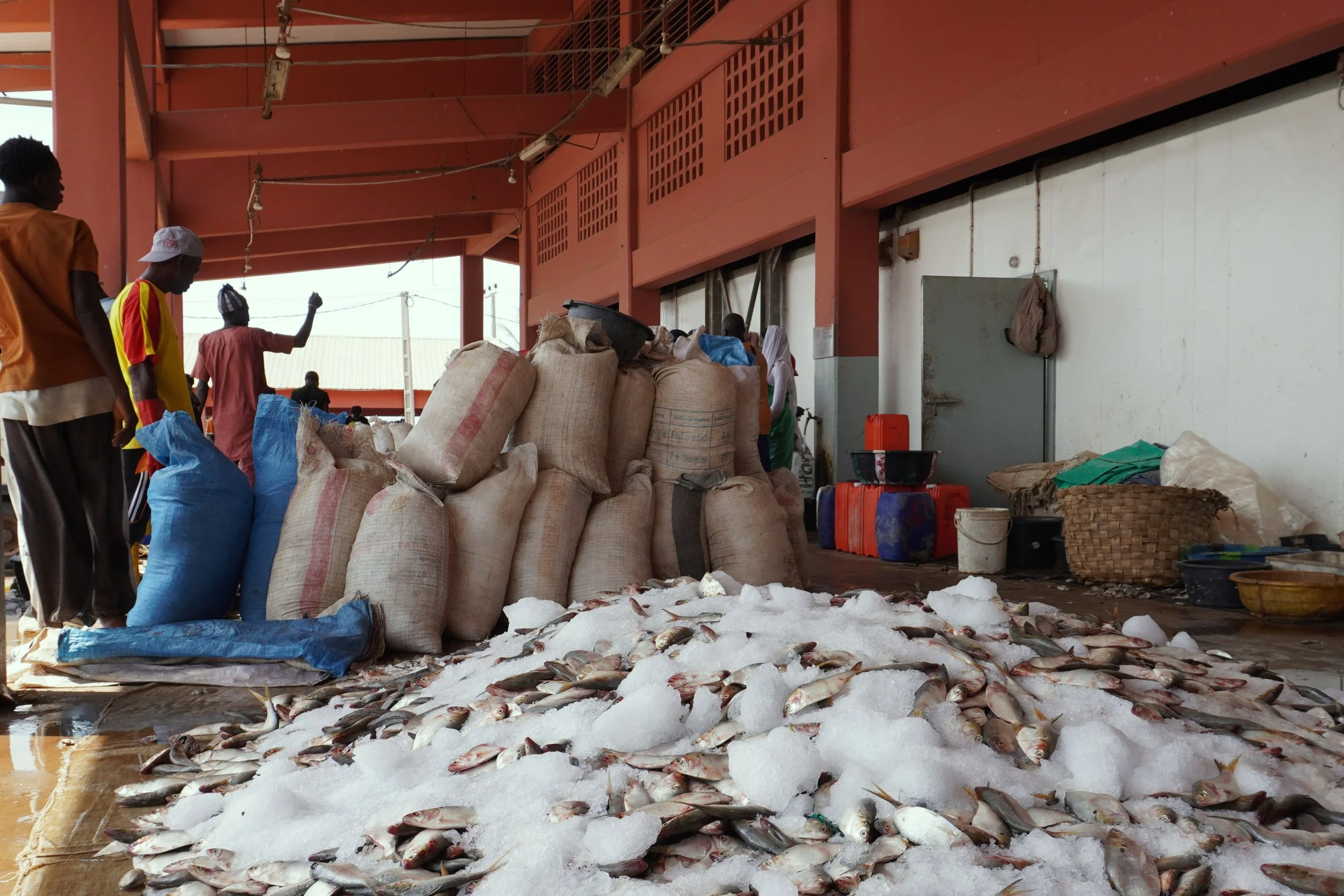
Public support must strengthen local economies, value chains and communities, ensuring oceans sustain people, rather than enabling practices that deplete resources and deepen inequality. Photo: At Gunjur landing site, in The Gambia, workers are loading bags of ice and fish into vans to transport them to markets further inland, by Margaux Rochefort.
This also illustrates the fact that S&DT should not be based only on whether a country is formally considered a developing country, but should also take into account the scale of its fisheries subsidies, the size of its fishing fleets and the impact of those fleets on global fish stocks and on the fisheries of developing coastal countries whose fisheries are largely small-scale and essential for food security and livelihoods.
The missing link: distant-water fishing and access agreements
An issue that remains insufficiently discussed in WTO fisheries subsidies negotiations is the relationship between fisheries subsidies and distant-water fishing access arrangements. Government-to-government payments under fisheries access agreements are generally not considered subsidies under WTO rules. Yet, together with other types of access arrangements, they play a major role in enabling distant-water fleets to operate in the waters of developing countries. From the perspective of African fishing communities, fisheries subsidies cannot be analysed in isolation from fishing access arrangements and fisheries governance more broadly.
If fisheries subsidies enable distant-water fleets to operate globally, fisheries access arrangements determine where those fleets operate and how the benefits are distributed. The two issues are linked and should be addressed together in negotiations on subsidies and fisheries governance.
During the FAO Sub-Committee on Fisheries Management discussions on fishing capacity, civil society organisations, including small-scale fishers, emphasised that access arrangements should become instruments of the fisheries governance, supporting national and regional fisheries management systems, improving scientific data and monitoring, strengthening local value chains and infrastructure, particularly small-scale fisheries.
‘Public subsidies should feed people, not empty the oceans’
In parallel to MC14, civil society organisations raised broader concerns about the role of global trade rules in shaping food systems and rural livelihoods. La Via Campesina argued that current trade rules, including those governing fisheries subsidies, must be assessed in light of their impacts on food sovereignty, poverty and inequality. From their perspective, fisheries subsidies negotiations should not be treated only as a trade or environmental issue, but as part of a broader debate on food systems, equity, development and the rights of small-scale food producers, including small-scale fishers.
Speaking at a panel on the next steps of the WTO Agreement on Fisheries Subsidies, Gaoussou Gueye, President of the CAOPA, emphasised that developing countries, like African countries, are not the main providers of harmful subsidies, and African small-scale fisheries are not the source of global overcapacity. Yet, they are often the most affected by the impacts of subsidised industrial fishing.
‘Any Fish 2 agreement must distinguish clearly between subsidies that increase industrial fishing capacity and those that support sustainable small-scale fisheries, food security and local economies’, he highlighted. Indeed, poorly designed subsidy disciplines could restrict African countries ability to support small-scale fisheries while failing to effectively discipline the subsidies that drive overcapacity at the global level. For him, ‘public subsidies should feed people, not empty the oceans’.
“Global trade rules must be judged by how they shape food systems, equity, and livelihoods. Fisheries subsidies should prioritise small-scale fishers, sustainability, and food security—not industrial overcapacity.””
These views were echoed by Sebastian Mathew, independent adviser on sustainable small-scale fisheries, who highlighted that fisheries subsidies reform is not only about prohibiting harmful subsidies. It is also about improving fisheries management, sustainability, transparency and equity in access to resources. Fisheries subsidies negotiations are therefore closely linked to broader questions of ocean governance, development policy, food systems and social justice.
Redirecting public support in that way could improve livelihoods, strengthen local economies, reduce food losses and contribute to sustainable fisheries, while avoiding the negative impacts associated with subsidies that increase industrial fishing capacity and distant-water fishing.
To subsidise or not to subsidise, that is not the question
The debate on fisheries subsidies is not simply about subsidising fisheries or not. It is about who benefits from public money, who has access to fishery resources, and what kind of food system and ocean economy governments want to support.
If the Fish 2 negotiations succeed in disciplining subsidies that drive overcapacity and distant-water overfishing while allowing developing countries to support sustainable small-scale fisheries, the agreement could contribute to more equitable and sustainable fisheries globally.
If not, the risk remains that the most harmful subsidies will continue, while the policy space of developing countries and support to small-scale fisheries could be constrained.
For African fishing communities, this is why Fish 2 may ultimately matter more than Fish 1.
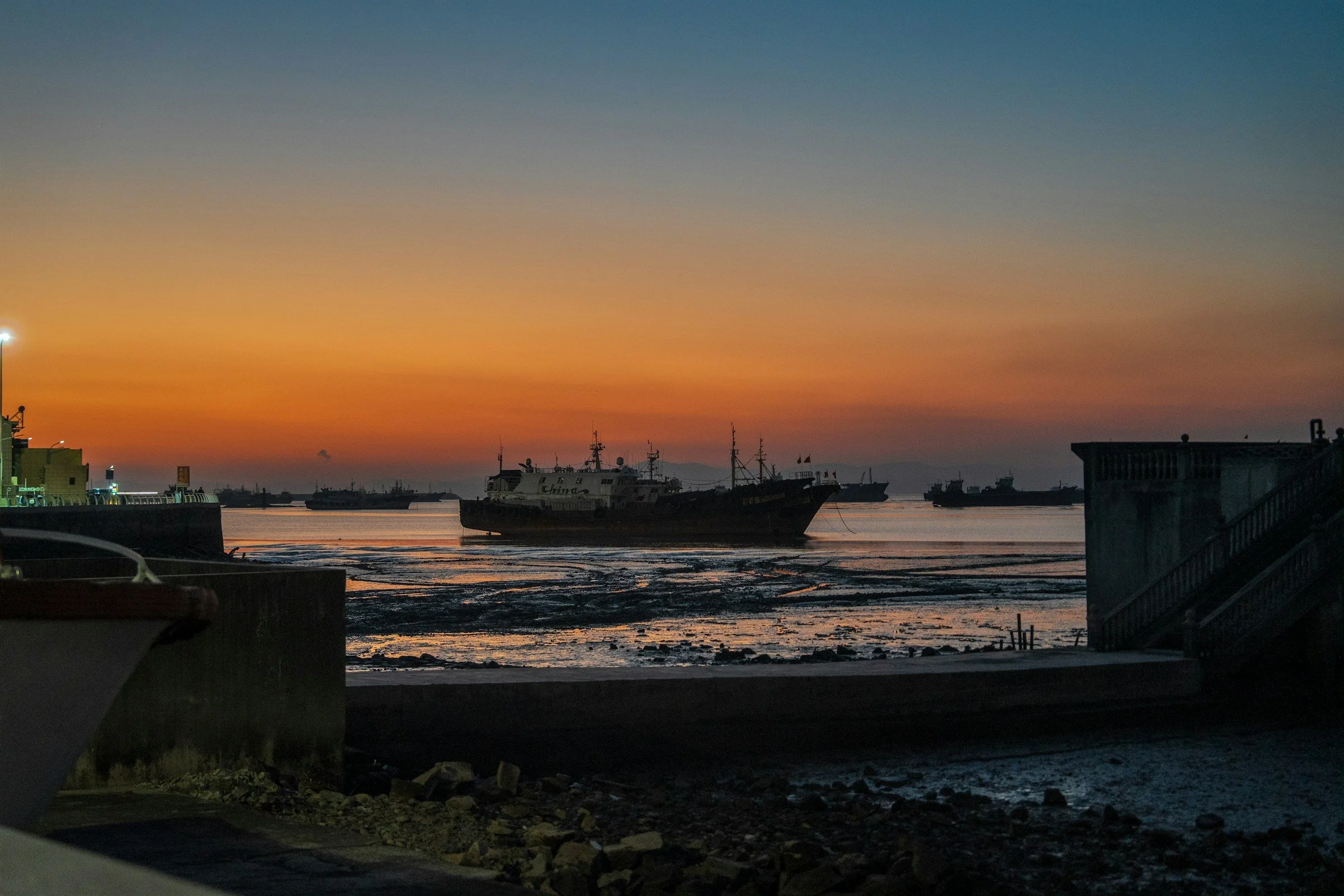
Banner photo: cargo ship in Taizhou, China, by JinHui Chen.


Francisco Mari, advocacy officer for global food security, agricultural trade and maritime policy at Bread for the World, reviews the WTO agreement on fisheries subsidies; following its recent entry into force. For this, he points at what till remains unaddressed and the costs and opportunities for developing countries, including the impact on small-scale fisheries.