From 23 to 27 February 2026, Reykjavik, Iceland, hosted the second session of the FAO Subcommittee on Fisheries Management (COFI:FM).
Established two years ago, this body provides a platform for in-depth discussion of fisheries management issues. The meeting convened 47 FAO members and around 30 observers from intergovernmental organisations and civil society, amid increasing pressure on fishery resources, heightened competition between industrial and small-scale fisheries, and global debates on sustainable ocean governance.
The African Confederation of Professional Organisations of Artisanal Fisheries (CAOPA) represented the perspectives of coastal communities and small-scale fisheries stakeholders across Africa. Such discussions are pivotal, as they help shape national policies, international regulations, and future access to resources that sustain millions of livelihoods.
CAOPA contributed five statements to the Subcommittee, each endorsed by nearly forty NGOs, highlighting the vital role of small-scale fisheries in the sustainable management and conservation of fishery resources and stressing the urgency of fully implementing the FAO Voluntary Guidelines to ensure the sustainability of this sector. Here is a review of the main messages and recommendations presented by CAOPA at this meeting.
When small-scale fisheries go hand in hand with biodiversity conservation
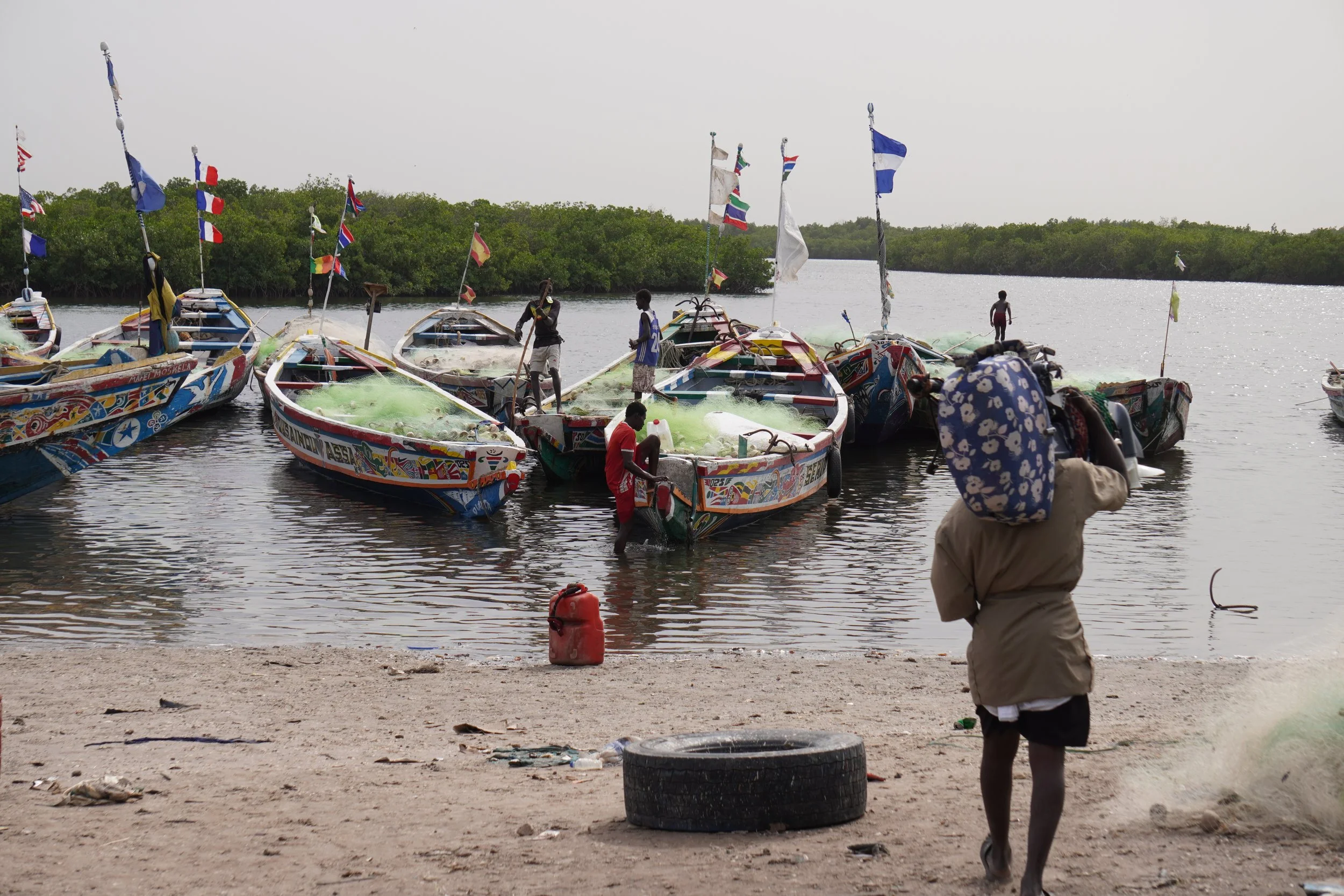
A key discussion at the meeting focused on enhancing the conservation and sustainable use of fish stocks. CAOPA highlighted that small-scale fisheries communities play a central role in preserving biodiversity. By employing sustainable, low-impact fishing methods – such as selective gear, seasonal closures during spawning periods, and spatial restrictions – they help prevent overexploitation, promote the regeneration of fish stocks, and support the health of aquatic ecosystems.
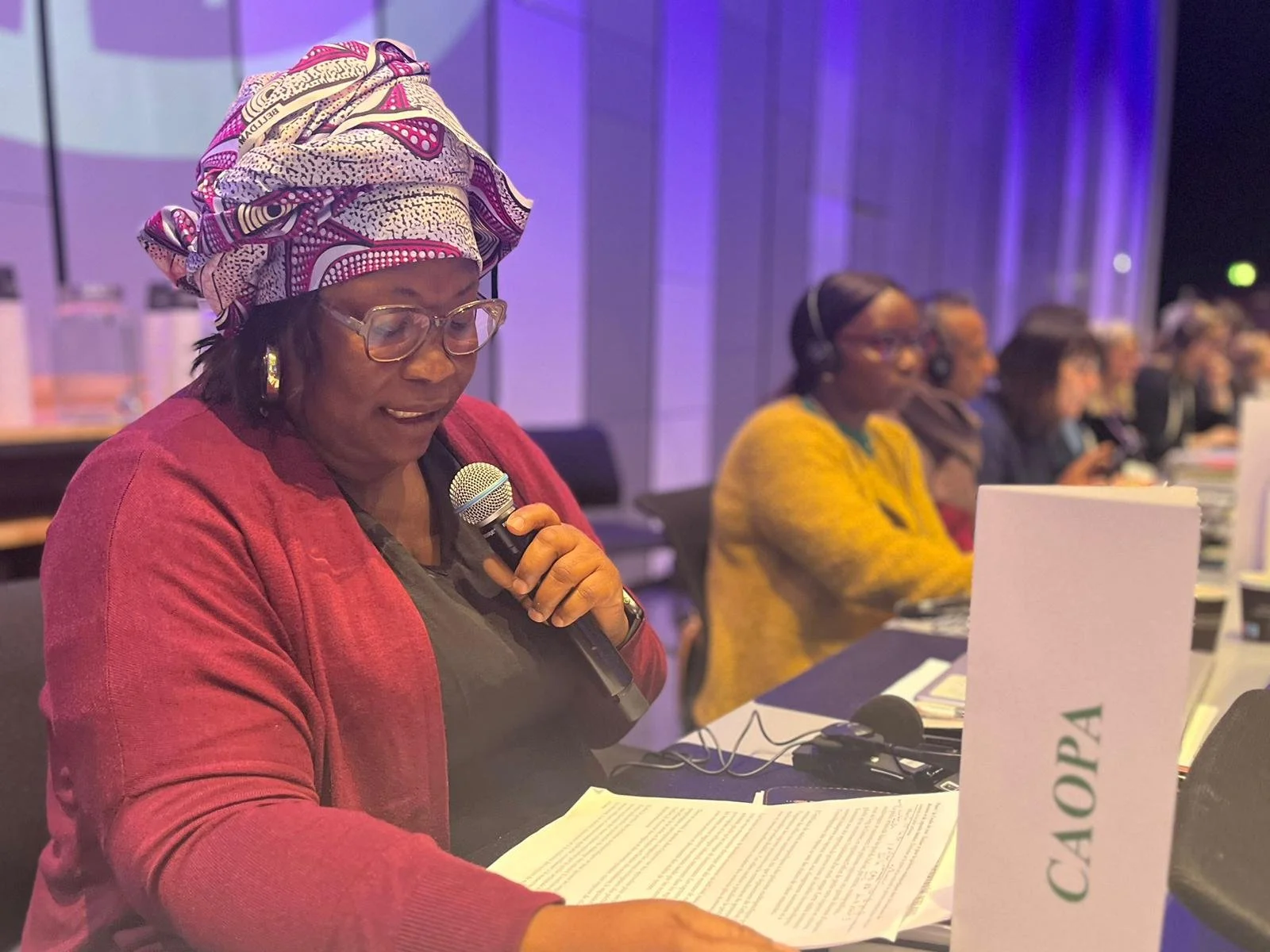
“Multispecies management cannot ignore the impacts of industrial fleets, particularly non-selective trawling. The spatial exclusion of industrial vessels from inshore small-scale fishing grounds is an effective (…) measure that supports biodiversity conservation, food security and the resilience of coastal livelihoods.” Photo: Raïssa Madou at the Second session of the FAO Subcommittee on Fisheries Management, by Margaux Rochefort.
These practices are often grounded in traditional knowledge passed down through generations, enabling communities to manage the ecosystems on which they rely sustainably. However, as Gaoussou Gueye, President of CAOPA, emphasised, “Recognition of these contributions must be translated into concrete political commitments, particularly through legal, budgetary, and institutional measures that integrate small-scale fisheries management into formal fisheries governance rather than treating it as a voluntary contribution.”
When small-scale fisheries communities are actively involved in resource governance – participating in management and monitoring of fishing areas, often through co-management systems with local authorities and organisations – they strengthen ecosystem protection and affirm their role as true guardians of aquatic biodiversity.
The FAO has acknowledged these contributions, underscoring the need for policy reforms that secure land and access rights, establish participatory monitoring systems, and provide direct funding for local initiatives.
How should multi-species fisheries be managed?
Small-scale fisheries in the Global South exploit a diverse range of species throughout the year, adapting their techniques to local conditions and seasonal cycles. Raïssa Madou, a fish processor and CAOPA representative, highlighted that this versatility –multi-species, multi-gear, and seasonal – helps distribute fishing pressure across different species and periods.
“Regional management must move beyond coordination towards joint decision-making on conservation, fishing capacity and access allocation, grounded in the precautionary principle. Harmonised regional standards are essential to prevent regulatory fragmentation and the exploitation of weaker national regimes, particularly by industrial fleets.””
Many existing fisheries management frameworks, however, were designed for industrial fisheries targeting a single species. Applied to tropical artisanal fisheries, these models often fall short. Effective management of multi-species fisheries requires participatory approaches that integrate local knowledge, regulate fishing effort, promote gear selectivity, and establish spatial protections for artisanal fishing areas.
Years of underinvestment in research and applied science have left monitoring systems for multi-species fisheries largely inadequate. As Ms. Madou noted, “Science that is too often centralised and detached from local realities struggles to capture the complexity of these ecosystems.” In response, the Subcommittee urged the FAO to prioritise long-term technical support for multi-species and multi-gear fisheries, promoting innovative, region-specific management approaches focused on sustainable resource use and strengthening national capacity.
Access agreements designed to prevent fleet overcapacity
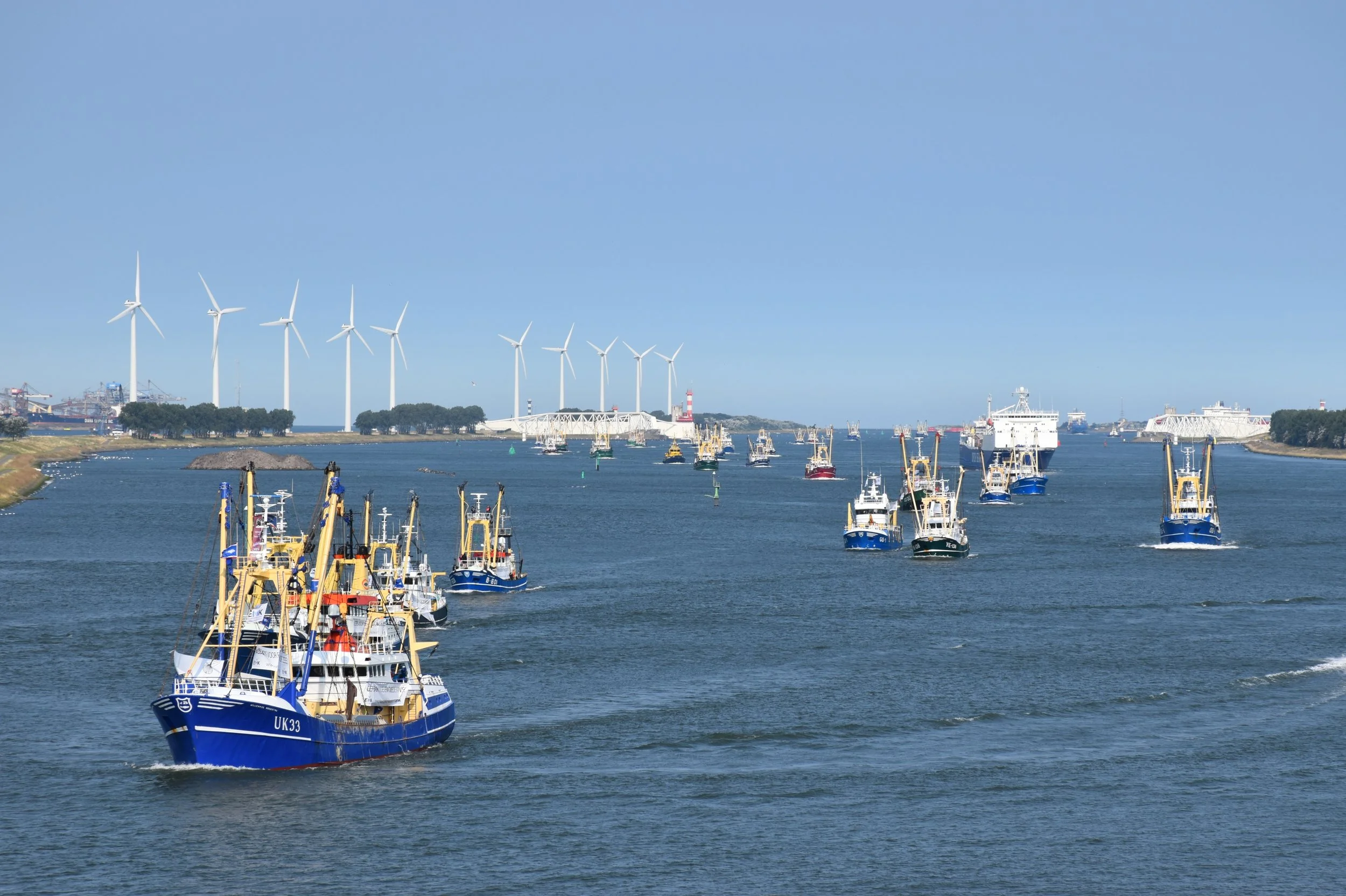
Sustainable resource use also requires better-calibrated access agreements for industrial fleets. Gaoussou Gueye, President of CAOPA, highlighted the risks that fleet overcapacity poses to oceans and coastal communities. Across Africa and other regions, millions of artisanal fishers and women working in the fish processing sector face threats to their livelihoods from foreign industrial fleets. Poorly structured access agreements exacerbate overexploitation of stocks and weaken ecosystems.
Decisions on resource access directly affect who can fish and where, with immediate implications for local food security. When industrial fleets operate in coastal areas traditionally used by small-scale fisheries, they divert fish away from local markets and undermine entire industries.
To restore balance, Mr. Gueye advocates rethinking access agreements by emphasising transparent stock assessments, protection of breeding grounds and landing sites, and prioritisation of food security. The involvement of coastal communities – particularly women, who constitute the majority of the post-harvest workforce – alongside rigorous monitoring, is key to ensuring that industrial fishing does not supplant local actors.
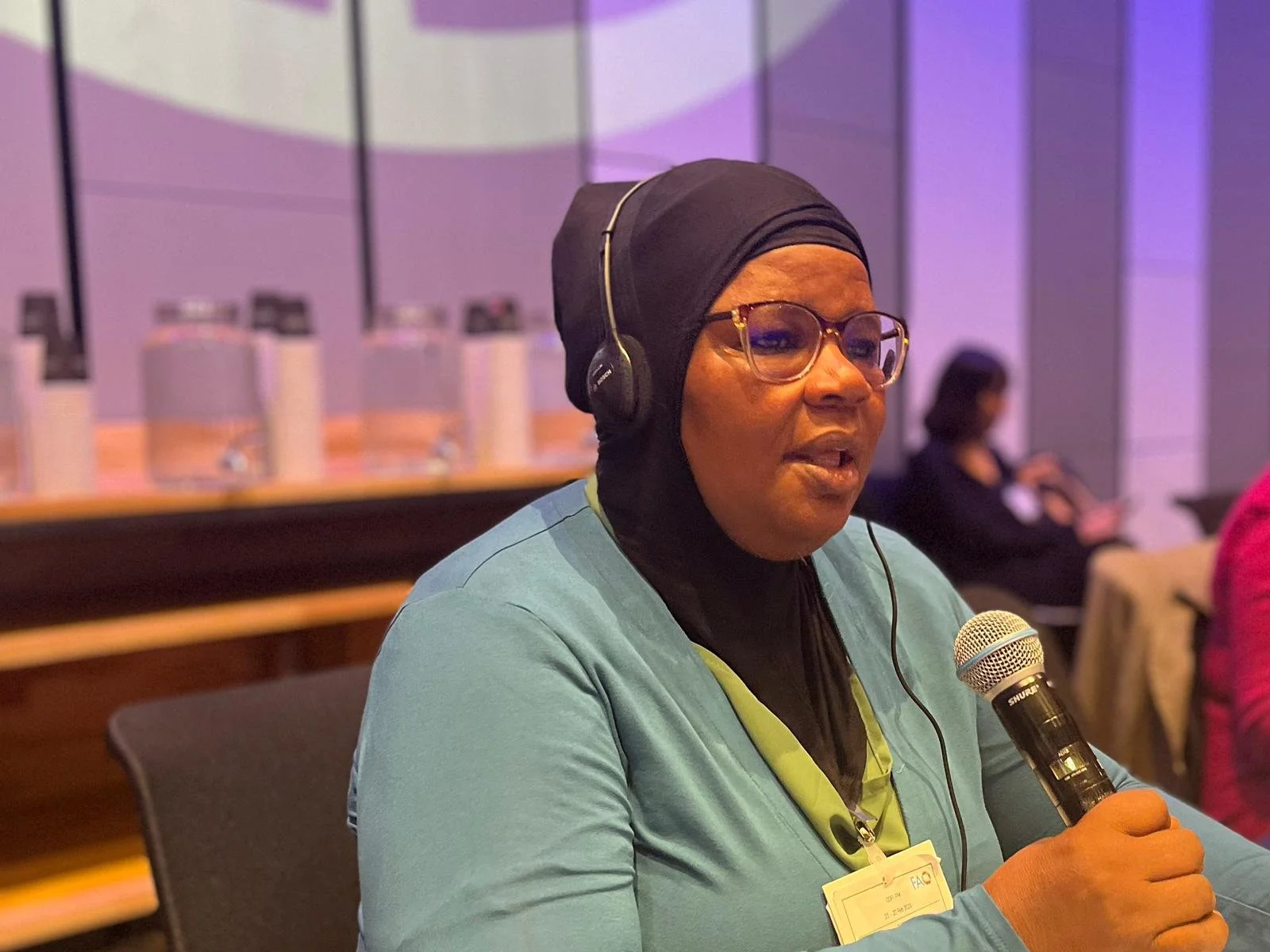
“Access arrangements should be conditional on precautionary and transparent assessments of fish stocks and should prioritise local food security and small-scale fisheries. Spatial and temporal provisions must protect artisanal fishing grounds, spawning areas and post-harvest spaces, reducing conflicts and safeguarding women’s livelihoods.” Photo: Mercy Mghanga at the Second session of the FAO Subcommittee on Fisheries Management, by Margaux Rochefort.
The Subcommittee also strongly encouraged FAO members to upload and regularly update fleet information in the global fishing vessel register, including details on beneficial ownership, to improve capacity monitoring and transparency. Implementation will vary by country, but FAO’s work on access agreements must continue and intensify to ensure that all such agreements are truly sustainable and equitable for coastal communities and ecosystems.
Integrating social considerations into fisheries management to protect food security
The UN Special Rapporteur on the right to food has emphasised that hunger is not caused by a lack of food, but by political and economic choices that marginalise small-scale producers, including artisanal fishers. Mercy Mghanga, Vice-President of CAOPA, stressed that small-scale fisheries are a cornerstone of food security for African coastal communities. They provide livelihoods for families with limited economic alternatives and supply essential protein and micronutrients to low-income populations who rely on affordable fish, such as small pelagic species.
Policies governing access to resources must prioritise artisanal fisheries for local consumption, ensuring that fish remains available to nearby communities rather than being diverted to export markets or distant value chains. Moreover, spatial or seasonal closures should never compromise the food security of dependent communities. Such measures must be co-designed with local populations and accompanied by compensation and social protection mechanisms, particularly to safeguard the incomes and nutrition of women fish processors and traders.
Towards regional management of small pelagic species in West Africa?
The week concluded with a discussion on regional management, a pressing issue in West Africa. Small pelagic fish, such as sardinella, horse mackerel, and mackerel, are the primary source of animal protein for millions of people in the region. Their overexploitation represents not only an ecological concern but also a critical food security challenge.
“Management decisions should prioritise small-scale fisheries that produce fish for human consumption, secure community access and tenure rights, and promote co-management with the effective participation of fishers’ and women’s organisations.””
For Gaoussou Gueye, this underscores the urgent need for effective regional management. Because these stocks are shared across neighboring countries, sustainable management cannot rely on fragmented national approaches. Unilateral decisions on fishing effort, closed seasons, or access in one country are often undermined by pressure in adjacent waters. Regional authorities must therefore work to reduce regulatory fragmentation and harmonise standards – particularly regarding access and operating conditions – to achieve both social and conservation objectives.
Effective regional management also requires recognising small-scale fisheries organisations as key players in participatory and inclusive co-management. Their knowledge and experience are vital for understanding fisheries dynamics and addressing cross-border compliance challenges. In this context, cross-border fishers’ committees represent a concrete mechanism for participatory management of small pelagic species, provided they are formally integrated into regional decision-making bodies rather than serving solely in an advisory role.
Conclusion
During the meeting, CAOPA and its partners emphasised that sustainable fisheries management cannot be achieved without fully recognising the role of small-scale fishers in resource governance. For African small-scale fisheries organisations, the next challenge is to translate these international discussions into concrete policies: protecting coastal areas, prioritising local markets, formally recognising community rights, and ensuring the effective participation of fishers’ organisations in decision-making.
Amid growing pressure on the oceans, this meeting underscored that the sustainability of fisheries depends not only on policies and institutions but also on the knowledge, practices, and stewardship of local communities.
Click on the image to read the full statement, along with the list of signatories.
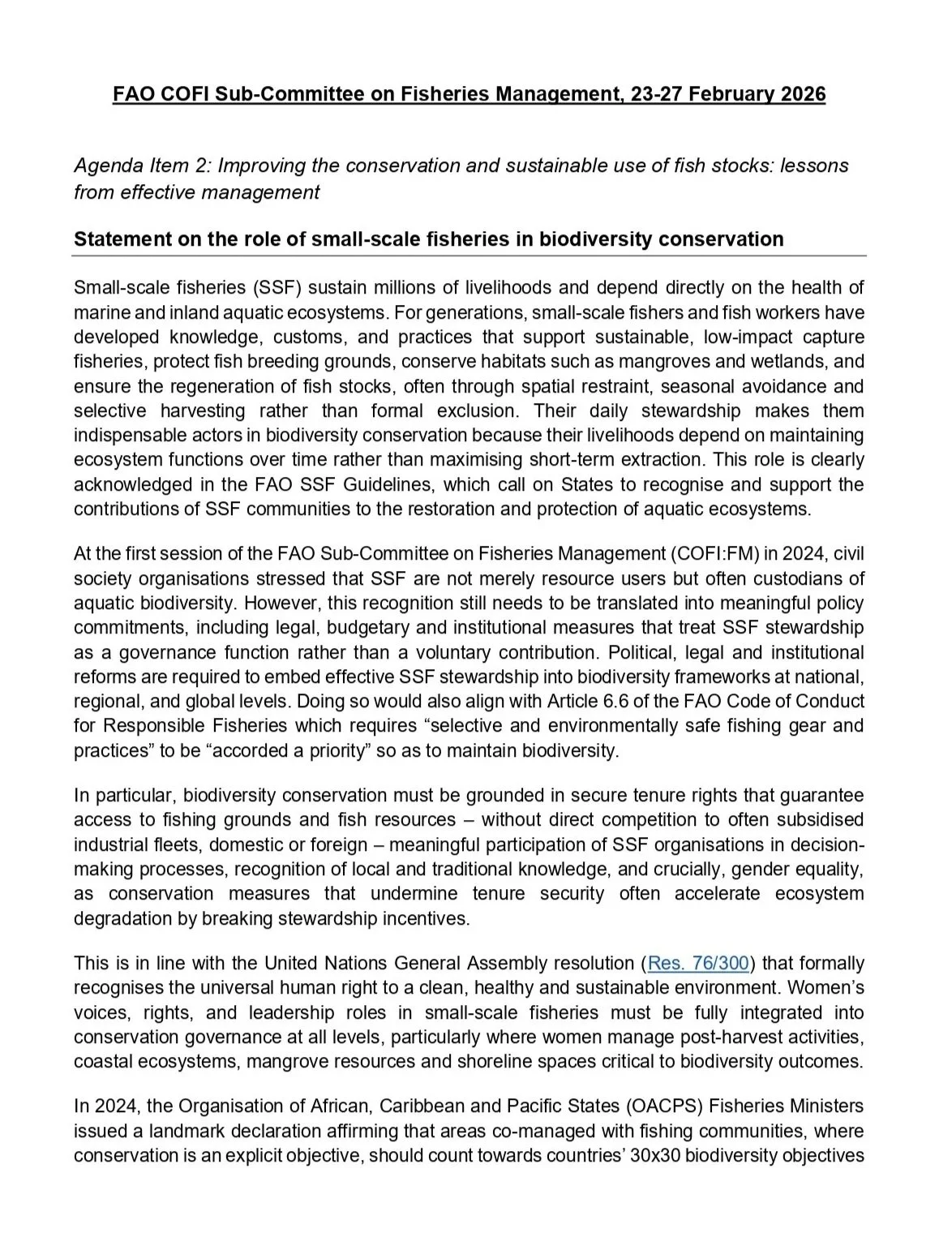
Statement on the role of small-scale fisheries in biodivesity conservation.
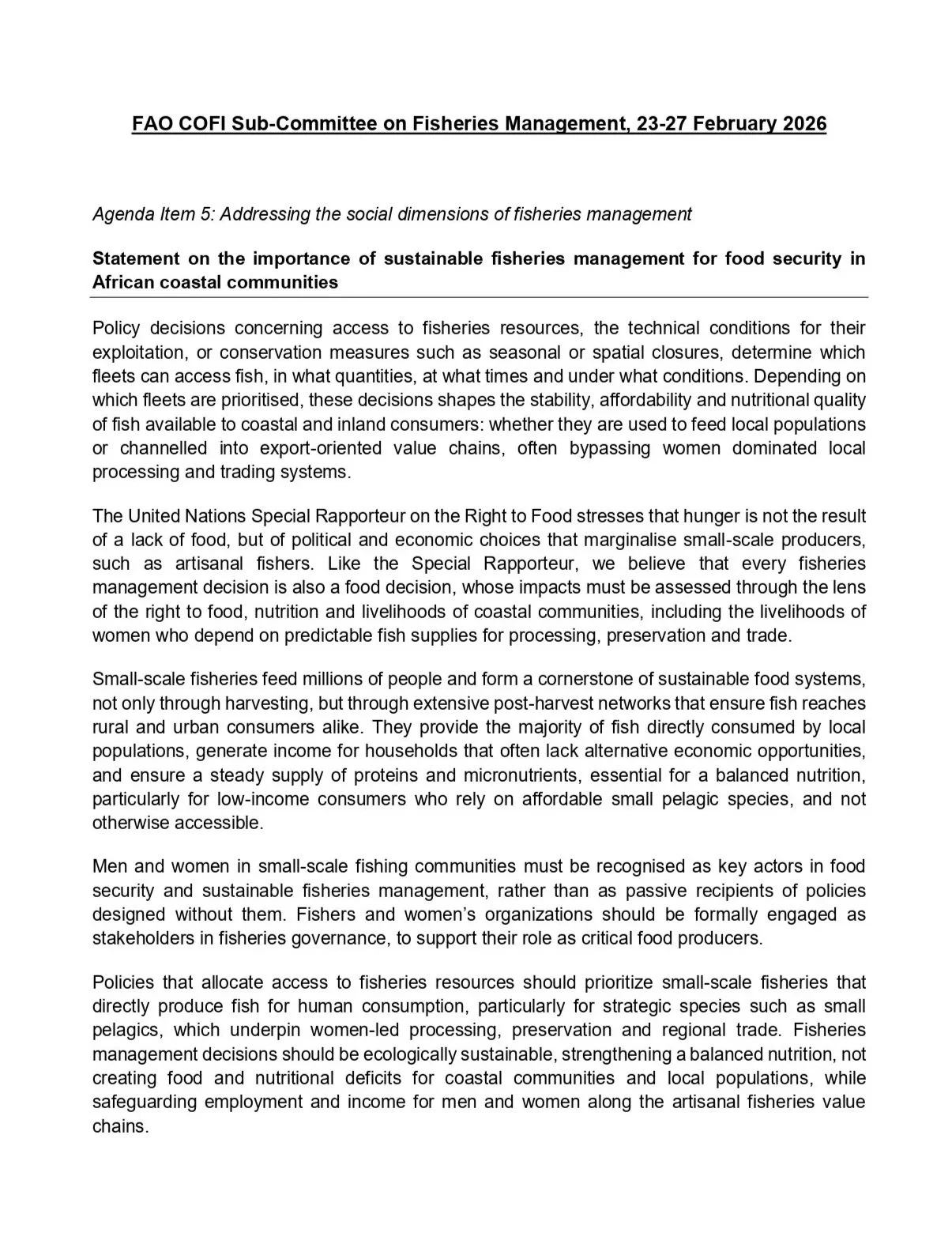
Statement on the importance of sustainable fisheries management for food security in coastal communities.
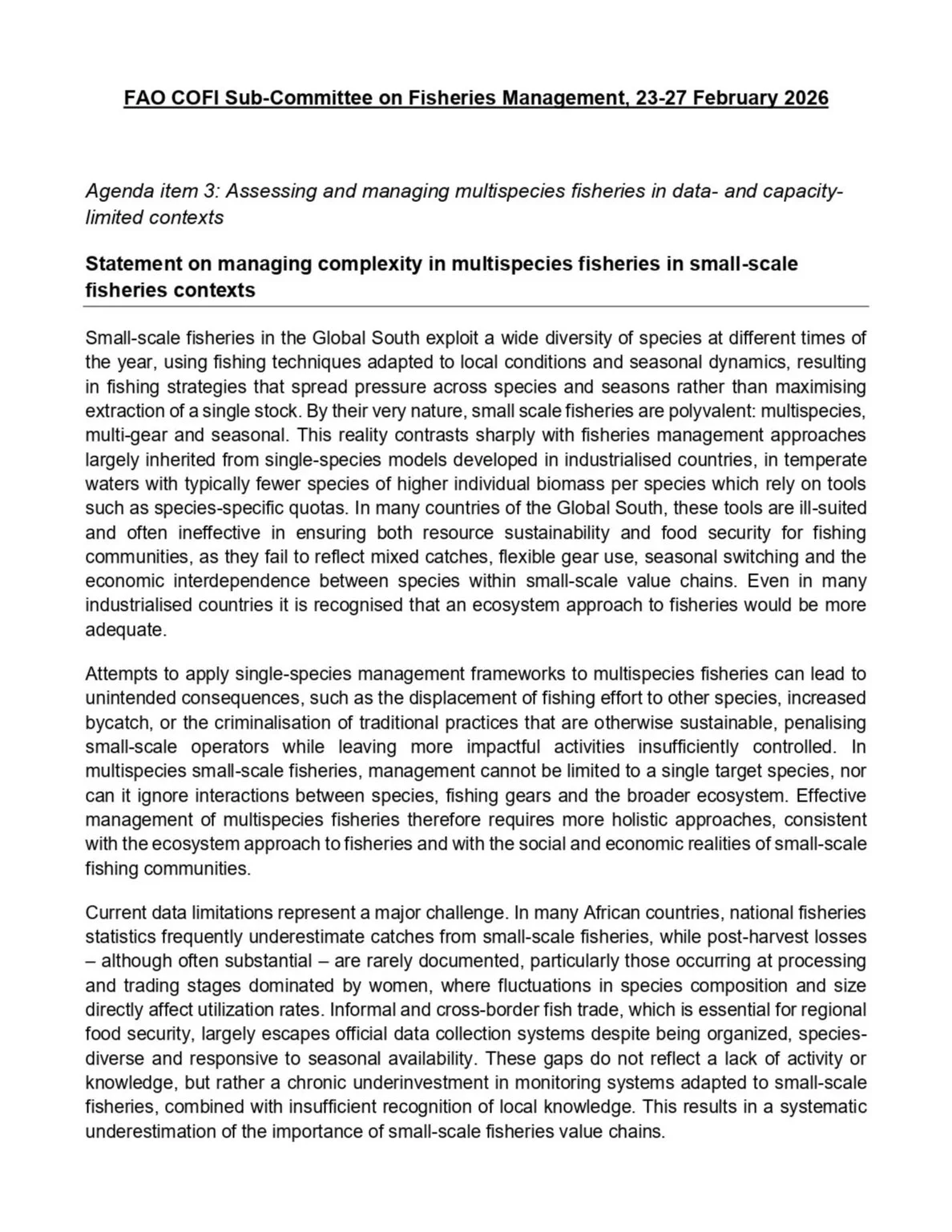
Statement on managing multispecies fisheries in small-scale fisheries context.
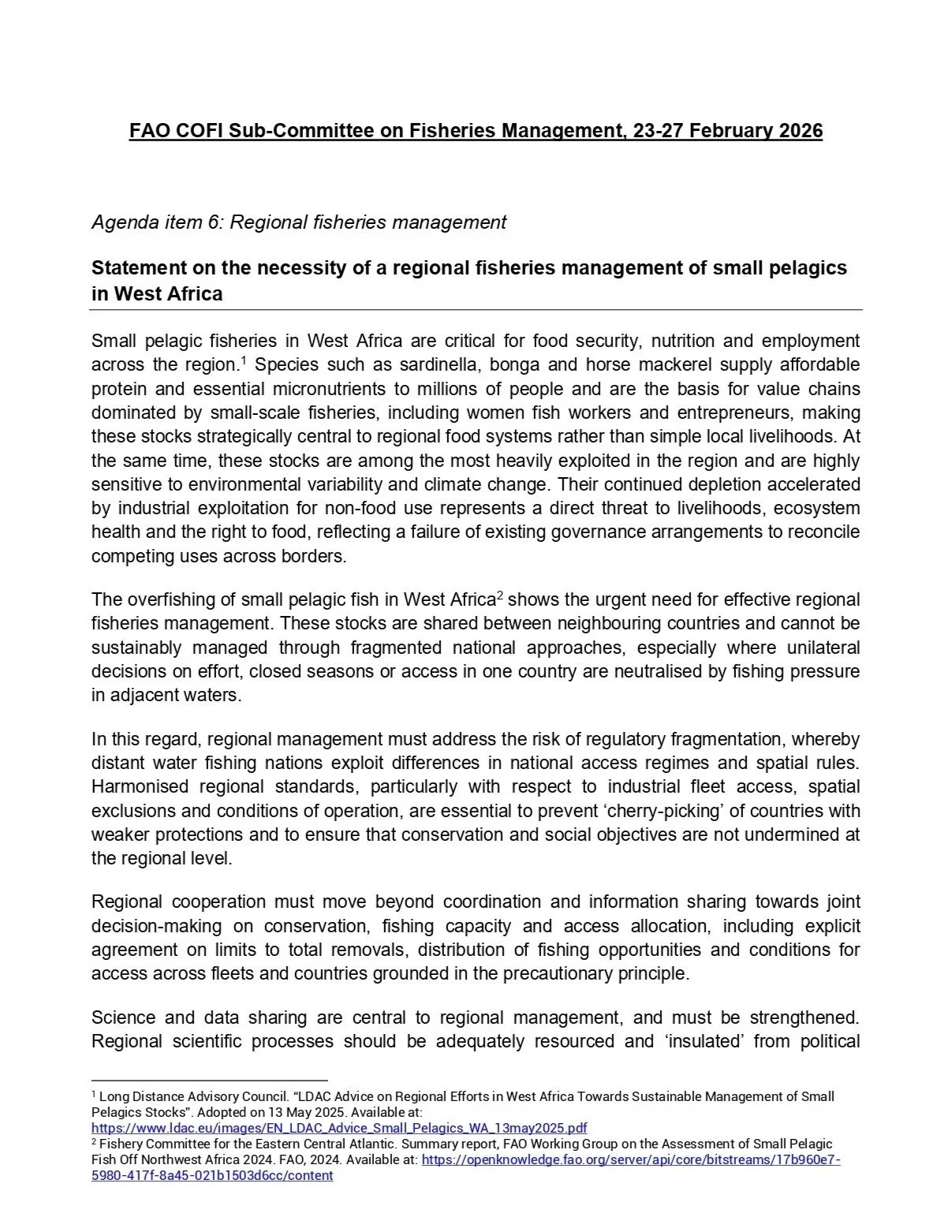
Statement on the necessity of regional mangement of small pelagics in West Africa.
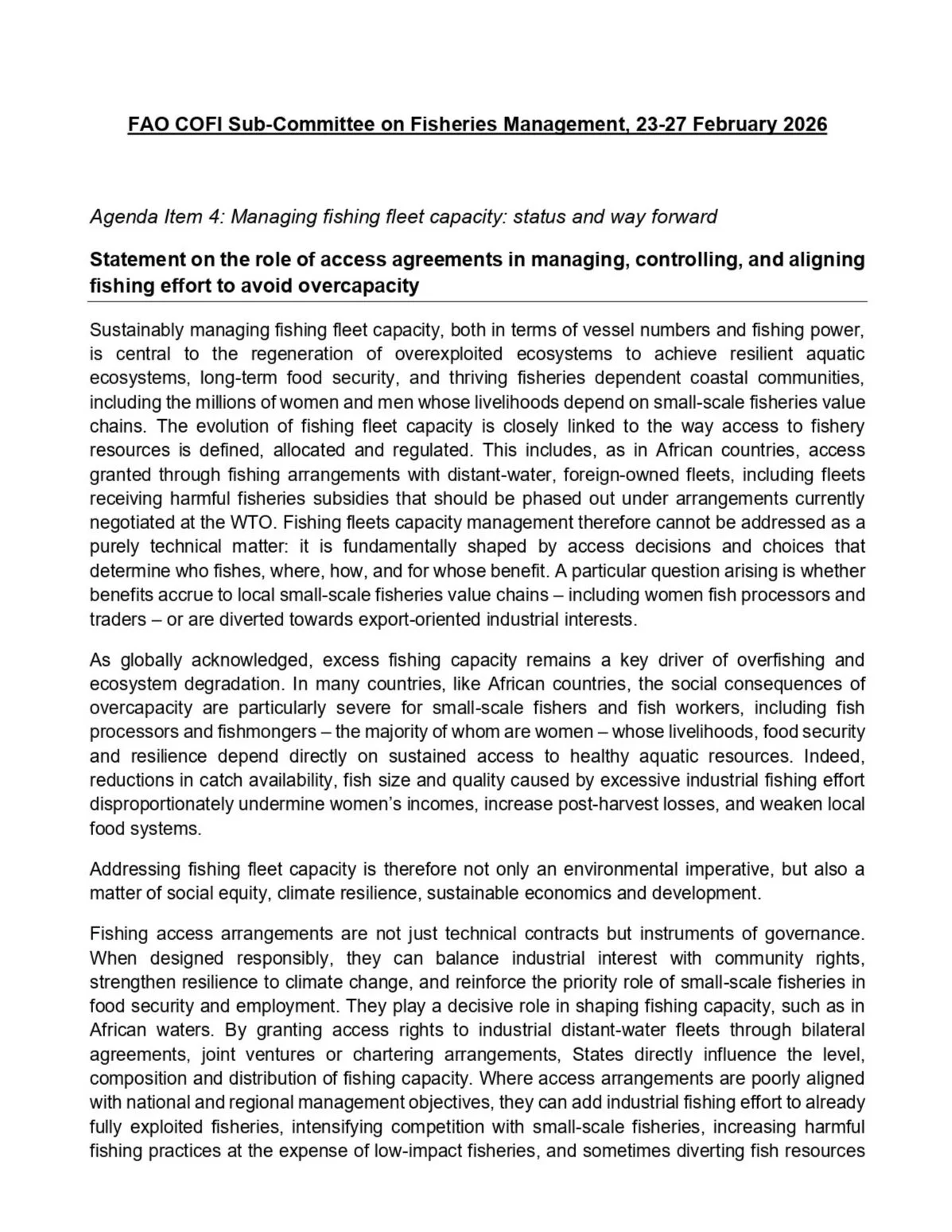
Statement on the role of access arrangements in managing fishing effort to avoid overcapacity.
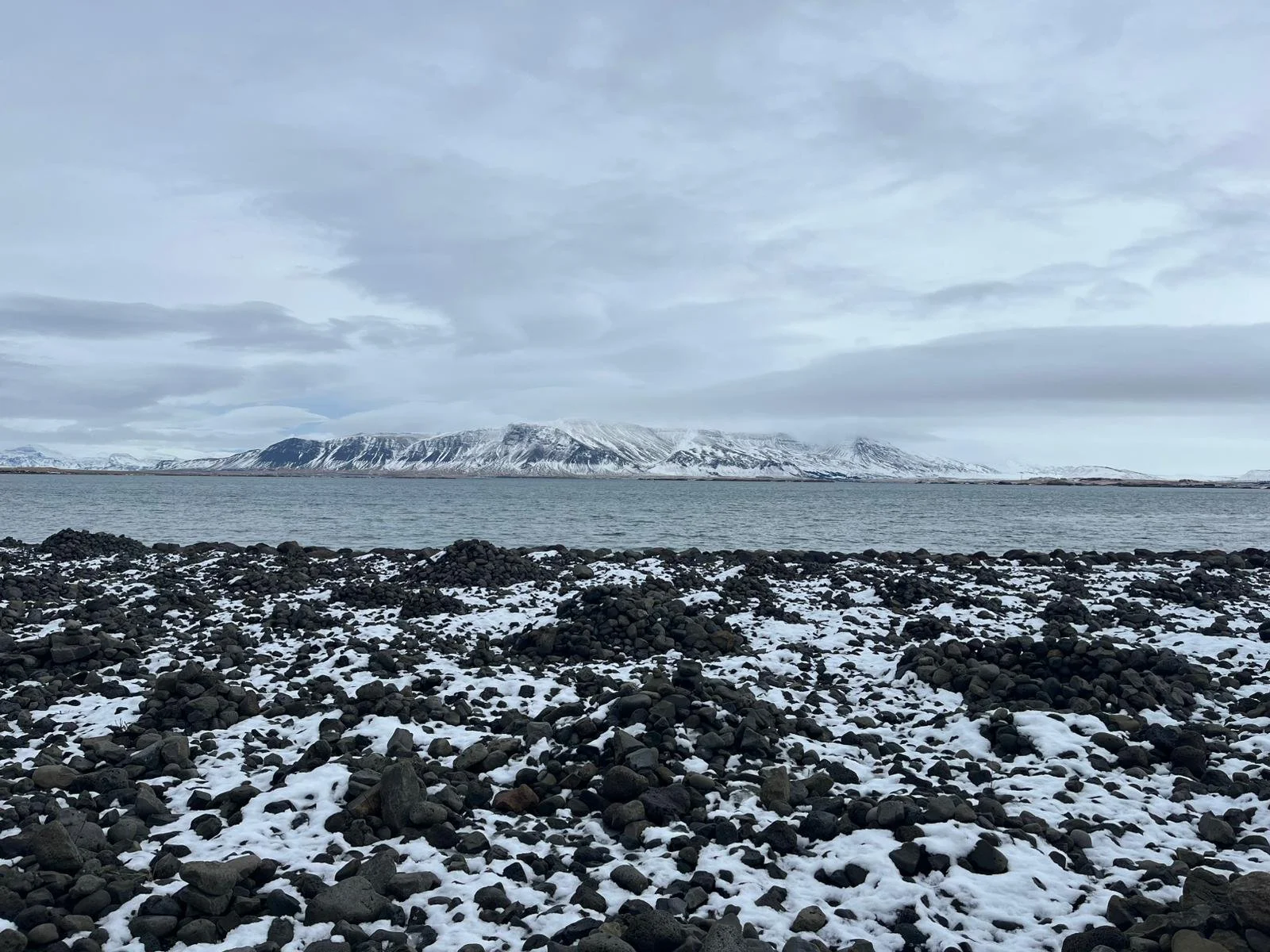
Banner photo: Faxa Bay, facing Reykjavik port, in Iceland, by Margaux Rochefort.
Ten reconnaissance licences for offshore gold mining were granted in February 2026 in Ghana’s territorial waters and are facing strong opposition from fisheries stakeholders. The company’s published map overlaps with the Inshore Exclusion Zone (IEZ), an area reserved for small-scale fisheries.