conservation finance series #8
Building on our series on Conservation Finance, this article focuses on the lack of public consultation that characterises debt-for-nature swaps. US environmental organisations have come under intense criticism over this, particularly from stakeholders in countries most affected by these transactions, including small-scale fishing communities. In what might have been a response to these complaints, US environmental organisations produced “practice standards”for debt swaps in 2025. These were presented as conforming to a human rights-based approach respecting the free, prior and informed consent of Indigenous Peoples and other rights-holders. However, these standards insist that anyone included in discussions about these deals before they are finalised sign a Non-Disclosure Agreement (NDA). This is incompatible with a human-rights-based approach.
This paper explains the flawed reasoning behind the NDA clauses in the “practice standards”. It argues that Southern countries should reject them. Instead, public debate needs to start at an early stage on whether debt swaps are an appropriate strategy and, if so, how they should be designed, and this must allow for independent consultation with affected communities. An argument could be made for certain financial information to be temporarily restricted from public disclosure when these deals are being brokered. Nevertheless, a clear distinction should be drawn between this type of information, and information regarding proposals on national policies and the use of public funds. Organisations selling debt swaps to Southern countries must therefore be subject to rigorous public scrutiny, and there must be credible systems of consultation for small-scale fishing communities. A case study from Kenya helps to set the scene.
Reading time: 23 minutes
Introduction
A. ANOTHER LEGAL CASE AGAINST DEBT SWAPS IN KENYA
In April 2024, members of the African Sovereign Debt Justice Network filed a complaint against the Kenyan government at the East African Court of Justice. The case centred on the lack of transparency and public participation in the negotiation of debt swaps that were rumoured to be taking place at the time—a debt-for-food swap involving the World Food Programme and a debt-for-nature swap involving The Nature Conservancy. They argued that the lack of public information and consultation was contrary not only to Kenyan law, but also to the East African Community Treaty. In its response to the case, submitted on 31st of May 2024, the Kenyan Attorney General stated that the government had not begun discussing these deals with financial advisors or foreign creditors.
Since then, the Kenyan government has gone further with these debt swaps, presented as one of the tactics to address an escalating debt crisis in the country. Although this crisis is similar to many other African countries, Kenya is facing one of the worst debt crises on the continent. In 2012, when Kenya’s public debt was about USD10 billion, debt repayments accounted for around 10% of government revenues. By 2025, Kenya’s debt had risen to over $90 billion, and debt repayments accounted for 70% of public revenues. This has caused harsh cuts to public services and deeply unpopular proposals for tax increases.
In early 2024—and seemingly contradicting what the government had claimed in its response to the lawsuit—the Kenyan government concluded a bilateral swap with the German government. A press release by the German government, which called this a ‘debt-to-climate’ swap, described that the deal would commit the Kenyan government to spending $60 million on geothermal energy production. Once this has happened, the same amount will be wiped off the debt owed to Germany. There is no contract for this deal in the public domain.
Then, in late 2025, during his visit to the White House to meet with Donald Trump, Kenyan President William Ruto thanked the Development Finance Corporation (DFC) for agreeing to facilitate the debt-for-food swap, valued at about $1 billion. This deal, unlike the German one, involves commercial debt Kenya owes to international creditors, raised through the issuing of Eurobonds. The role of the DFC is to provide political risk assurance to help Kenya borrow money to finance a debt buyback at a lower interest rate than it otherwise could. That is critical as Kenya’s sovereign credit rating has deteriorated, meaning foreign creditors demand high interest rates for lending money to the Kenyan government. Government statements in Kenya have also referred to another ‘debt-for-health’ swap being discussed with the DFC and the Global Fund for Aids, Malaria, and Tuberculosis.
““Although the African Sovereign Debt Justice Network brought a case before the East African Court of Justice in April 2024 to challenge the lack of transparency surrounding debt-swaps in Kenya, the government initially denied that any negotiations were underway and later proceeded to conclude several agreements.””
In an interview with Ademola Ajagbe, published in March 2026, the regional head of TNC in East Africa confirmed that TNC was also close to finalising the debt-for-nature swap in Kenya, with the deal expected by the middle of the year. It was part of three deals TNC is working on in Africa, with a combined value of approximately half a billion dollars. The other two countries were Angola and Gabon. TNC has been keeping details of these swaps close to its chest; it is not yet public whether its deal in Kenya targets ocean conservation, like many of the other TNC debt swaps, or something else.
The lawsuit brought by the African Sovereign Debt Justice Network is therefore vindicated: so far, there has yet to be public access to information on these deals, and no opportunities for public debate about what exactly is being swapped and for how much.
B. A CONSISTENT AND GROWING PROBLEM…
As CFFA has documented, what is happening in Kenya is consistent with other countries. Parties to debt swaps negotiate and conclude these deals without public engagement, and usually without the involvement of parliamentarians, either. They only see the contracts after they have been signed. The legal complaint brought by civil society in Kenya is similar to the one brought by activists in Ecuador regarding the lack of transparency and public participation in the debt swap for marine conservation in the Galapagos Islands.
There are many reasons why debt swaps ought to be subject to careful public debate and government accountability. Kenya, as with many other countries engaging in debt swaps, has a dire track record with corruption when it comes to raising debt from foreign and domestic creditors; a problem that also implicates international banks and law firms, which facilitated and profited from reckless and exorbitant borrowing, while also being the same institutions that facilitate and profit from commercial debt swaps.
There are wider geopolitical concerns. Kenya’s swaps with the US government came shortly after USAID funds to Kenya, including for health and food security, were abruptly cancelled. Yet new bilateral agreements on health and food support that have replaced USAID support have been widely criticised for advancing US corporate interests. How the debt swap agreements relate to this ‘America First’ policy is therefore a matter of public interest.
Public participation is especially relevant for small-scale fishing communities given what governments agree to in these deals. Some of the largest debt swaps over the past few years have targeted ocean conservation. The contracts of these agreements include obligations for Southern countries to create marine protected areas that can exclude small-scale fishers from their traditional fishing grounds. They also include other obligations on how fisheries are managed, as well as plans for other blue sectors, such as aquaculture and carbon markets, which also impact the activities of small-scale fishers.
“In contexts marked by high levels of debt and corruption, a lack of transparency tends to favour private and foreign interests at the expense of the public interest. This is particularly concerning when such agreements affect essential sectors and shift decision-making power away from public authorities.””
The contracts of these deals last up to 15 years and include financial penalties for non-compliance by the government. They also establish a permanent new non-governmental organisation in countries that administer millions of dollars, often much more than the national government provides to public authorities responsible for these sectors. Foreign environmental NGOs control these new organisations, and appoint their board of directors. Yet questions remain about who these organisations are actually accountable to and how they ensure adequate voice for fishers.
Debt swaps, therefore, leverage the distressed debts of Southern countries to achieve a substantial transfer of money and decision-making away from public authorities. This makes them critical for public scrutiny. It is an issue that will become amplified as debt swaps proliferate. In fact, as we see in Kenya, multiple foreign organisations are attempting to strike a deal with the government to get a debt swap for themselves. Amidst this growing and competitive market, those instigating debt swap transactions appear stubbornly incapable of adhering to the principles of aid effectiveness agreed over the past few decades, as well as to the substantial efforts to increase transparency and accountability in debt markets.
So, why are debt swaps so resistant to public accountability? This paper argues that confidentiality is not merely incidental to these transactions: it is a deliberate design element based on the idea that this is a necessary condition for efficient debt restructuring. But do these arguments hold up to scrutiny?
1. “Practice standards” for managing debt swaps and the role of NDAs
A justification for preventing public consultation is provided in a ”practice standard” for swaps published last year. This was produced by a group of US conservation organisations led by TNC, with the support of partner organisations in the financial sector. These standards—which are not restricted to conservation deals but apply to all types of swaps targeting other development and climate goals—were most likely generated in response to growing criticism of these deals. It is hard not to read them as predominantly for public relations.
The resulting practice standards are underwhelming, leaving key issues unresolved and treating all of the recommendations as optional. Their weakness is partly explained by the total lack of input from experts or civil society organisations in Southern countries. All 14 organisations represented among the authors of the standards have a financial stake in swap deals, including TNC, which manages billions of dollars in these deals. At the heart of the standards is therefore a conflict of interest.

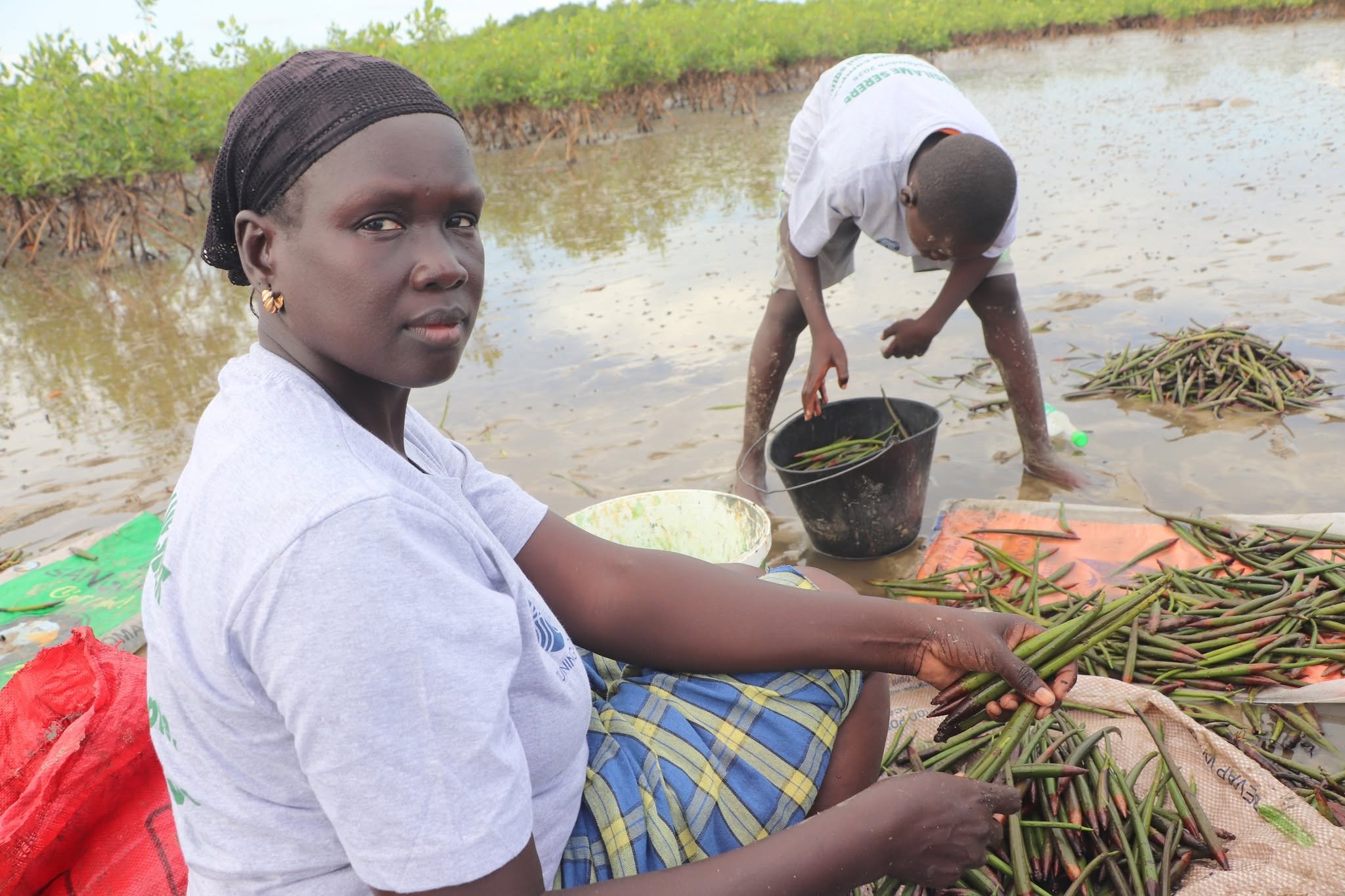
The practice standards developed by 14 environmental NGOs that have a stake in debt-swaps recognise a human-rights-based approach but frame it around the duty of governments, not their own, and fail to propose a real free, prior and informed consent for communities, claiming Non-Disclosure Agreement Clauses are unavoidable. Photo: Mamadou Aliou Diallo/CAOPA.
In conversations CFFA held with TNC end of 2025 to raise our concerns with debt-swaps, TNC announced the upcoming standards were going to respond to most of the criticisms of these deals. However, rather than providing a detailed review of the standards, we are interested here in how they address the complaints raised in cases such as Kenya and Ecuador. What we find is a paradox.
The standards reference a general commitment to the ideals of transparency and free, prior, informed consent (FPIC) and claim to follow a human-rights-based approach, albeit framed predominantly around the duty of governments in these deals, not of other parties:
“The government follows a rights-based approach when planning and implementing the Debt Conversion Project. This approach entails a transparent, inclusive, equitable, evidence-based, knowledge-based, and participatory process that includes Stakeholders and Rightsholders and meets global best practice guidelines.”
This failure to extend the duty of human rights to non-government organisations, including environmental organisations, banks and financial advisors, is a major flaw, and shows a lack of understanding of international human rights frameworks. Nevertheless, if governments in Southern countries followed these principles, then many of the serious criticisms might fall away.
However, when it comes to the details about participatory processes, the “practice standards” state that the negotiations involved in a debt swap are “sensitive” and any public engagement needs to be carefully managed. According to the standards, any organisation included at the pre-financial-close stage must abide by confidentiality:
“Stakeholders and rightsholders may be required to sign non-disclosure Memoranda of Understanding (MOUs) or agreements (NDAs) to enable engagement pre-financial close; and some participatory planning processes, including consultation, may need to happen post-financial close.”
As with so many parts of the “practice standards”, the wording is vague.They do not explain why the negotiation is sensitive nor whether the use of NDAs is mandatory. Nevertheless, the implications for FPIC are serious. Consider a civil society organisation or a small-scale fishing organisation that is invited to participate in deliberations on a debt swap, but on the condition that a representative signs an NDA. That representative would be prohibited from discussing what they had learned with colleagues in their own organisation, let alone with members of the fishing communities themselves. If they strongly opposed the debt swap or its conditions, it is unclear what they could do. They may face criminal sanctions for speaking out.
Although it may be surprising that US conservation organisations are encouraging this approach, the use of NDAs and similar confidentiality MOUs has long been raised in the literature on barriers to FPIC. Human rights organisations have documented many cases where this has been deployed by mining and logging companies as part of their strategies to negotiate land disputes with indigenous peoples. One of the problems with this legal arrangement is that it enables authorities and corporations to dismiss formal complaints that stakeholders have not been consulted. The claim that certain information is commercially sensitive could therefore be used to nullify the lawsuit against debt swaps in Kenya. It is an argument that could be replicated in many other countries: governments may argue they cannot consult the public because they are bound by NDAs.
2. Arguments for the use of NDAs in debt swaps, and why they are unconvincing
To understand the implications for FPIC, it is important to explain why and how NDAs are used in a sovereign bond buyback process.
To recap: a debt-for-nature swap, or a debt-for-food swap, is a transaction where a government offers to buy back debt from commercial creditors at a discount. They are transactions that usually happen when the country is in a financial crisis; when its foreign currency bonds are losing value to investors on the secondary market, partly because investors know a default is on the horizon. This buyback is financed through a loan arranged by a foreign organisation that requests something in return. As CFFA has described in other reports, the “something in return” consists of a portion of the money saved for the country, but also other policies and government commitments.
Debt-for-nature swaps are not the only time when a government attempts to buy back bonds from investors. The majority of debt buybacks in Southern countries involve governments using their own foreign exchange reserves or borrowing money without any green or social commitments to creditors. It is becoming an increasingly common strategy among Southern governments as a short-term move to alleviate a debt crisis, although critics regularly characterise these moves as ‘kicking the can down the road’. Over the past few years, there have been at least 10 to 15 buybacks of Eurobonds by Southern country governments each year. The use of NDAs in all of these buy-back schemes is normal.
The justification for confidentiality in the debt buyback process is based on several assumptions. One of these is that it is in the government's interest to keep details of their debt buyback scheme secret. According to this theory, news about a debt buyback can push bond prices up. In financial jargon, this is referred to as “causing a run on bond prices”. The upshot is that as the market price of bonds increases, the government’s ability to get a discount diminishes.
Another reason concerns ‘fairness’. If some people receive information about an imminent debt buyback scheme, they will be in an advantageous position compared to those who do not. Debt buyback schemes provide investors a price for their bonds that is above the price they are selling on secondary markets, but still below the face value. An unscrupulous actor with privileged news of a debt buyback could purchase bonds, knowing that they can turn a quick profit. The NDA is therefore a mechanism to prevent insider trading.
A.HOW DO NDAs WORK?
So how do NDAs work? As soon as governments reach an agreement with their financial advisors about instigating a debt buyback, they create an inner sanctum through NDAs, often depicted in financial literature as a ‘firewall’ for the debt transaction. People in this group are banned from sharing information with outsiders. However, it is also standard practice for this group to approach some bondholders to gather their views on the buyback proposal; this helps gauge market interest and establish a reasonable price to offer bondholders. These investors are also asked to sign an NDA before they receive further details, and if they accept, they are prohibited from buying or selling notes for the applicable bond.
Usually, a bond buyback is initiated with a formal public tender. This is when the government’s offer to all bondholders is published. At that point, the NDAs cease to apply. The offer to tender is therefore also referred to as a ‘cleansing agreement’.
“While NDAs are justified by the need to prevent access to inside information and, consequently, insider dealing, they effectively deprive civil society of the opportunity to debate the terms of the deal during the decisive phase of the negotiations.””
In short, the assumption is that if NDAs are not used, then there will be market manipulation and opportunities for criminal or unethical behaviour. Surprisingly little has been published on debt swaps that interrogate whether this is true. These concerns are regularly mentioned in the literature on debt swap schemes, giving the impression that NDAs are both an economic and a legal imperative. The practice standards treat the use of NDAs as a matter of fact, as if it is something that does not require any further justification.
The key point for debates about FPIC and debt swaps is that this process of confidentiality – or creating the firewall – prevents the government or others from discussing the terms of the debt swap with civil society. It is only after the ‘cleansing’ takes place that outsiders can be consulted. This contradicts human rights agreements on FPIC that clearly state Indigenous people have to be fully informed prior to a decision being taken, and they must be able to voice their disagreement with the decision.
B. ARE NDAs LEGALLY REQUIRED?
Laws governing the disclosure of information do apply to debt buybacks. The most relevant are set out in the US Securities and Exchange Commission’s rules and the EU's and the UK’s Market Abuse Regulation, which apply to any bond listed in the US, the EU or the UK. As a result, it seems quite likely that in all of the US conservation organisations' commercial debt swaps, a small group, including itself, investment banks, law firms, and government authorities, has signed an NDA because this complies with the legal norms where the bond is registered. One can imagine this is treated as standard procedure.
However, these laws do not prohibit governments from disclosing information about debt buybacks. They are designed to regulate the misuse of ‘material non-public information’, not to require sovereign issuers to keep proposed buybacks secret. In fact, these laws explicitly exempt sovereign issuers from their core disclosure and trading restrictions when conducting public debt management operations.
Furthermore, the use of NDAs in public debt restructuring creates a serious legal quandary, particularly in countries where parliament has the constitutional authority to approve new debt liabilities. This means there can be a separate legal obligation for governments to disclose information about proposed public debt transactions before they take place.
Reports on how governments navigate this legal paradox are not abundant. Almost all of the literature on this issue examines the legal requirements facing governments after debt tenders have been brought to the market, not in the pre-financial close period. Nevertheless, there are technical guidelines on the options, such as those provided by the IMF. One of these options is for the government to establish confidential parliamentary meetings, similar to how parliament is engaged on other matters of national secrecy. Another option is for parliament to approve a framework for debt buybacks that the government must abide by. This means parliament is not aware of the precise financial details before the formal tender is issued, but it has consented to the overall principle of the deal and may have agreed to a ceiling on how much the government can spend.

Laws governing disclosure of information were designed to regulate the misuse of ‘material non-public information’, not to require governments to keep proposed debt-swaps secret. In fact, some laws expressly exempt governments from certain disclosure restrictions when conducting public debt management operations. Photo: Mamdou Aliou Diallo/CAOPA.
In many countries, parliament is not consulted, and governments therefore proceed with debt buybacks that contradict national laws or constitutions. Beyond our examples of debt swaps for nature, prominent examples include a $1 billion debt buyback of distressed Eurobonds in Argentina in 2023 that lacked parliamentary approval. The same is true for the $1.5 billion debt buyback in Kenya initiated in 2024, which was unrelated to any green or developmental goal. What we see in these cases is that, even in countries where there is a legal imperative for consultation with parliament or the general public about debt transactions, these are ignored and usually with no meaningful sanctions.
C. ARE Ndas CONSISTENTLY APPLIED?
Empirical evidence suggests the image of a firewall created around a select group of people bound by NDAs is fundamentally misleading. Leaks happen routinely, and there is little evidence that NDAs associated with debt buybacks in developing countries are ever enforced.
A fairly common observation, going back decades, is that bond prices start to climb before the government issues formal tenders—indicating that investors are already in the know. A comprehensive study of sovereign debt repurchasing across 65 countries from 1988 to 2012 found evidence of information leakage ahead of official announcements, with bond price movements occurring before public disclosure.
As information is systematically leaked in these situations, it is also relevant to consider the behaviours of conservation organisations regarding debt swaps. As we see in countries like Kenya, TNC gives media interviews about upcoming debt buybacks, including the predicted amounts involved. It is hard to see how this would be permitted if NDAs were strictly enforced.
“It is unclear whether staff of organisations involved in debt swaps are subject to the same confidentiality obligations as the civil society in the countries concerned. However, the risk of sensitive information being disclosed to investors appears to be greater within those organisations.””
It is also possible that knowledge of debt buybacks arranged by US conservation organisations is widely known among investors and financial institutions well before a formal tender is issued. One reason is that investors and financial institutions serve on the governing boards of US conservation organisations. In the case of TNC, its dedicated debt-swap programme, NatureVest, is a collaboration with JPMorgan, a bank that both owns and helps issue sovereign bonds in Southern countries, including in Kenya. These debt swaps are also negotiated with the support of the US government and multilateral development banks. The networks of people who know about the deals are extensive.
Given this situation, it is unclear if TNC staff are required to sign the same NDAs they propose for civil society in countries where the debt swaps take place, or how seriously they take them. This is not covered in their practice standards. However, they are far more at risk of leaking sensitive information to investors than African fishing communities
D. ARE THERE OTHER REASONS FOR NDAs?
The logic for using NDAs in debt buybacks is questionable. If insider dealing is a genuine concern, it is unclear whether a secretive transaction governed by NDAs is preferable to choosing absolute transparency from the outset. If information is widely known, then no one has the opportunity to benefit from it exclusively.
Transparency International, in its report on corruption in the public debt cycle, argues that confidentiality is likely a contributing factor in enabling corruption rather than an impediment to it. Indeed, the greater cause of insider dealing is the lack of public disclosure of bond note trades, including information on the beneficial owners of legal entities and the involvement of politically exposed persons. But this information is either actively hidden by governments who consider it commercially sensitive information, or it is not collated by regulators at all.
Likewise, the logic that information about a debt buyback must be kept a guarded secret to prevent adverse fluctuations in the value of government bonds is hard to understand. It would make some sense if investors were prevented from trading bonds when news of the debt buyback is released, but that is not what happens. They are allowed to trade their bonds after the tender is announced.
Governments use differing time frames for this process: the tender period in a buyback on Eurobonds in Kenya was just one week, whereas it was approximately three weeks in Gabon when bondholders were presented with the terms of the buyback for the debt-for-ocean swap. But even when the tender is presented for an accelerated decision by bondholders, market fluctuations happen anyway. In El Salvador, for example, a formal tender for a debt buyback scheme was launched in September 2022, and within 48 hours, the price of bond notes on secondary markets shot up by 40%. Similar jumps in the value of bond notes on secondary markets are reported for almost all of the debt buybacks linked to nature deals. So, the evidence suggests the use of NDAs cannot be justified for avoiding a run on bond prices.
There are other possible explanations for why parties to debt swaps would prefer to use NDAs, which seem more plausible than the standard arguments about market manipulation or insider dealing.
One outcome of a secretive approach to negotiating debt swaps is that it prevents these transactions from being slowed down by lengthy meetings with NGOs and parliamentarians, while also delaying adverse publicity. The secretive approach, based on the use of NDAs, might therefore help manage political fallout and ensure that negotiations run as smoothly as possible.
Given the prospect that debt swaps might become a more crowded market, NDAs will prove useful in warding off competitors seeking to trade a country's debt for their own development projects. Under free and open market conditions, a risk for the instigators of debt swaps is that someone else might make a better offer. Why swap public debt for a marine protected area when you could swap it for a national education programme?
In contrast to the fear of public deliberations, we can only wonder what the results would be if debt-for-development swaps were conducted openly and with high transparency. Discussions on what national priorities should be served by debt swaps would take place. It might even be beneficial for African governments for the public to know precisely which investors are refusing the swap offer and holding out for a higher price, despite the swap being used for development or biodiversity conservation. Publicity may get them a better deal.
3. Why NDAs should not prevent free, prior, informed consent
Financial advisors and experts working on debt swaps could disagree with the argument that NDAs are unjustified for protecting the financial interests of developing countries or for preventing insider trading. However, it is important to distinguish between financial information and information regarding policies on how sectors, such as fishing, are managed.
Even if we accept that some detailed information in the financial aspects of the debt buyback should be kept secret before an official tender is launched, this does not prevent instigators of debt swaps from being subject to public scrutiny on the other elements of these deals: how they propose to change public policy and how new funds will be administered. Consultation should not simply consist of informing affected stakeholders of commitments that have already been decided. Fishing communities, and other rights-holders, must have an opportunity to participate meaningfully in shaping these commitments before they are agreed. As it is, the case for confidentiality of financial information is being used to prevent free, prior informed consent on the substance of these deals.
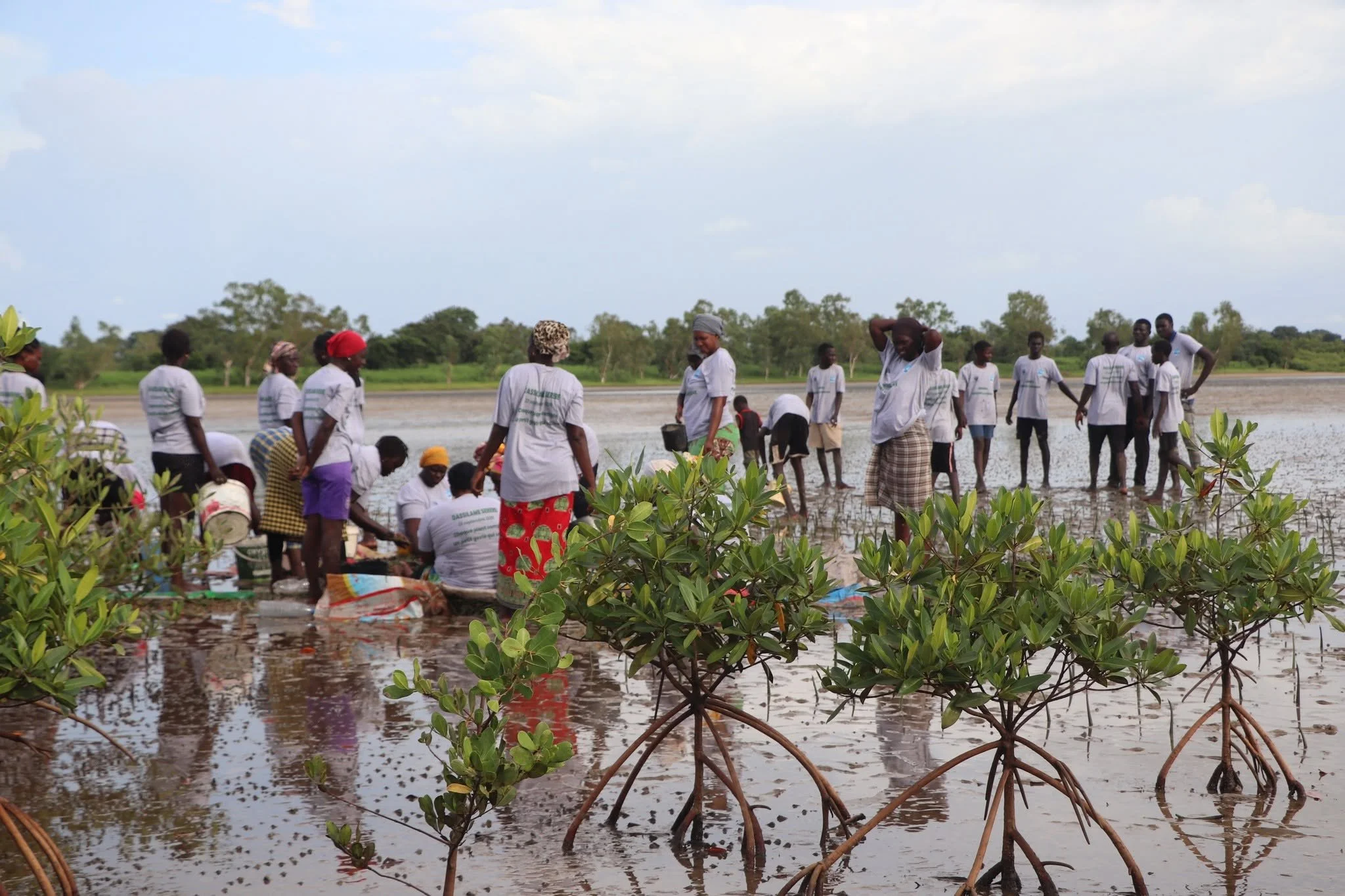
Consultation should not simply consist of informing affected stakeholders of commitments that have already been decided: Fishing communities have a right to free, prior and informed consent regarding the marine conservation and other policy commitments of their governments under debt-for-nature swap deals. Photo: Mamadou Aliou Diallo/CAOPA.
This is a critical distinction. While many stakeholders, such as fishing communities, might be less interested in how much their government is offering bondholders in a debt buyback transaction, they are clearly concerned with what their government is committing to as a quid pro quo regarding marine conservation. Drawing on our case studies from previous debt-for-ocean swaps, small-scale fishing communities in Ecuador would most likely want to know and have a say in how the commitments to expand non-fishing zones surrounding the Galápagos Islands would protect their livelihoods, while in Belize fishing communities might have also wanted to know more about the proposed expansion of blue carbon markets and commercial aquaculture. These are not issues that should be prevented from public debate through NDAs.
Conclusion
It seems reasonable to believe that debt swaps will spread and become a more central feature of development and climate finance for Southern countries. This is partly due to the growing debt crisis in many Southern countries combined with the retreat from genuine aid by traditional bilateral donors. While many organisations are raising an alarm about this, the majority of international organisations, including UN agencies, celebrate debt swaps as ingenious financial deals. In doing so, they gloss over one of the striking features of these transactions—parties to debt swaps remain convinced that it is impossible and reckless to engage in public debate before the deals are finalised. If greater attention is given to this dilemma, then better solutions are needed than what is being offered by US conservation organisations. These solutions need to be led by civil society in Southern countries.
A potential way forward lies with proposals civil society organisations campaigning on debt justice have made in raising levels of transparency and public accountability in sovereign borrowing. For example, in June this year, Senegal hosted an international multi-stakeholder conference to discuss the nature of Senegal’s debt crisis and identify how things could be improved. Delegates proposed a formalised multi-stakeholder platform that works with governments to address public debt strategies collaboratively. Such a forum would be an ideal platform to review debt swap proposals as well. In fact, under this approach we could imagine Southern governments, in consultation with civic forums, being proactive at a much earlier stage: deciding whether swaps are a valid strategy in comparison to others, and if so, determining what portion of their sovereign debt is available for debt-buybacks, what the proceeds should be prioritised on and how the resulting funds are managed.
An alternative framework for regulating debt swaps must enable stakeholders impacted by them, such as fishing communities, to participate meaningfully from an early stage, before decisions affecting their rights and livelihoods are taken. This contrasts with the current situation where the purpose and design of debt swaps are left to foreign organisations without public consultation and planning.
A question is whether foreign organisations would remain interested in debt swaps if they were managed in this way? Perhaps some would not. But then the question follows: would Southern countries be better off without them?
This article’s photos: This article has been illustrated with pictures from the fishing community of Dassilamé in Senegal. The Economic Interest Group (GIE) of the women of Dassilamé (Dassilamé Sérère, in the municipality of Toubacouta, Fatick region) comprises hundreds of members who are active in oyster farming and market gardening. In this report series, they are seen planting mangrove shoots. Photos by Mamadou Aliou Diallo, courtesy of CAOPA.




Presented as a means of protecting sensitive information, the use of confidentiality agreements in debt-swap transactions effectively deprives civil society in the countries concerned of its free, prior and informed consent by obstructing debate and participation on the terms of the deal, including the public policies the governments commit to in exchange for the debt-swap.