JOINT STATEMENT
21 Civil Society and Small-scale fishing organisations (CSOs and SSF) sign a joint statement at the 37th Session of the FAO Committee on Fisheries, a body in that it provides periodic global recommendations and policy advice to governments, regional fishery bodies, civil society organizations, and actors from the private sector and international community.
FAO members cannot any longer ignore the social and environmental impacts of the industrial aquaculture feedlot model.
The latest report of the State of World Fisheries and Aquaculture (SOFIA 2026) highlights the steadily growing role of aquaculture in food and nutrition worldwide. However, “aquaculture” includes various production models – with a range of social and environmental costs and benefits. Some may be relatively environmentally benign when conducted at appropriate scale, such as small-scale, non-intensive, family/community based fish farming and the extensive cultivation of algae, mussels, clams, and oysters, whilst others - notably intensive industrial feedlot aquaculture - incur significant environmentally and socially damaging impacts on coastal ecosystems and the communities that depend on them for their livelihoods all around the world.
We welcome the support FAO provides and the technical assistance on developing aquaculture “focusing on small-scale producers, women, youth, and those in vulnerable situations.” Small-scale aquaculture indeed presents a major opportunity for women and youth, who must be at the heart of development policies.
Nevertheless, industrial intensive models put increasing pressure on ecosystems and communities. FAO members cannot any longer ignore the social and environmental impacts of the industrial aquaculture feedlot model.
The SOFIA report underscores the gains in aquaculture production, yet little attention is given to the social and ecological impacts of different aquaculture models.
Across the globe, the industrial model of feedlot aquaculture is displacing coastal small-scale fisheries, competing with them for space on land and in waters traditionally used for navigating and fishing. The acquisition and privatisation of the coastal commons and environmental degradation and pollution of fishing grounds due to farm waste are threatening small-scale fishers’ livelihoods.
The environmental impacts of this production model have been well documented. They include eutrophication, causing increases in harmful algal blooms; the accumulation of organic matter around farms, negatively impacting seagrass meadows and other critical habitats; increased risk of disease epidemics as well as infestations of pathogens and noxious pests affecting wild fish populations, due to massive escapes of farmed fish into the wild and fish die-offs; and water pollution from the use of harmful chemicals (including pesticides, carcinogens and antibiotics), creating dead zones on the sea bed underneath the farms and posing risks to human health.
While SOFIA reports a long-term global decline in the volume of whole fish directed to non-food uses, this aggregate trend obscures aquaculture’s continuing substantial demand for wild fish. We are also concerned that the SOFIA report neglects structural inequalities. The intensive industrial feedlot aquaculture model takes fish and livelihoods away from local communities, especially in low-income countries, to feed fish in industrial feedlot aquaculture destined for consumption in wealthier nations. Aquaculture in Europe and Asia is particularly demanding on sourcing fish feed from West African fish. Over half a million tons of pelagic fish that could feed over 33 million people in the West Africa region are instead extracted from the ocean and reduced to fishmeal and fish oil, to feed farmed fish and livestock. New research shows that if meeting FAO’s 75% aquaculture growth target concentrates growth in feed-intensive species, aquaculture could require the equivalent of nearly half the world’s annual wild catch by 2040. This aquaculture model directly impinges on the right to food of millions, as has well been underscored by UN special rapporteurs, including Mr Fakhri on the right to food, and Ms. Puentes Riaño on the right to a clean, healthy and sustainable environment. FAO should instead focus on promoting local and regional value chains that are vital for livelihoods and food security – those value chains that prioritise human consumption (see art. 11.1.9 of the Code of Conduct for Responsible Fisheries).
The current FAO strategy for aquaculture does not respond to the social and environmental challenges posed by this sector. Such all-inclusive support to all forms of aquaculture is not coherent or compatible with the FAO’s policy goals to achieve sustainable food systems that are productive, resilient, and equitable. The Blue Transformation should instead look into strengthening local food systems.
We call on FAO and its members to:
Adopt a coherent approach to sustainable “blue foods” systems governance that aligns with an ecosystems based approach and social equity;
Stop encouraging mass production of seafood through industrial feedlot aquaculture;
Phase out the use of fishmeal and fish oil in aquaculture feed, beginning with ingredients derived from whole wild fish. Edible wild fish must be prioritised for direct human consumption and local and regional food security rather than reduced to feed;
Place small-scale, low-impact aquaculture, fishers and fishworkers, small-scale fish producers, processors and traders at the heart of their food policy.
Signatories:
African Confederation of Artisanal Fisheries Organisations (CAOPA)
Afrifish-net (Pan African platform of non-state actors in fisheries)
Association pour la Promotion et la Responsabilisation des Acteurs de la Pêche Artisanale Maritime au Sénégal (APRAPAM)
Fédération libre de pêche artisanale - FLPA Mauritanie
Forum for the Conservation of the Patagonian Sea and its Area of Influence
Low Impact fishers of Europe (LIFE)
PLAGANEPA (Guinea-Bissau platform of non-state actors in artisanal fisheries)
Syndicat de pêcheurs – Mauritius
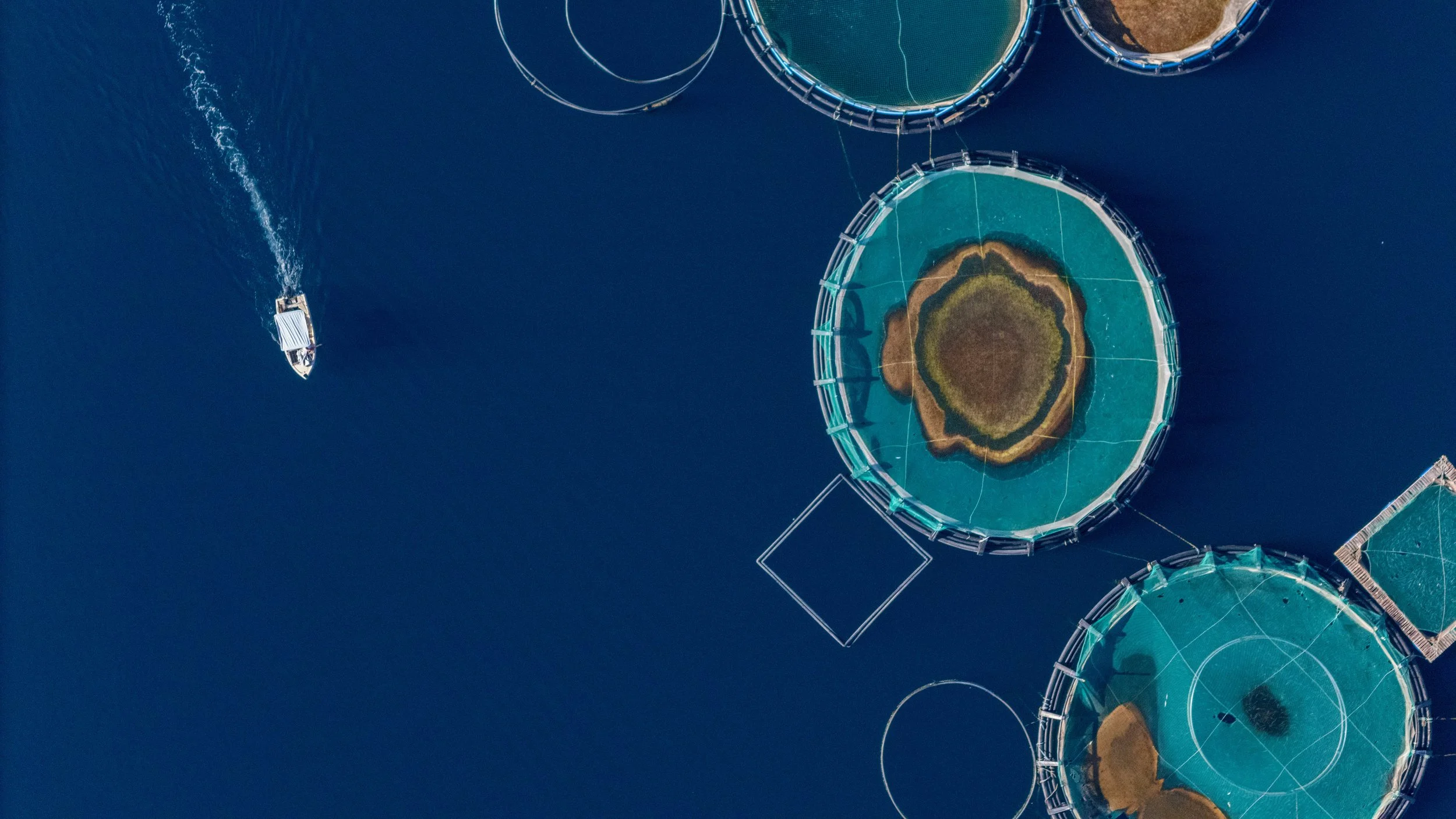
Banner photo: A fish farm in Halkidiki, Greece, by Valeri Penchev/Unsplash.

The Cypriot commissioner-designate faced the questions of the European Parliament fisheries committee (PECH) regarding the strategic framework which should bring coherence among ocean-related policies, including the Common Fisheries Policy. PECH backed him for his future mandate.