The European Commission is seeking to amend the European Maritime, Fisheries and Aquaculture Fund (EMFAF) to align it with the WTO Agreement on Fisheries Subsidies. As the effects of EMFAF extend well beyond EU waters, CFFA sees the amendment as an opportunity to ensure that EU funding genuinely supports sustainable fisheries by EU vessels, both in EU waters and around the world. In this regard, it should publish the beneficiaries of subsidies, close loopholes that allow sanctioned operators to benefit, and ensure that technological innovation does not increase fishing capacity.
Reading time: 4 minutes
The European Commission has launched a public consultation towards amending the European Maritime, Fisheries and Aquaculture Fund (EMFAF), the main financial instrument supporting the implementation of the EU Common Fisheries Policy.
The proposed amendment aims both to simplify the EMFAF and to align it with the WTO Agreement on Fisheries Subsidies.
This amendment is an opportunity to ensure that EU public funding genuinely supports sustainable fisheries, wherever EU vessels operate around the world. Indeed, although EMFAF is primarily an internal EU funding instrument, its effects extend well beyond European waters. Subsidies for fleet modernisation, energy efficiency or vessel equipment also influence fishing activities carried out in third countries waters, including those under access arrangements. Simplification and reducing unnecessary bureaucracy should go hand in hand with stronger transparency, better safeguards and greater coherence across EU fisheries legislation.
1. What’s done with public money should be public
European taxpayers have a legitimate interest in knowing who benefits from fisheries subsidies. Information on EMFAF beneficiaries should be published in a harmonised and easily accessible format across all Member States.
Where legally possible, this should also include information on the beneficial ownership of companies receiving support. Knowing who ultimately owns and controls companies is increasingly recognised as an essential element of responsible fisheries governance. Greater transparency would strengthen public confidence in the use of EU funds, facilitate public scrutiny and help ensure that public money supports responsible operators.
2. Close loopholes that allow sanctioned operators to benefit
The current EMFAF already prevents operators involved in IUU fishing from receiving public funding. Meanwhile, the revised EU Fisheries Control Regulation has recognised beneficial ownership as an important tool in tackling fisheries crime.
However, the relationship between these two legal frameworks should be made clearer. The revised EMFAF should explicitly clarify how beneficial ownership must be considered when applying the Fund's admissibility criteria (Article 11). This would help ensure consistent implementation across Member States and reduce the risk that operators sanctioned for IUU fishing continue to benefit indirectly from public funding through complex corporate structures.
3. Modernisation without increasing fishing pressure
The WTO Fisheries Subsidies Agreement seeks to ensure that public subsidies do not contribute to overfishing. Achieving this objective requires looking beyond traditional measures of fishing capacity.
Recent research commissioned by the European Commission has shown that technological innovation can substantially increase a vessel fishing capacity without changing indicators such as engine power or gross tonnage. New equipment, improved fish detection systems, and more efficient gear may all increase effective fishing capacity while remaining invisible under current capacity measurements.
In view of this, eligibility for EMFAF support should take account not only of changes in nominal fleet capacity but also of the likely effects of investments on effective fishing capacity, fishing effort and fishing pressure.
Concurrently, investments that genuinely improve safety at sea, working conditions or decarbonisation should continue to receive support, provided they do not increase harvesting capacity.
Finally, sustainability standards should apply equally regardless of where EU vessels fish. In some partner countries, fisheries management systems, scientific assessments and monitoring capacities remain limited. Technological improvements supported through public funding could therefore increase fishing pressure without adequate safeguards. EMFAF support should be conditional on documented evidence that the fishing activities benefiting from public funding take place within sustainably managed fisheries. This would bring the EMFAF into closer alignment with the Sustainable Management of External Fishing Fleets (SMEFF) Regulation, which already requires operators to demonstrate that their fishing activities are sustainable before obtaining authorisation to fish outside EU waters. It would also strengthen coherence across EU fisheries legislation and reinforce the objectives of the WTO Agreement on Fisheries Subsidies.
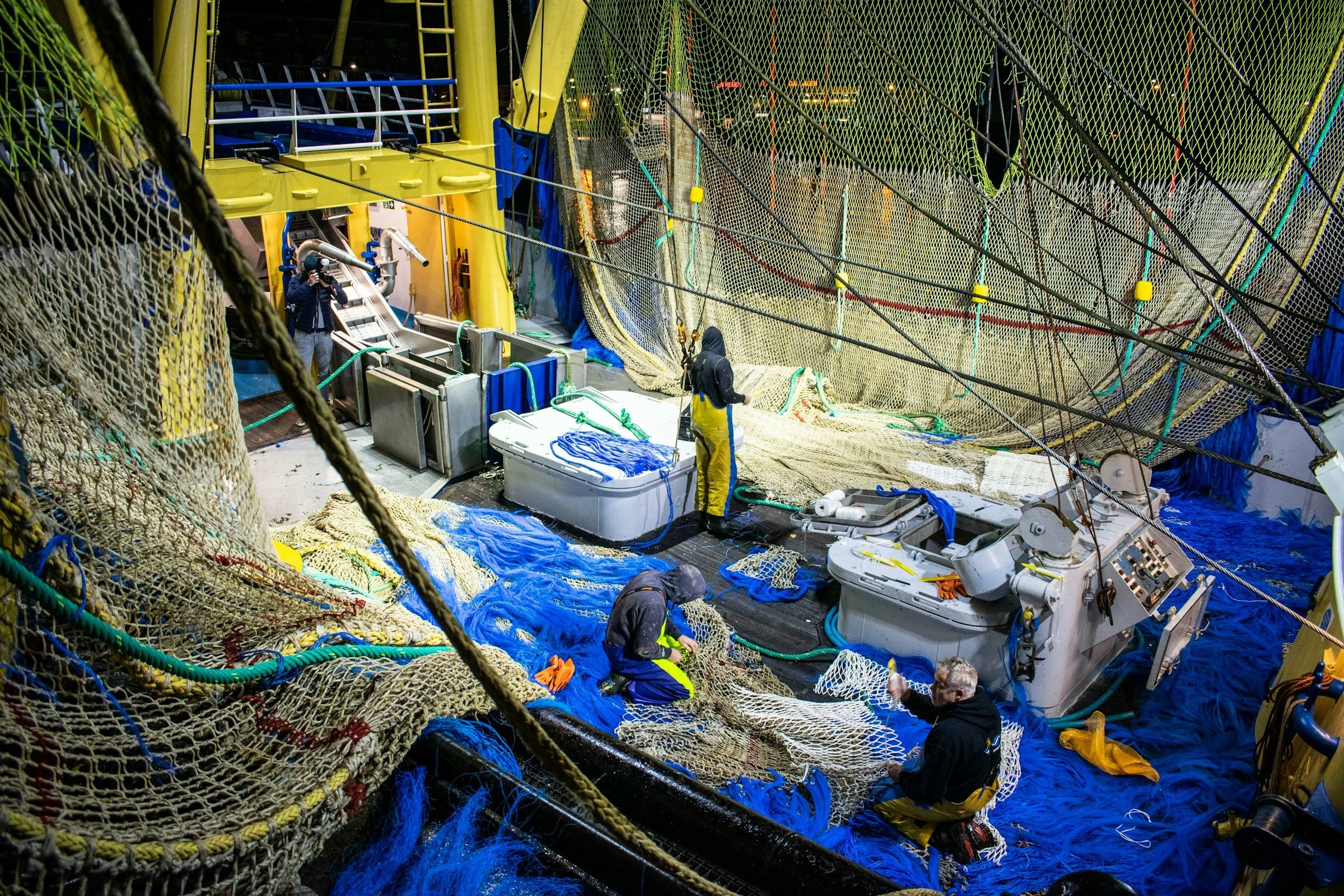
Banner photo by Paul Einerhand.


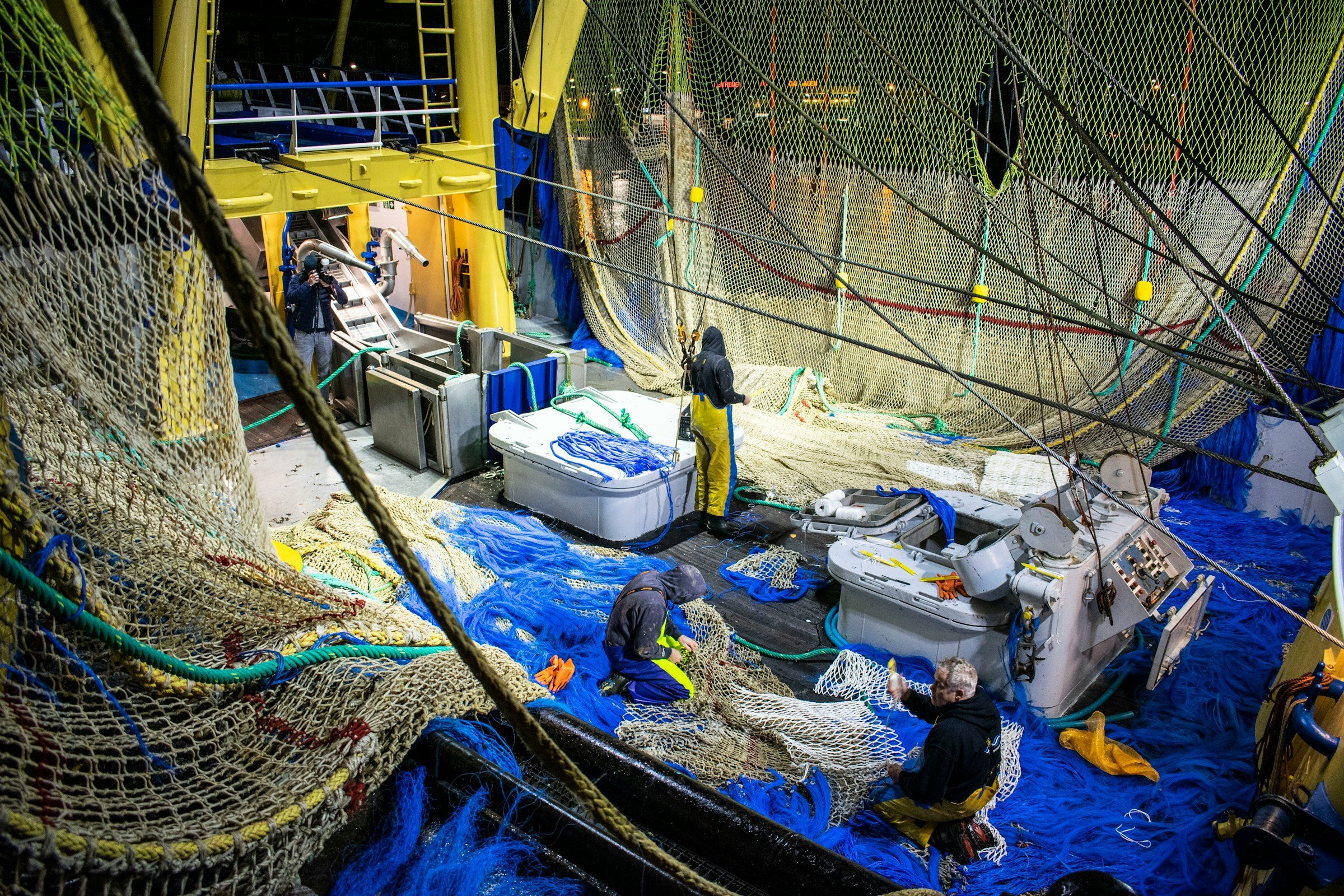

A subsidy to fit a fishing vessel with an engine that uses less fossil fuel, that seems like an easy win. However, if the same vessel can then fish more efficiently, the climate gain may come with a hefty bill for fish stocks and coastal communities.