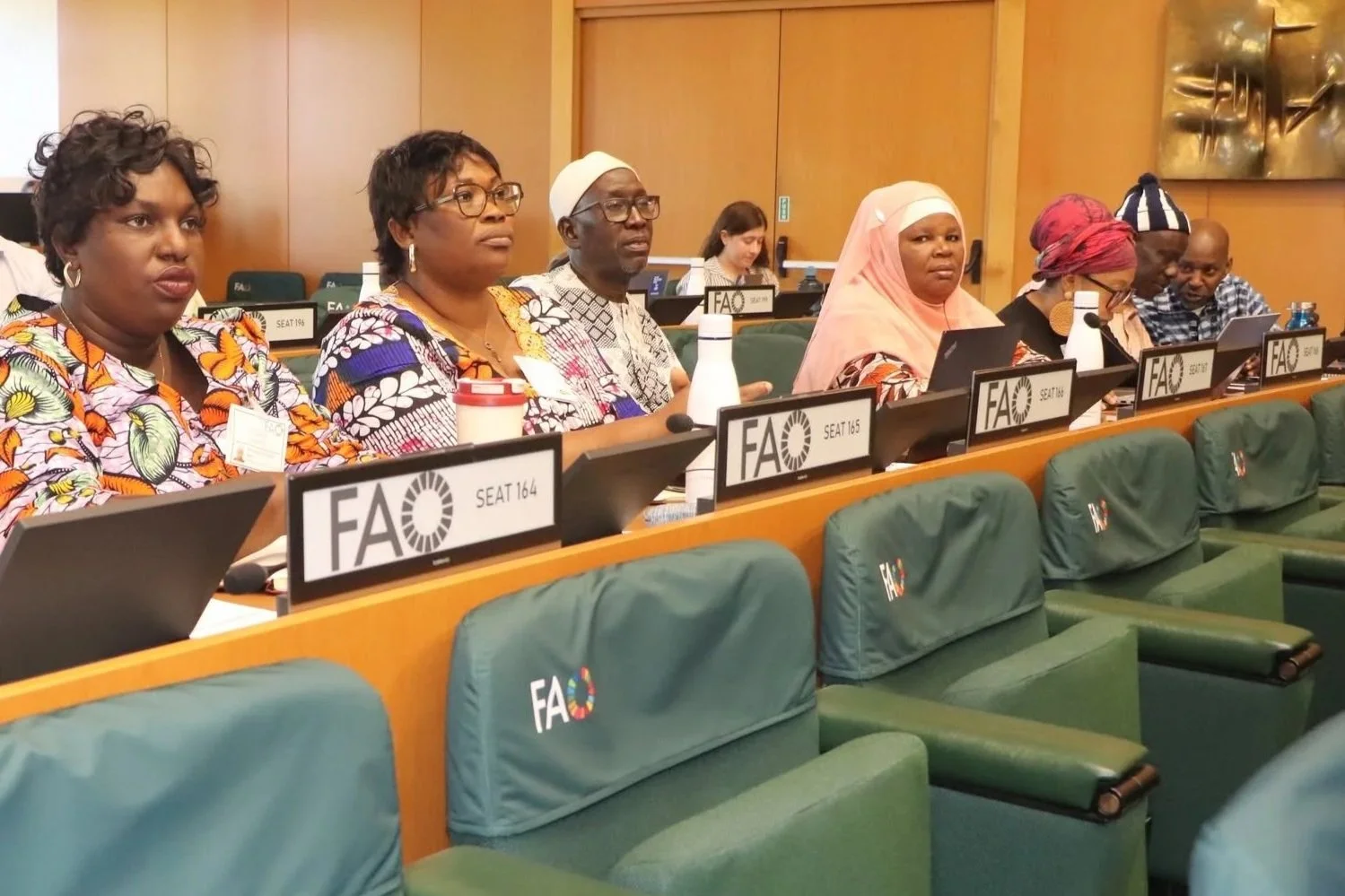
The third Small-Scale Fisheries Summit (SSF Summit) took place from 4 to 6 September 2026 in Rome, at the headquarters of the Food and Agriculture Organization of the United Nations (FAO).
At the heart of the discussions was the relaunch of the Global Strategic Framework to support the implementation of the Voluntary Guidelines for Securing Sustainable Small-Scale Fisheries in the Context of Food Security and Poverty Eradication (SSF-GSF).
Before examining the exchanges between representatives of small-scale fisheries communities from around the world, as well as their NGO and scientific partners, it is worth taking a brief look back at how the SSF-GSF came about.
After a decade of implementation efforts, the SSF-GSF remains at a standstill
In 2014, the FAO Committee on Fisheries (COFI) approved the Voluntary Guidelines for Securing Sustainable Small-Scale Fisheries (SSF Guidelines). They were the first international instrument dedicated specifically to small-scale fisheries. Their objectives include promoting the equitable development of small-scale fishing communities, ensuring the sustainable use of fisheries resources, and providing States with guidance for developing ecosystem-based legal frameworks that promote sustainable small-scale fisheries.
Yet one question remains: how can these Guidelines be translated into concrete changes at national, regional and local levels? It was precisely to address this question that the Global Strategic Framework (GSF) was established to support the implementation of the Voluntary Guidelines for Securing Sustainable Small-Scale Fisheries in the Context of Food Security and Poverty Eradication (SSF-GSF).
The aim was to create a global platform for partnership and coordination, bringing together small-scale fisheries organisations, governments, the FAO, civil society organisations, scientists to work together towards the implementation of the SSF Guidelines. In 2016, COFI approved the creation of the SSF-GSF. Its structure included an advisory group representing small-scale fisheries organisations, regional advisory groups, a mechanism bringing together States supporting the Guidelines – the “Friends of the Guidelines” – and a knowledge-sharing platform.
The project was ambitious from the outset, but the global mechanism has not delivered the expected results. Among its weaknesses are the absence of a clearly defined institutional status and a lack of dedicated resources. The SSF-GSF has therefore primarily played a coordinating role, without having the necessary means to support the implementation of the SSF Guidelines.
The SSF-GSF and existing regional initiatives
Should the SSF-GSF therefore be regarded as the only way to advance implementation of the Guidelines?
While the mechanism has struggled to take shape, other organisations have continued this work on the ground and at regional level. This is particularly the case for the African Confederation of Professional Organisations of Artisanal Fisheries (CAOPA), which used this third Summit to present again its Call to Action. Addressed to governments, this document sets out five priorities for implementing the SSF Guidelines. First presented in 2022, it has since served as a common advocacy framework for numerous small-scale fisheries organisations.
The relationship between the SSF-GSF and existing regional dynamics also came up during discussions on implementing the Guidelines at regional level. Some participants from the Africa group highlighted the risk of confusion that could result from the creation of a parallel structure through the establishment of a Regional Advisory Group (RAG) for Africa.
The African Union already recognises several regional and pan-African frameworks bringing together non-state actors in fisheries and aquaculture, including the Pan-African Platform of Non-State Actors in Fisheries and Aquaculture (Afrifish-net) and the African Network of Women Fish Processors and Traders (Awfishnet). Any RAG for Africa should therefore take into account these existing structures, their mandates, representativeness and experience.
If the Africa RAG were to become the SSF-GSF’s main point of contact without being clearly linked to the regional frameworks already in place, it could lead to confusion, or even competition, between organisations. This could ultimately weaken the representation of African small-scale fisheries.
This is particularly important given CAOPA’s longstanding role as a recognised partner of the African Union, Afrifish-net, the Sub-Regional Fisheries Commission (SRFC) and the Ministerial Conference on Fisheries Cooperation among African States Bordering the Atlantic Ocean (COMHAFAT). Through these different bodies and processes, CAOPA promotes the priorities of small-scale fisheries, including food security, transparency, community participation, generational renewal, adaptation to climate change, and participatory regional management of small pelagic fisheries in West Africa.
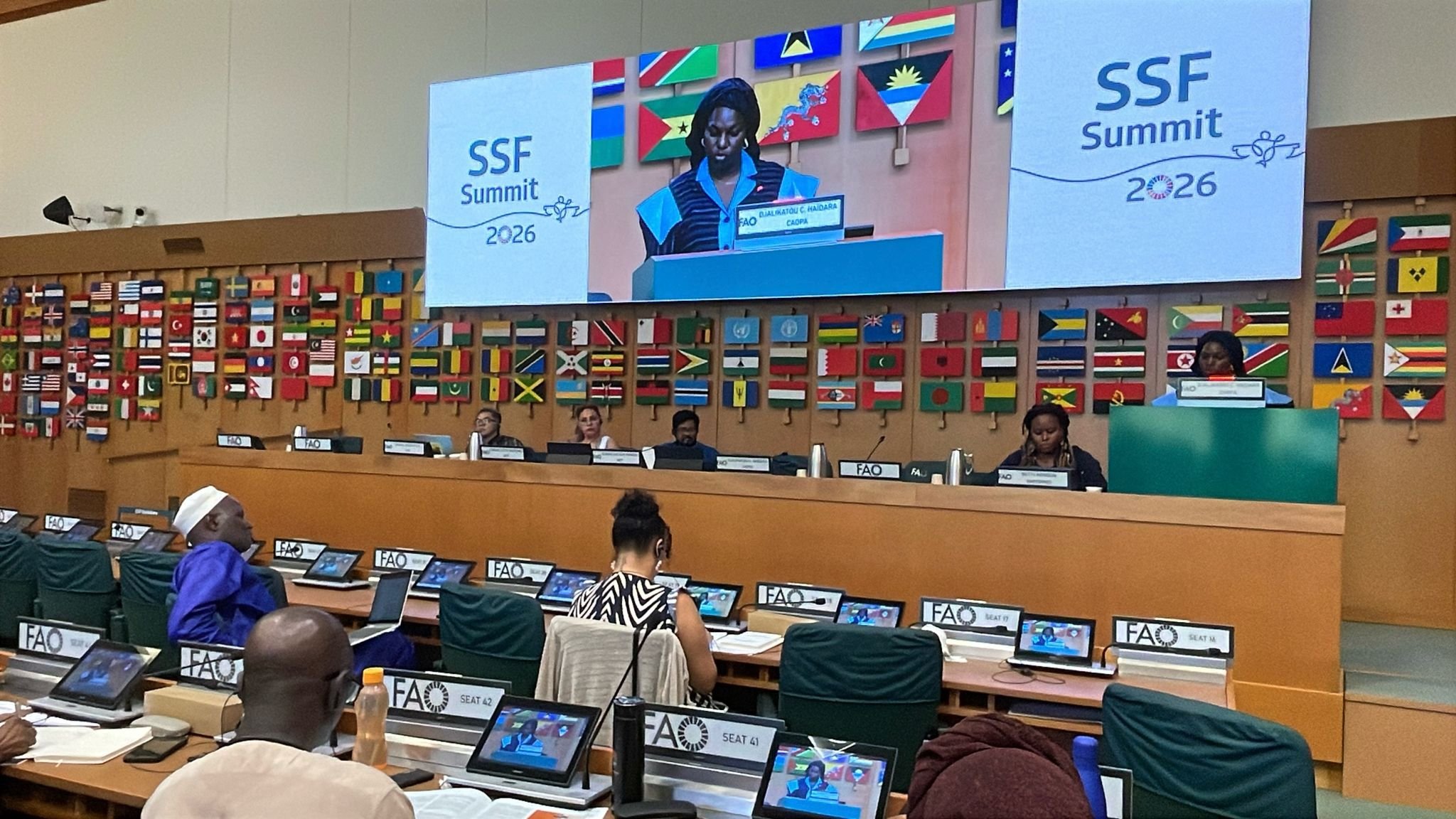
Djalikatou Cherif Haidara, a fish processor and CAOPA representative, outlined the main challenges it faces at the continental level in Africa, including fragmented governance and limited cross-border coordination; climate change, pollution and habitat degradation; youth disengagement, inadequate social protection and IUU fishing. Photo: Mamadou Aliou Diallo.
Following the third Summit, it is clear that the roles and mandates of the RAGs still need to be clarified. One point, however, is essential: their establishment should not come at the expense of representative organisations that are already active, such as CAOPA, or of existing and recognised regional frameworks. If the SSF-GSF is to make a meaningful contribution to implementing the Guidelines, the new mechanisms should build on these existing initiatives, strengthen them and ensure that they complement one another. The organisations concerned should therefore be fully involved in defining the mandate, composition and working arrangements of the RAGs. It would also be important to clarify how these bodies will interact with pan-African organisations, regional fisheries organisations and platforms already recognised by the African Union.
Areas of convergence?
Beyond the question of how the SSF-GSF should be structured, the Summit also gave small-scale fisheries organisations and their partners – scientists, NGOs and governments – an opportunity to reaffirm the principles that should guide their collaboration.
CFFA has detailed how it applies the Rules of Conduct in its work with partner African small-scale fisheries organisations. The starting point for this collaboration is the priorities and needs identified by these organisations themselves, with the aim of strengthening their autonomy and capacities rather than acting on their behalf. CFFA’s role is also to make its expertise and resources available to them, while creating the conditions for meaningful and equitable participation. This includes ensuring access to relevant information and enabling participants to express themselves in their own languages through interpretation.
Scientists also stressed the importance of recognising the knowledge held by small-scale fisheries communities and enabling them to produce and document their own knowledge, experiences and analyses. For such collaborations to be genuinely effective, they need to be built on shared objectives, trust, reciprocity and a long-term commitment. The knowledge generated through these collaborations must, in turn, be able to inform concrete action and public policy.
Several ministers responsible for fisheries and aquaculture – from Brazil, Madagascar, Indonesia and Cabo Verde – presented both the progress made and the challenges encountered in implementing the Guidelines in their respective countries. The Summit was nevertheless marked by the limited participation of national delegations. More than a decade after the adoption of the Guidelines, this lack of engagement by States raises questions.
Participants called for a new step forward by making the SSF Guidelines a binding instrument. While mechanisms, partnerships and knowledge can contribute to their implementation, progress will ultimately depend on the commitment of States to ensure their effective application.
With this in mind, the relaunch of the SSF-GSF will only constitute meaningful progress if it strengthens the capacity of small-scale fisheries organisations to take action, builds on existing regional dynamics, and helps secure measurable commitments from States. The third Small-Scale Fisheries Summit (SSF Summit) took place from 4 to 6 September 2026 in Rome, at the headquarters of the Food and Agriculture Organization of the United Nations (FAO). At the heart of the discussions was the relaunch of the Global Strategic Framework to support the implementation of the Voluntary Guidelines for Securing Sustainable Small-Scale Fisheries in the Context of Food Security and Poverty Eradication[MR7] (SSF-GSF).
Before examining the exchanges between representatives of small-scale fisheries communities from around the world, as well as their NGO and scientific partners, it is worth taking a brief look back at how the SSF-GSF came about.
Banner photo: Christian Adams from the West Coast Small-Scale Fishers Cooperative Forum (South Africa) during the 3rd SSF Summit, in Rome, Italy. By Mamadou Aliou Diallo.

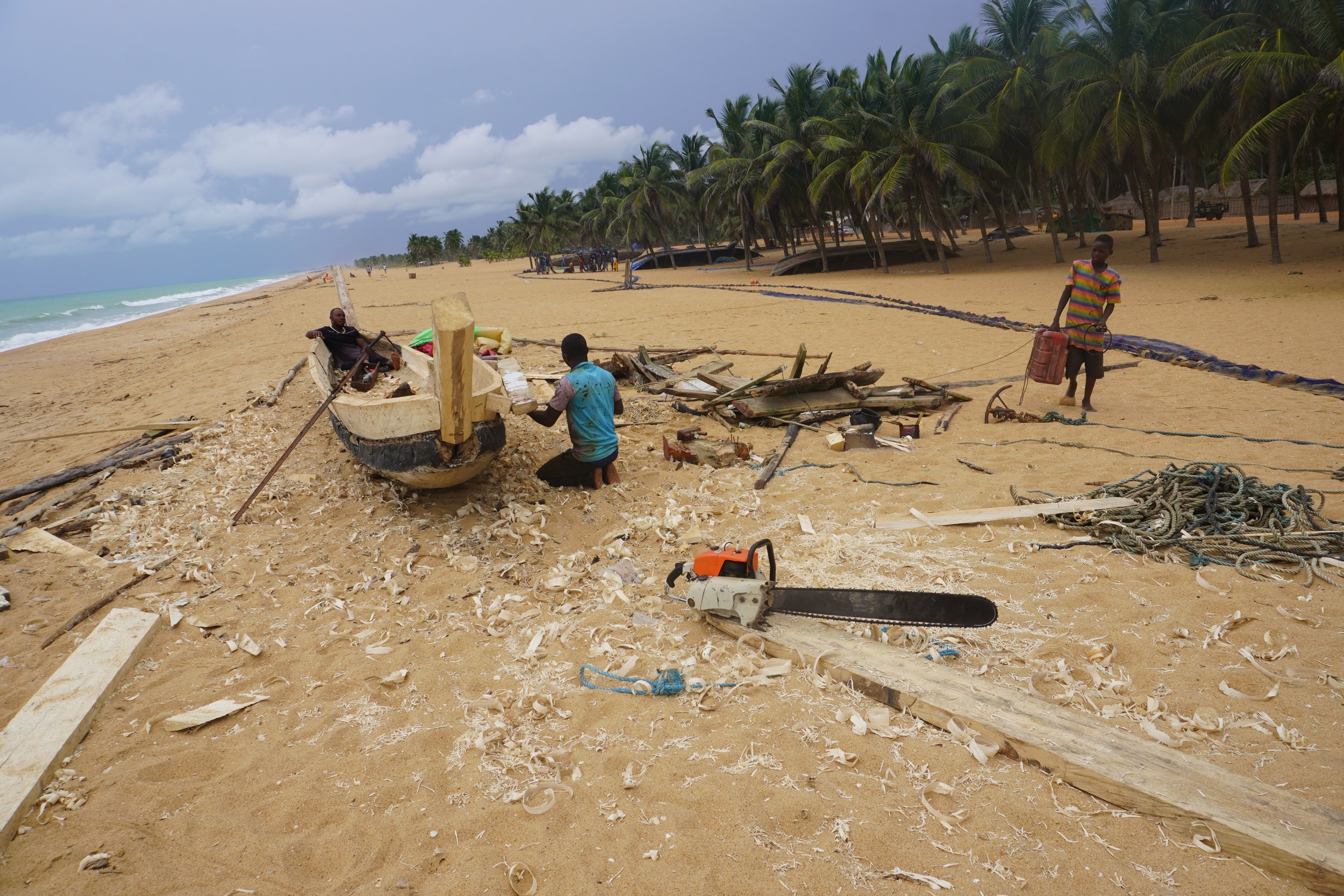


From 23 to 27 February 2026, during the second session of the FAO Subcommittee on Fisheries Management, 40 NGOs reiterated that sustainable fisheries management cannot be achieved without fully recognising the role of small-scale fisheries communities in resource governance.