On 28 September, a group of environmental NGOs alerted that a corporation, called GoldCoast Resource reported holding 10 offshore reconnaissance licences for gold exploration along 300 km of Ghana’s coastline, overlapping with Ghana’s Inshore Exclusion Zone (IEZ).
They petitioned President John Dramani Mahama to review this offshore exploration and ensure that these activities do not encroach on artisanal fishers’ access to waters and livelihoods.
GoldCoast Resource Corporation, headquartered in Canada, is a corporation created specifically for “shallow water gold exploration and development on Ghana's offshore continental shelf”. Their website advertises their reconnaissance activities as “one of the last unexplored gold frontiers in the world” and announce they obtained the exclusive right to conduct these activities. According to their website, they have only conducted the phase of exploration through an airborne magnetic survey, yet stakeholders opposing this say to be concerned with the following phases, comprising seismic, bathymetry and magnetometry surveys and sediment sampling.
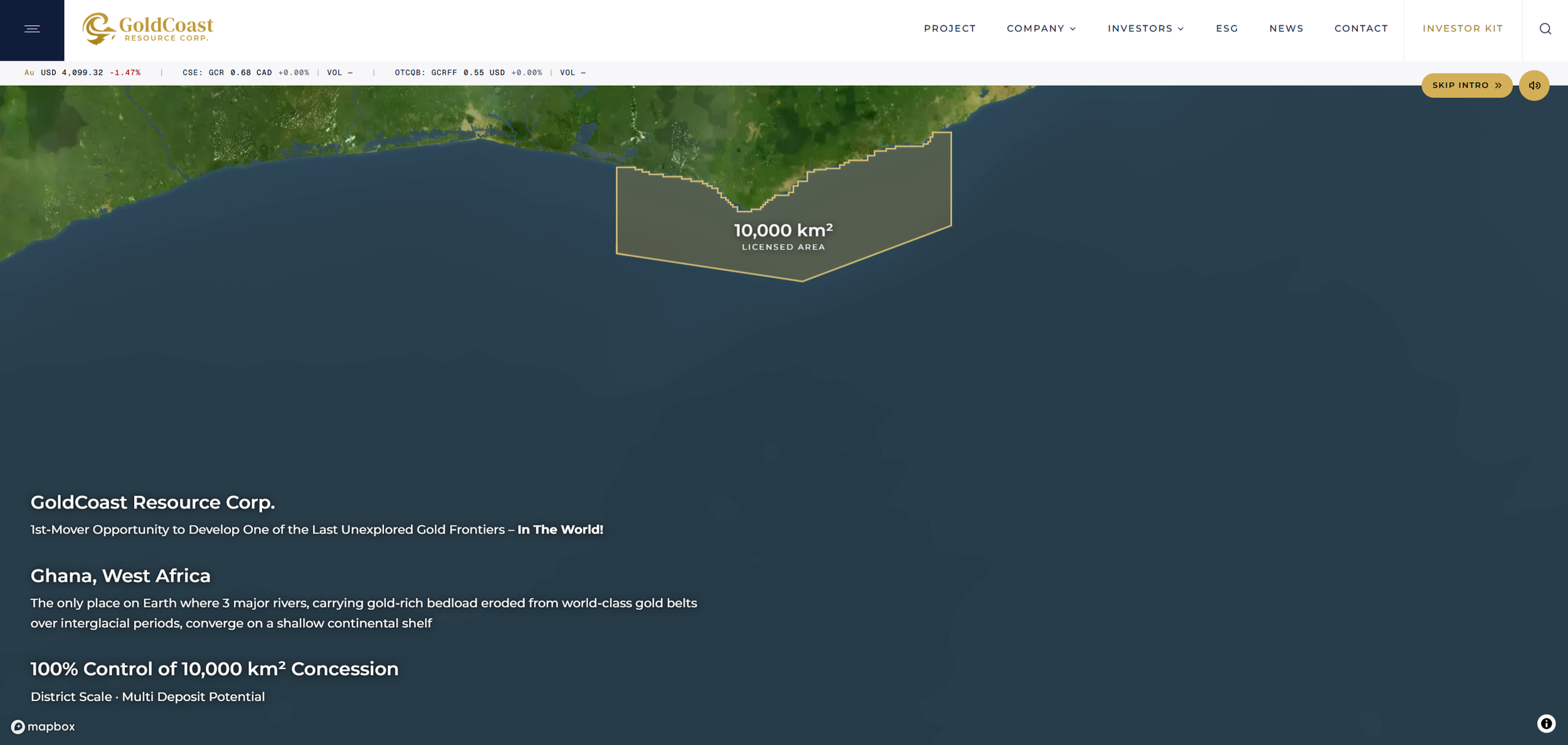
A screenshot of GoldCoast Resource Corp. showing the map of the licenced area. Retrieved on 7 October 2026.
In a cascade of reactions, the Fisheries Commission, also published a formal protest on 29 September that “the reconnaissance programme […] have been prepared without adequate consideration of Ghana’s marine environment, fisheries resources, fishing activities and the livelihoods of fishing communities”. The following day, a letter by unnamed scientists warned of “significant environmental, economic, social and legal consequences”, including loss of benthic biodiversity, sediment plumes and water degradation, noise and vibration effects, release of toxic metals and fisheries decline. Several local fishers and civil society organisations also reacted on 3 October, concerned that “reconnaissance could progressively lead to […] commercial offshore gold extraction” and reminded the president that “the same marine space supports thousands of artisanal fishers, fishing communities”.
According to local media, The Ministry for Lands and Natural Resources directed an immediate suspension of the exploration activities over the environmental and the lack of consultation concerns. Indeed, all environmental and fisheries stakeholders pointed at a lack of consultation of concerned parties and call for some form of environmental, social and human rights impact assessment: “Given the economic, livelihood, food-security, and ecosystem-service values associated with artisanal fisheries, [the] potential costs must be carefully weighed against the […] benefits expected from seabed gold mining”, states the scientists’ letter, citing likely human rights breaches and calling for an “independent and comprehensive human rights assessment”. Fishers’ associations also call for a credible and independent environmental and social impact assessment which “must not be treated as a technical exercise controlled solely by the project proponent” but rather be an “independent scientific review” with fisher participation and public disclosure of the findings.
Scientists alert in their letter that “the emergence of seabed mining would introduce new competition for marine space within Ghana's Exclusive Economic Zone”. A competition for space which will be increasing as Ghana develops its blue economy. In its formal protest, the Fisheries Commission reminds that an activity “of this scale cannot appropriately be considered solely as a minerals-sector matter. It necessarily intersects with fisheries management, maritime activities, aquatic environmental protection and the livelihoods of fishing communities”.
At the heart of the matter is the question of ocean governance, including marine spatial planning, a governance that often excludes small-scale fisheries. In August 2025, Ghana extended its IEZ from 6 to 12 nautical miles to ensure “sustainability, compliance, and improved livelihood, especially for small-scale fishers”, according to the official statement by the Fisheries Ministry. Yet one step forward can come with two steps back: IEZs are rarely safe from being nibbled away. “Ghana has taken important steps to expand the IEZ, rebuild its fisheries and establish its first Marine Protected Area”, argues the statement by environmental NGOs: “The same shallow coastal waters should not be subjected to a potentially competing extractive use”. In this regard, it is essential that fishers’ access rights and meaningful participation are guaranteed in development plans for blue economy and subsequent marine spatial planning.
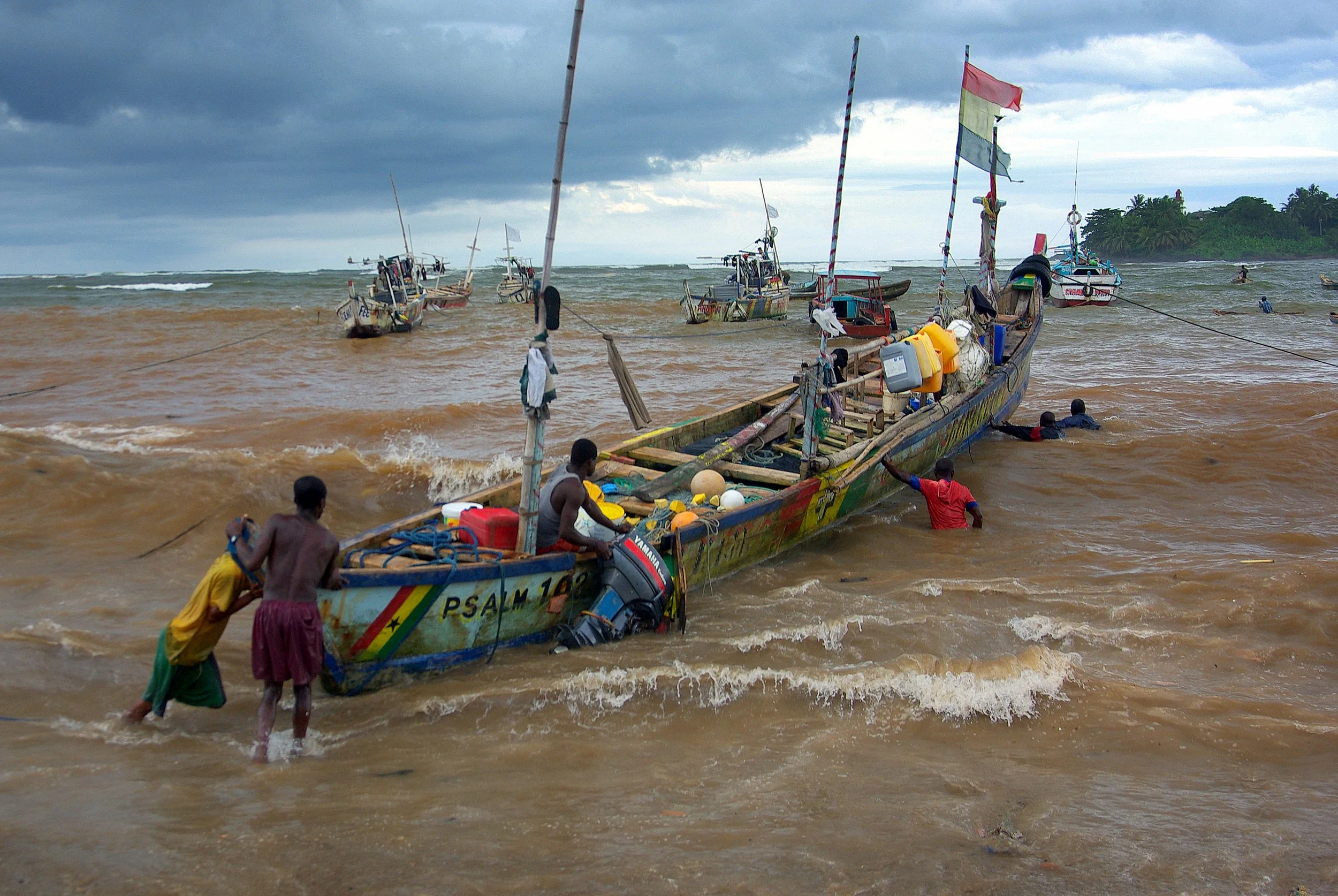
Banner photo: Canoe fishers in Abuesi, western Ghana. Photo by David Mills.


Ten reconnaissance licences for offshore gold mining were granted in February 2026 in Ghana’s territorial waters and are facing strong opposition from fisheries stakeholders. The company’s published map overlaps with the Inshore Exclusion Zone (IEZ), an area reserved for small-scale fisheries.