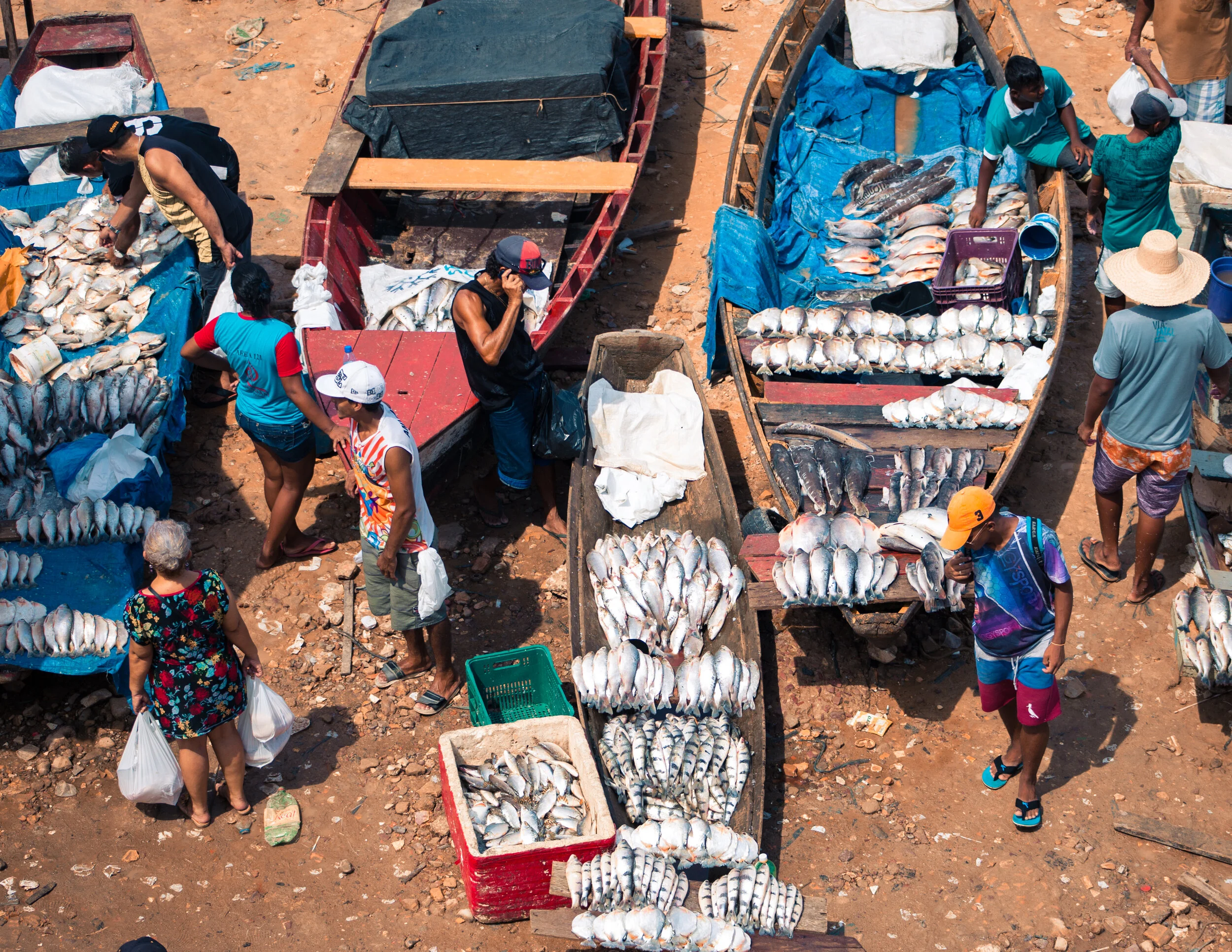
During the SFPA negotiations, the local artisanal fishing organisation SFBOA, highlighted its priorities: the EU-Seychelles agreement should (i) contribute to reducing the pressure on tuna resources and on the environment; (ii) ensure transparency and more participation of the fisheries stakeholders and local communities, and (iii) use sectoral support funds primarily for the management of fisheries, and for the improvement of living and working conditions in the local fishing sector.
Mauritania pledged to eliminate fishmeal production by 2020. Today, it has tripled
AU Blue Economy : EU reiterates its commitment to address corruption, promote transparency and participation of all stakeholders
New effort for a regional management of small pelagics in West Africa?
“A vibrant call to protect and promote African local artisanal fisheries” ahead of the EU-Africa Summit
At a webinar jointly organized by the FAO and the German Presidency and hosted by Members of the European Parliament, CFFA partner CAOPA calls on EU and AU, their members and their citizens to work together to implement, through transparent, participatory and gender-sensitive national action plans to implement the FAO Voluntary Small scale Fisheries Guidelines.
Liberian fishers protest against the potential issuance of fishing licences to six Chinese supertrawlers
Recently built in China, these vessels, Hao Yuan Yu 860, 861, 862, 863, 865 and 866, arrived mid-June in Monrovia after failing to undertake fishing operations in Mozambique. This demand follows a trend of licence requests by vessels of Chinese origin in several West African countries, such as Senegal and Ghana.
Old fantasies: the French Citizen’s convention for climate proposes to replace fisheries with aquaculture
CSOs complaint about Italian vessels illegal activities in Sierra Leone: The European Commission is dragging its feet
Senegal: The fisheries ministry will not issue any of the licences to the 54 vessels of Chinese and Turkish origin
Senegalese fisheries stakeholders protest against its government intention to issue 54 fishing licenses to Chinese and Turkish vessels
In the midst of the Coronavirus crisis, the Senegalese consultative committee for the attribution of fishing licences was consulted via email for this allocation. Several fisheries organisations have raised sustainability concerns and warned it could endanger artisanal fishing communities’ livelihoods.
Reducing control during the Covid-19 outbreak would open the door to illegal fishing
African artisanal fishermen call for measures to help them cope with the COVID-19 epidemic
Tackling the use of wild fish in aquaculture supply chains
Stories on artisanal fisheries: call for proposal to African journalists
There are only 99 days left for governments to reach an agreement to end harmful fisheries subsidies at the WTO conference
Civil society and artisanal fisheries organisations react to the new EU-Senegal fisheries protocol
As the proposal is being presented at the European Parliament PECH committee and to the Senegalese National Assembly, APRAPAM and CAOPA ask the government to publish all access agreements, demand more transparency on the use of sectoral support funds and express concern on the access to some fish stocks.
European Commission: “Given the importance of fisheries and aquaculture, any diversification of the African economy should fully build on these traditional sectors”
Echoes from COFI 29
The twenty-ninth session of the FAO Committee on Fisheries (COFI 29) was held in Rome, 31 January to 4 February 2011.
CFFA and other support NGOs facilitated the attendance of many small-scale fisheries representatives from around the world in order to defend their interests and voice their concerns to national delegations officials and intergovernmental organizations, including on the item 10 of the session’s agenda on the creation of an international instrument for small-scale fisheries.
At this occasion, CFFA’s African partners, from which many are now members of the African Confederation of Small-scale Fisheries Professional Organizations (CAOPA) reiterated the principles and recommendations of the Banjul Civil Society Declaration drafted in September 2010 during the first Conference of African Ministers of Fisheries and Aquaculture. The AU (African Union) and NEPAD (New Partnership for Africa’s Development) have recognized the importance of this declaration that will be taken into consideration in their work.
In view of the important role played by small-scale fisheries the Committee approved the development of a new international instrument on small-scale fisheries to complement the Code of Conduct for Responsible Fisheries (CCRF), drawing on relevant existing instruments. The Committee agreed that the new instrument could take the form of an international guidelines, be voluntary in nature, address both inland and marine fisheries and focus on the needs of developing countries. The Committee recommended that all stakeholders be associated, as appropriate, with its development.
Availability of fishing licenses lists: Gabon
CFFA welcomes the steps taken by the republic of Gabon to make available to the public the lists of fishing vessels licensed in 2008/2009.
We encourage all ACP countries to take such steps. Moreover, we would like to highlight the importance for ACP countries to publish an update of these lists, so that real time data about fishing vessels licensed can be accessed by the public and third countries authorities, partners for sustainable fisheries development.
In particular, in the context of the fight against IUU fishing, the availability of updated lists of fishing vessels licensed in ACP countries is a key element for collaboration between coastal states -ACP countries in this case- and market states -such as the EU- to help efficient action to be taken in order to stop the trade of illegally caught fish.
Case studies: Environmental and Social Criteria for Allocating Access to Fisheries Resources
A new report released today by OCEAN2012 and Meridian Prime highlights environmental and social criteria that are successfully employed in allocating access to fisheries resources.
The report, Environmental and Social Criteria for Allocating Access to Fisheries Resources, offers case studies from ten different fisheries in Europe and around the world to show how reform of the Common Fisheries Policy (CFP) could be modelled.
Specifically, the report recommends :
Selectivity – Different fishing methods result in different amounts of by-catch. Fishers using fishing methods with low by-catch should be given priority access to the available resources ;
Environmental impact – The impact of different gears and practices on the environment, including damage to the seabed and pollution, vary widely. Fishers using less destructive fishing methods should be given priority access ;
Energy consumption – Some gear and vessel types, like some trawlers and seiners, require enormous amounts of energy compared to the fish they catch. Fishers using vessels and fishing methods that consume less energy per tonne of fish caught should be given priority access ;
Employment and working conditions – Fishing methods that provide more employment opportunities and have less environmental damage should be given priority access. Working conditions should comply with relevant international standards, notably the 2007 International Labour Organisation (ILO) Work in Fishing Convention ;
History of compliance – Past compliance with the rules of the CFP by fishers as well as EU Member States should be considered when allocating access to fishing rights.
“The right to fish in EU waters should be granted to those who contribute to the goal of ending overfishing,” said Markus Knigge of the Pew Environment Group and OCEAN2012. “Allocating access to commonly held fisheries resources through the implementation of strict environmental and social criteria is an effective way of doing this.”
On April 22, 2009, the European Commission launched a reform of the CFP. As part of a broader, stepwise approach to returning EU fisheries to a sustainable footing, OCEAN2012 suggested replacing, or at least enhancing, relative stability with a system of allocating access to fisheries based on an explicit consideration of certain criteria. The allocation system should contribute to environmental sustainability, a more equitable distribution of access to available fishing resources and a culture of compliance.