In this article, the author looks into the current work of the Commission on the ‘Do No Significant Harm’ principle. A consultation has been launched to feed into a set of guidelines for an harmonised approach to ensure EU funded activities do not undermine EU environmental objectives. For fisheries, this should not result in weaker environmental safeguards. The EU should also be supporting those fishers that have maintained low-impact and selective practices for years.
Reading time: 6 minutes.
The European Commission is preparing a set of guidelines to apply the ‘Do No Significant Harm’ (DNSH) principle to the 2028 - 2034 EU budget. This principle is designed to ensure that activities supported by the EU do not undermine its environmental objectives. These include climate mitigation and adaptation, the circular economy, pollution prevention, biodiversity and, particularly relevant for fisheries, the sustainable use and protection of water and marine resources. Under the 2020 EU Taxonomy Regulation, this means that activities should not be detrimental to achieving or maintaining the good environmental status of marine waters.
The guidelines will apply across EU funding programmes, with specific criteria proposed for 18 areas of activities, including fishing vessels and fishing gear. The aim is to replace the different approaches currently used by EU funding programmes with a single, simpler system, while reducing administrative burden for the beneficiaries. A differentiated approach is also suggested for activities taking place in third countries, “to capture the diversity of third countries, the specificities of external action and the lack of common environmental acquis.”
Simplification is welcome, particularly if it makes EU funding more accessible to small-scale operators. However, it should not result in weaker environmental safeguards, whether within the EU or in partner countries. At the same time, EU funding should recognise and support fishers who have maintained selective, low-impact practices for years, rather than mainly reward operators reducing historically high environmental impacts. These are some of the key messages put forward by CFFA in its response to the Commission consultation.
1. Greener engines do not automatically mean greener fisheries
The Commission concept paper identifies investment in fishing vessels and fishing gear as one of the areas of activity requiring safeguards. However, it proposes allowing certain investments that reduce environmental impacts, contribute to the energy transition or improve health and safety on board, subject to several conditions.
CFFA supports the need to decarbonise fishing. But reducing a vessel’s carbon emissions is not, in itself, sufficient to show that its overall environmental impact has been reduced. A more efficient engine, hybrid or dual-fuel propulsion or other types of vessel modernisation may lower fuel consumption while, in some cases, also allowing a vessel to travel further, remain at sea longer or fish more effectively.
This matters because EU fishing capacity is still principally measured through vessel tonnage and engine power,- GT and kW. These measurements do not necessarily capture increases in effective fishing capacity generated by technological improvements.
DNSH rules should therefore ensure that improvements in vessel performance or energy efficiency do not translate into increased fishing pressure, taking into account not only investments in individual vessels, but also the cumulative impacts of investments at fleet and fishery levels. The objective should be decarbonisation without increasing fishing capacity or pressure on marine ecosystems.
These concerns do not stop at EU waters. Where EU funded activities may affect fisheries resources in third countries, assessments should consider the status of those resources, the overall fishing pressure and impacts on marine ecosystems. When such environmental harm may affect local fishing communities, its consequences for their livelihoods and food security should also be considered.
2. A fishery being ‘managed’ does not mean it is sustainably exploited
One condition proposed by the Commission for allowing investment in fishing vessels is that vessels should target fisheries that are “under fisheries management measures”. But the existence of management measures does not mean that these are effectively implemented. That is, management measures cannot show whether, for example, a depleted stock is recovering, or whether sufficient scientific information exists to assess the stock status.
CFFA therefore argues that DNSH criteria should explicitly incorporate the precautionary and ecosystem-based approaches of the Common Fisheries Policy (CFP), with particular safeguards for investments in vessels fishing on overexploited stocks, or for which scientific information is insufficient. EU funding should not make fishing more effective on a resource already under excessive pressure simply because a management plan ‘technically’ exists.
3. Those fishing sustainably should be rewarded for already doing the right thing
Many small-scale fishers already operate with relatively low fuel consumption, selective gears and limited ecosystem impacts. A DNSH approach designed mainly to help high impact activities reduce their environmental footprint risks disadvantaging small scale low-impact fishers: the worse the starting point, the greater the reduction in environmental harm that can be demonstrated, and potentially the easier it is to justify public funding.
The Commission should therefore recognise that maintaining low environmental impact is a positive environmental result, and deserves public support. In that context, simpler procedures should facilitate access to funding support for operators able to demonstrate existing low environmental impact. Monitoring requirements should also be proportionate, so that small-scale, low-impact vessels are not excluded from public support in cases where particular electronic monitoring requirements (VMS, e-logbook) do not apply to their vessel category.
4. Climate resilience: small investments can have huge importance
The Commission suggests that additional climate-resilience criteria could focus particularly on large-scale or critical infrastructure. For fishing communities, however, focussing mainly on size can be misleading. This is particularly relevant for EU funded fisheries infrastructure in vulnerable coastal areas, including in partner countries. Relatively small investments in landing site, ice making plant, cold storage or processing facilities can determine whether fish reaches local consumers, whether post-harvest losses are reduced and whether fishing communities benefit from the investment. The contribution of investments to livelihoods and food security should matter as much as their financial size. Assessments should therefore consider not only the size of an investment, but the vulnerability of the coastal area and its fishing community to climate change and the consequences for the community if this investment fails.
5. No automatic green light, and no weaker safeguards abroad
In the Commission proposal, activities falling outside the areas subjected to DNSH criteria could be, in principle, considered not to cause significant harm. In fisheries, environmental impacts, and the risk of significant harm, depend on the fishing method, stock status, ecosystem, location and overall fishing pressure. The absence of an activity from the list should therefore not, in itself, be taken as proof that it does not cause significant environmental harm.
This is of paramount relevance for EU-funded activities in third countries. The Commission proposes a differentiated approach reflecting the variety of local circumstances as well as the absence of a common environmental acquis with the EU. CFFA agrees that local circumstances need to be taken into account, but a differentiated approach should not result in weaker environmental safeguards. If there is no equivalent level of environmental legislation or enforcement in the third country, the planned DNSH assessment should ensure a commensurate level of environmental protection proportionate to the risk of the potential impact.
Conclusion: Going beyond doing no significant harm
The future EU approach to DNSH will help define what EU public money should not support. But the debate should not stop there. The next EU budget is also an opportunity to make choices about the fisheries Europe wants to support - at home and in third countries. The test should not only be whether an EU funded activity does less harm than before, but whether it helps build fisheries that can thrive, without increasing pressure on the resources and ecosystems on which fishers depend.
1. No increase in fishing capacity or pressure
Criteria for investments in vessels, engines, gear or technology should ensure these investments do not increase effective fishing capacity, fishing effort or pressure on marine ecosystems.

2. Apply the precautionary and ecosystem-based approaches
The existence of management measures is not sufficient to demonstrate sustainability. Criteria should take into account the status of targeted stocks, and where information is insufficient, it should apply the precautionary approach.
3. support existing low-impact fisheries
Criteria should recognise maintaining a low environmental impact as a positive environmental outcome, not only reductions from a high-impact baseline.

4. assess socio-economic and climate benefits
Investments should not only be based on the financial value or on the size of the infrastructure. They should also, on the one hand, consider the community vulnerability to climate change, but also the importance of such an investment (even if small-scale) for food security, for livelihoods and for reducing post-harvest losses.

5. no weaker safeguards outside of the EU
A differentiated approach for third countries may reflect local circumstances, but must not result in a lower level of environmental protection.

6. no automatic green light for activities outside the list
An activity not covered by specific ‘Doing no significant harm’ (DNSH) criteria should not automatically be presumed harmless.
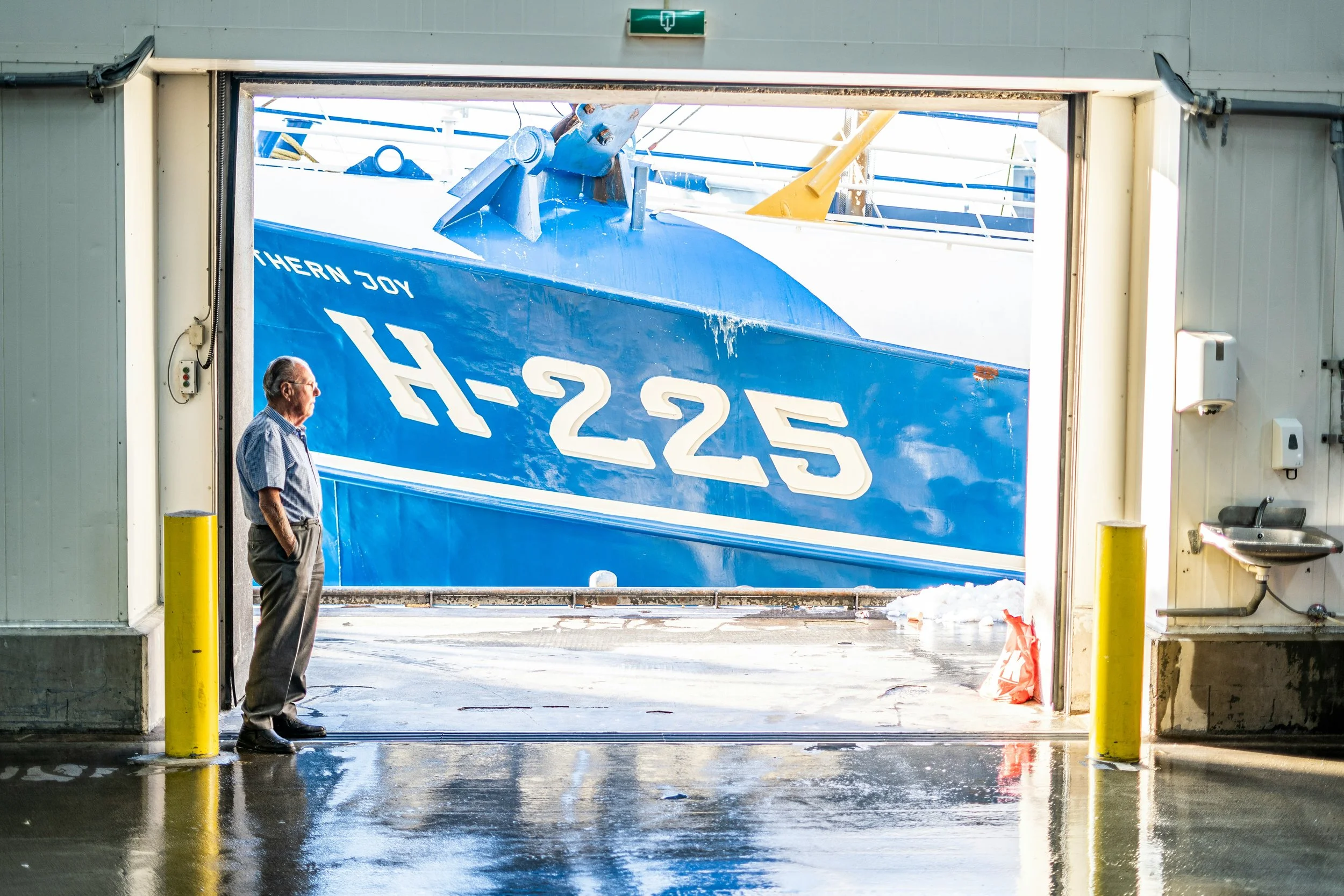
Banner photo: The Harbour of Scheveningen, The Netherlands, by Paul Einerhand.

The EU-Cabo Verde high-level political dialogue reaffirmed the SFPA as the “key framework for their fisheries cooperation”. However, at a workshop in Boa Vista bringing together fisheries organisations, civil society and public authorities, show that the partnership does not yet address the concerns of the third country’s small-scale fisheries.