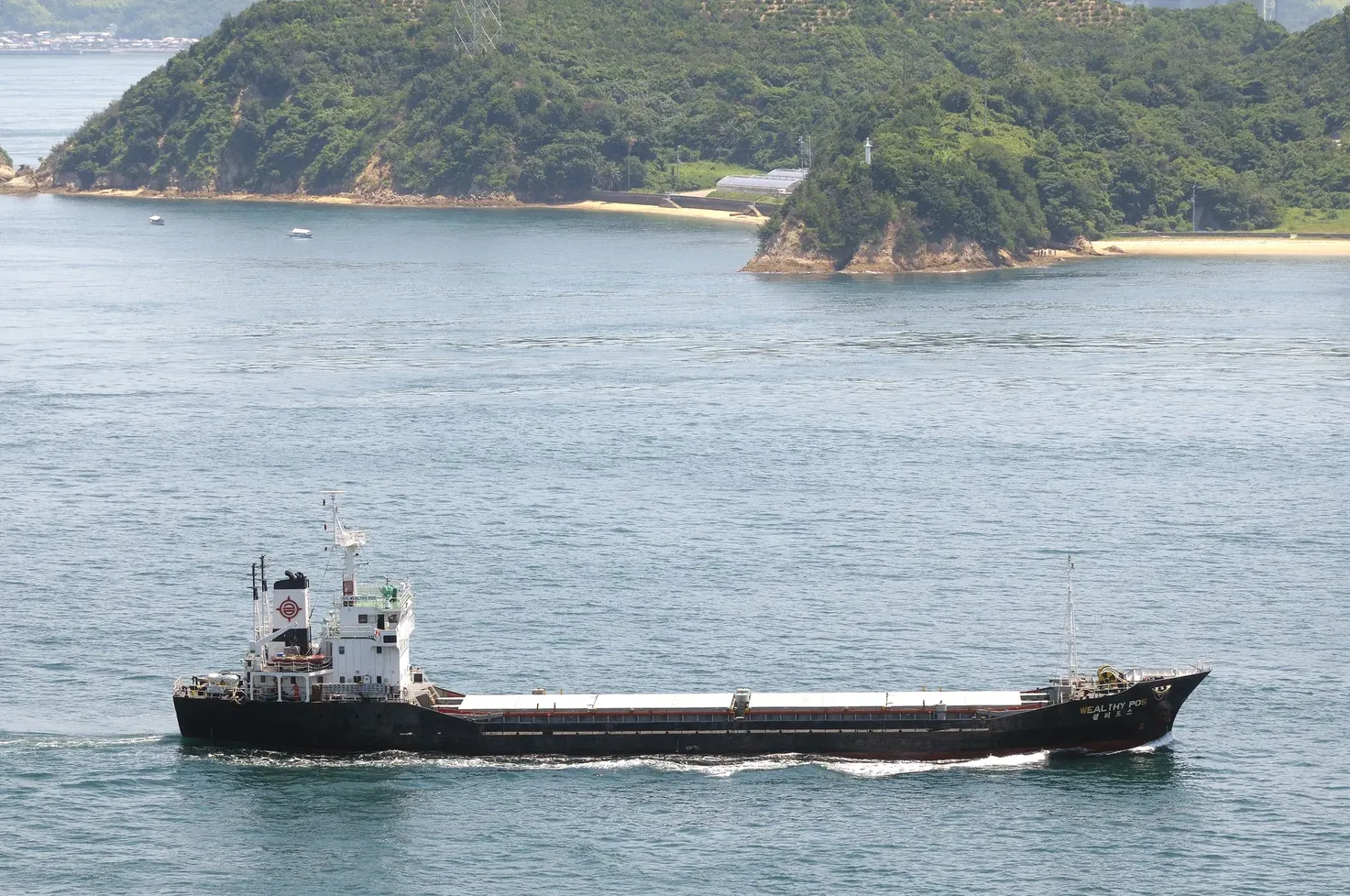
At the ports of Dakar and Bissau, the silhouette of the cargo vessel Hanfeng 88 (formerly Prosperity) has become a familiar sight.
The 85-meter vessel, built in South Korea in 1992 and currently sailing under the Sierra Leone flag, has called regularly at both ports over the past year – recording at least fourteen port calls in Dakar and seven in Bissau. This frequency and regularity are consistent with the operating pattern of a scheduled cargo service.
The vessel drew concern among Senegalese artisanal fishers on December 20, 2025, when it was observed unloading bags of fishmeal at the fishing dock in the port of Dakar. Fishmeal – widely used in animal feed and aquaculture – is typically produced from small pelagic fish, species that are critical to regional food security and many of which are already considered overexploited.
At this stage, further verification is not possible: no cargo manifest or export documentation is publicly available to confirm the exact nature or quantities of the goods unloaded.
Fishmeal produced in Guinea-Bissau is frequently transported to Dakar for export, as the port of Dakar serves as a major regional logistics hub. Compared with Bissau – a smaller and less structured port – Dakar offers significantly better connectivity to international shipping networks, with regular links to Asia, Europe, and the Americas.
After Mauritania, the emergence of a Turkey-China link in Guinea-Bissau?
At the same time, multiple sources report heightened activity by Turkish seiners in Guinea-Bissau waters, targeting small pelagic species for delivery to fishmeal factories. According to a Turkish newspaper, approximately ten Turkish vessels are expected to be operating in West Africa by 2024. Some of these vessels previously fished in Mauritania – such as the İlhan Yılmaz 3 and Turk Yilmaz 1 – and have recently been observed resupplying in the port of Bissau.
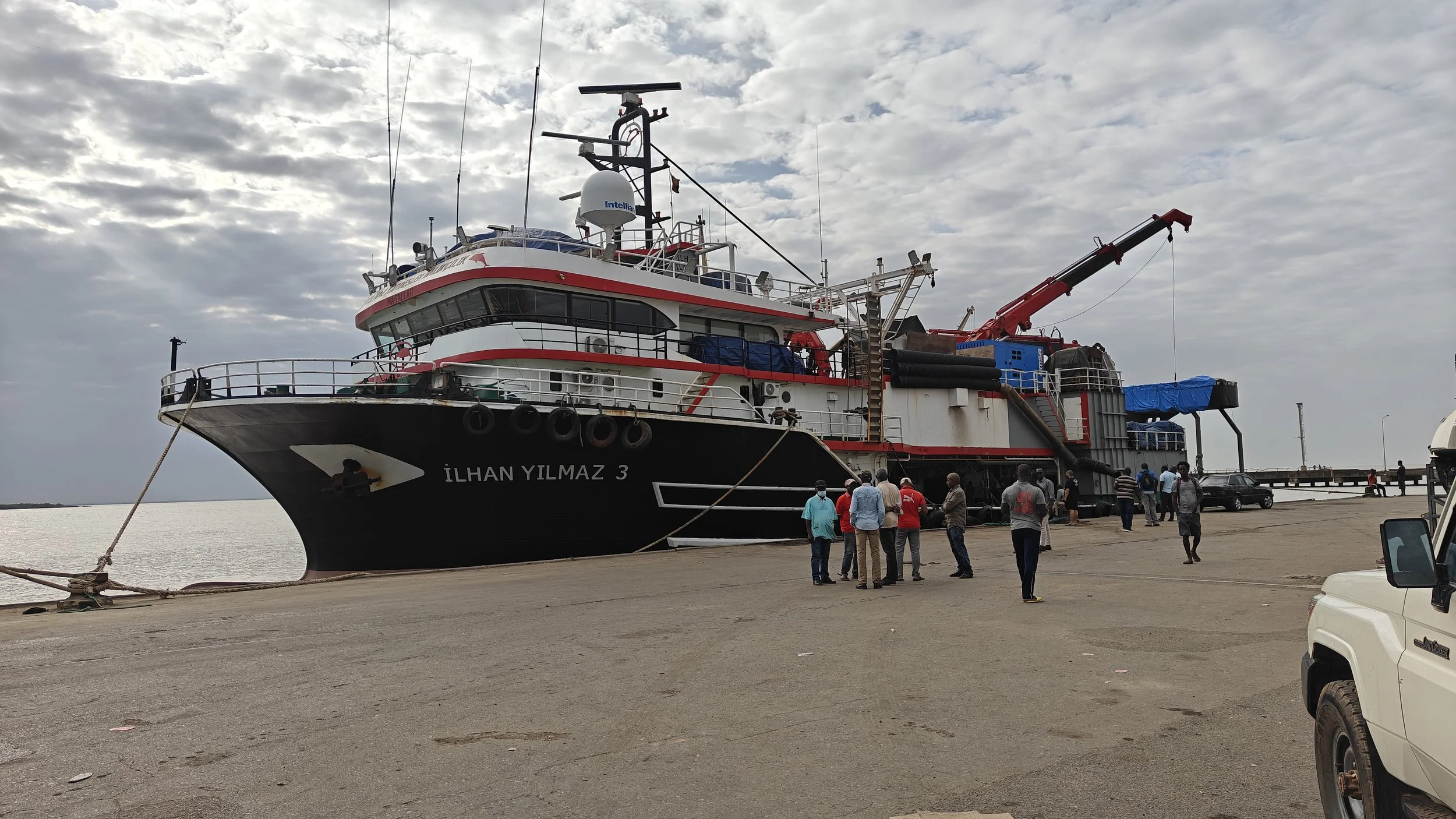
Behind the cargo vessel Hanfeng 88 lies a fundamental issue: the accelerated conversion of small West African pelagic fish into raw materials for global agri-food industrial chains, at the expense of local human consumption. Photo: İlhan Yılmaz 3 in the port of Bissau. This Turkish vessel targets small pelagics in West Africa, anonymous source.
In Mauritania, it has been documented that some Turkish seiners operate under supply agreements with factories owned by Chinese investors, such as the Poly Hondone group. If similar agreements exist between Turkish seiners and Chinese operators in Guinea-Bissau, Turkish seiners could be supplying local factories – or even offshore processing vessels – producing fishmeal and fish oil. These products could then be transported to Dakar aboard cargo vessels like the Hanfeng 88, which could serve as a maritime link between Guinea-Bissau and Senegal.
Another intriguing detail is that the Danish port of Thyborøn appears on a maritime tracking platform as a potential destination for the cargo ship. Thyborøn is not just any port: it is one of the world’s leading centers for the production and processing of fishmeal and fish oil, with a well-established industry.
The listing of Thyborøn appears to reflect a declared destination rather than a confirmed port call. To date, there is no evidence that any cargo from the Hanfeng 88 originating in West Africa has been unloaded there. In other words, the trail remains undocumented. Definitive information would require access to the cargo manifests from Dakar or Bissau, which would clarify the nature of the products, their volumes, origin, exporters, importers, and final recipients.
Artisanal fishers’ concerns over this cargo ship’s activities
Behind this discreet cargo lies a fundamental issue: the accelerated transformation of small West African pelagic fish into raw materials for global agri-food industrial chains.
In Guinea-Bissau, the fishmeal and fish oil industries are expanding in a context where small pelagic fish are already overexploited and illegal, unreported, and unregulated (IUU) fishing is widespread. These factories divert fish from local markets, heighten pressure on critical food stocks, and threaten the livelihoods of artisanal fishers and women fish processors. Their operations also pose significant risks of pollution and social conflict if growth continues unchecked, without strong regulation and transparency. Small pelagic fish are also a cornerstone of the marine ecosystem, serving as the primary prey for predatory fish, seabirds, and marine mammals. Overexploitation of these species raises the risk of broader ecosystem collapse.
A defining feature of the fishmeal and fish oil sector is its near-total lack of transparency. Citizens, fishers, and sometimes even authorities often have little knowledge of who is fishing for these factories, how much fish is being harvested, which species are targeted, or where the resulting cargoes are ultimately shipped.
The urgent need for transparency in the fishmeal and fish oil industry
This lack of transparency is particularly alarming given that stocks of small pelagic fish – such as sardinella and ethmalosa – are already overexploited across the region. These species are not only the primary source of protein for millions of families but also the economic lifeline for thousands of artisanal fishers and women fish processors. Yet when this critical resource disappears without reliable data to track it, how can there be a democratic debate on the use of a resource as strategic as small pelagic fish? How can effective policies be implemented to support local food? How can the ecological collapse of these fisheries be prevented?
Fishmeal and fish oil are transported aboard cargo ships – sometimes after transshipment, sometimes mixed with products from neighboring countries. Here again, the absence of public monitoring – of cargo manifests, shipping routes, and shipowner identities – creates the risk that products sourced through IUU fishing will enter international supply chains without traceability. Transparency in cargo ship operations is therefore not a technical detail: it is an essential tool for combating IUU fishing and corruption.
The cargo ship Hanfeng 88 will undoubtedly continue its rotations between Dakar and Bissau, under the vigilant eyes of artisanal fishers. Today, this vessel has become a symbol of the opacity surrounding the fishmeal trade. Ensuring transparency throughout the sector – including in the operations of transport vessels – is crucial. Behind these anonymous ships, the future of West African fisheries and the communities that depend on them is very much at stake.
Banner photo: The Hanfeng 88 when it was formerly (1992-2017) named Wealthy Pos, by Tetsuya.
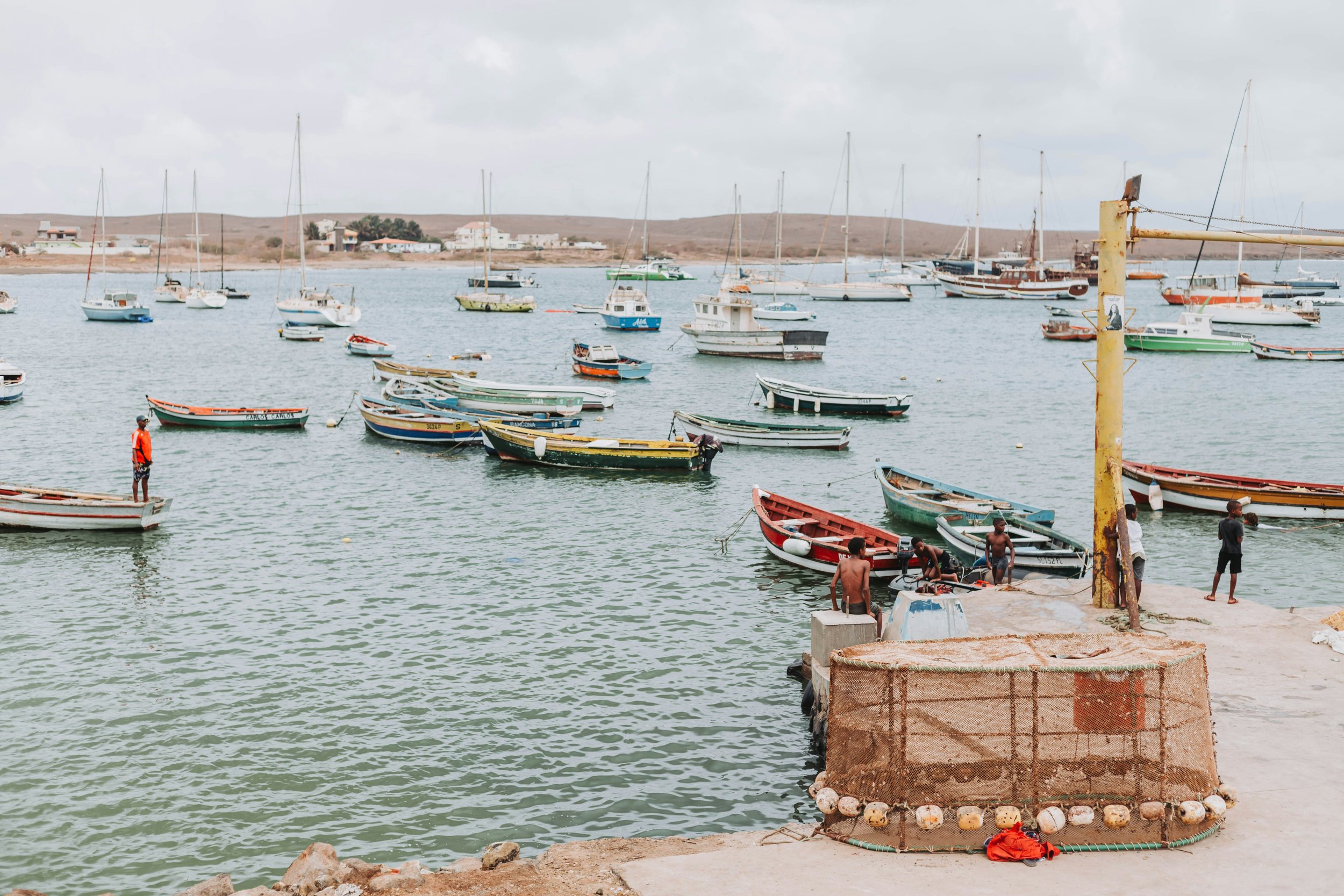
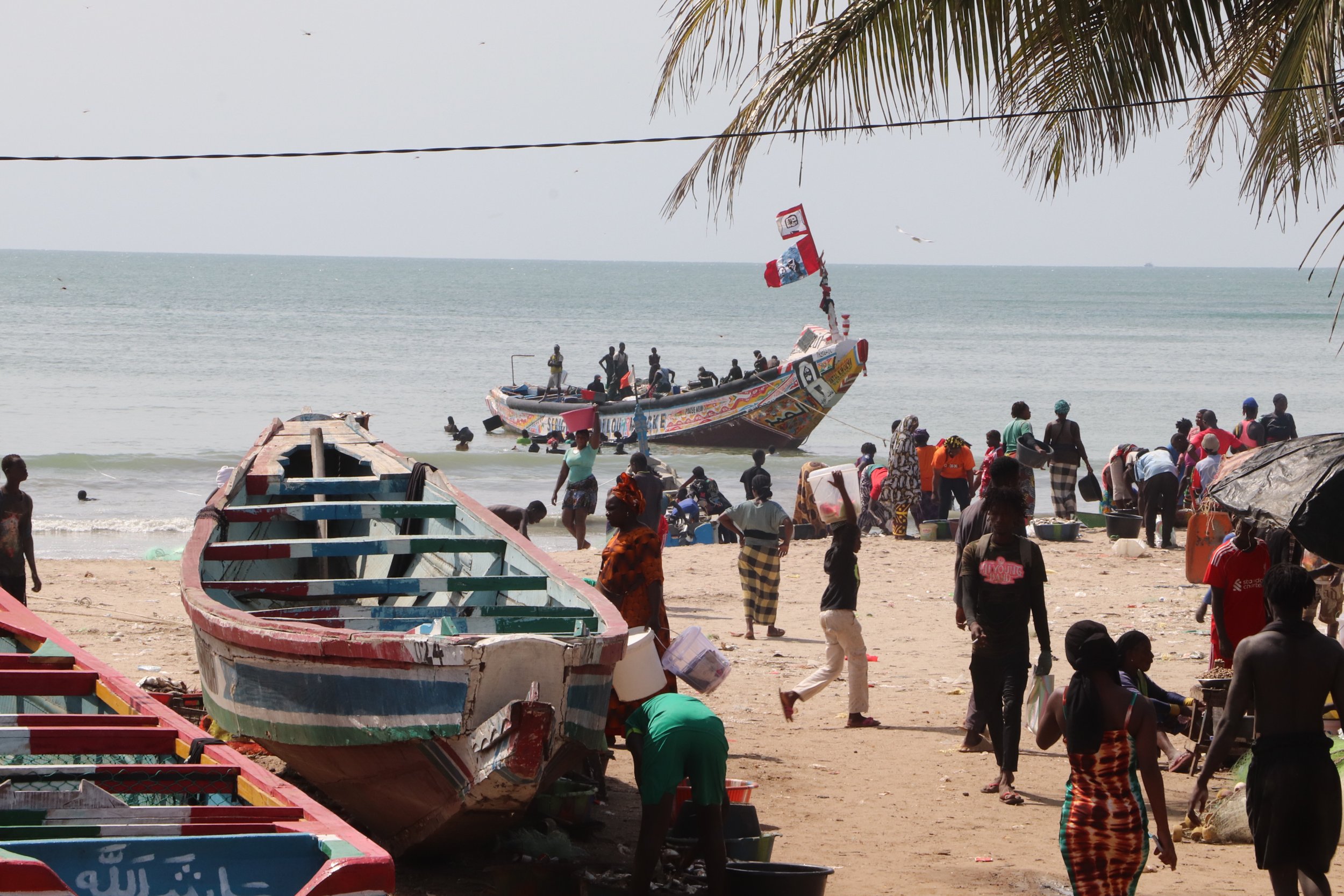


Senegal has granted four new coastal demersal fishing licenses. Although the government says the decision is based on scientific assessments, it is being challenged by fishing industry stakeholders and NGOs, who fear overexploitation of fish stocks, a lack of transparency, and potential risks to food security.