In this article, the author argues that fisheries governance in the EU should shift from a model centred on the ‘vessel’ unit to one based on the ‘enterprise’ unit, drawing in some respects on the Chinese model of distant-water fishing while highlighting its limitations. She points to progress on the EU side in terms of transparency and the control of beneficial ownership, while noting persistent shortcomings. In particular, the author recommends making public subsidies conditional, extending compliance requirements to all fleets, and broadening corporate responsibility to encompass the environmental and social impacts of their activities on a global scale.
Reading time: 7 minutes
As the EU-China stakeholders forum meets on 20 April, discussions will, most probably, focus on sustainability and governance.
The EU tends to present itself as a model for governance norms and regulations; China as the world’s largest fishing nation. An interesting question to ask is whether the EU can actually learn from the way China deals with its distant-water fleets? The answer points to a structural shift: moving from vessel-based to company-based governance.
1. An obsolete fisheries governance structure?
Fisheries governance, in the EU and in most of the world, is still built around the vessel as the basic unit of regulation. Licences are issued to vessels. Quotas go to vessels. Sanctions apply to vessels. Authorisations follow vessels.
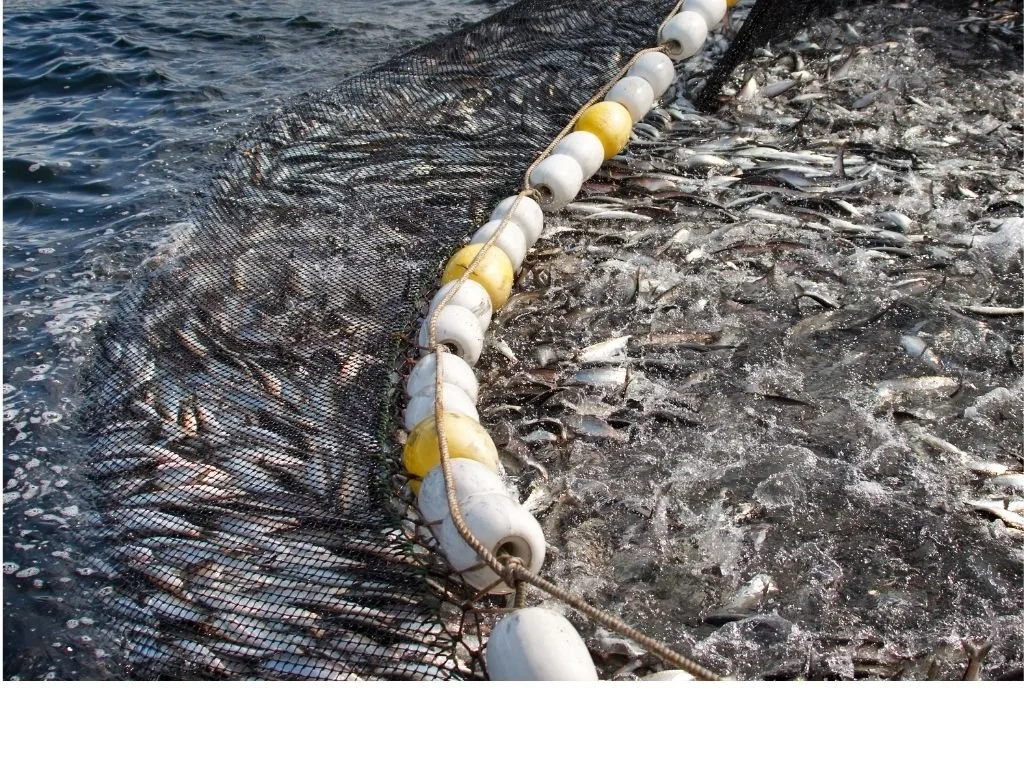
This does not reflect how industrial fishing fleets, including distant-water fishing fleets, actually work. Large distant-water fleets are controlled by a relatively small number of companies. As documented in the FAO research on access arrangements, a single company may operate dozens of vessels across multiple countries, under multiple flags, through a web of subsidiaries and joint ventures. An EU-based company might have some of its vessels flagged in EU member states, and others – of similar size, using similar gear, fishing in the same waters in West Africa – flagged to a Pacific island nation or an African coastal state. The economic unit is the company.
When responsibility is attached only to the vessel, it is easy to escape it: reflag the vessel, use a joint venture or a subsidiary company. Each one of these moves dilutes responsibilities, while profit and control remain concentrated at the top of the corporate structure, in the hands of beneficial owners.
For small-scale fishing communities, this is not an abstract governance problem. It is a daily reality. Industrial vessels operating illegally inside inshore zones are difficult to hold accountable when their ownership is opaque. As one fisher in Grand Béréby, Côte d’Ivoire, described, watching trawlers work waters where they had no right to be: ‘With one net, they take enough fish to fill ten pirogues.’ The vessel may end up being sanctioned. But the company that sent it there faces zero consequences.
2. What China's model reveals, and what it hides
China has built its distant-water fisheries governance around the unit that actually matters: the company. Large Chinese fishing enterprises, many of them state-owned, control entire fleets, manage overseas bases, run fishing and processing operations, and negotiate directly with coastal African governments. China’s industry policies, subsidies, and overseas fishing strategies are directed at these enterprises. That is how modern industrial fishing works, and China’s governance architecture reflects that reality. But this doesn’t de facto lead to corporate-scale accountability, and this is where China's distant water fishing governance model offers a warning as much as a lesson.
The China National Fisheries Corporation (CNFC) in Guinea-Bissau is a good illustration. Present in the country since the mid-1980s under successive bilateral cooperation agreements, CNFC today operates in the country around 15 industrial trawlers, has a permanent local office, a 4000 sqm processing and cold-storage facility – the largest industrial plant in the country – and has been involved in port infrastructure development. It has trained over 1,000 local workers. This is a vertically integrated corporate operation that includes fleets, infrastructure, processing, and bilateral diplomacy.
But the Guinea-Bissau case also reveals the other side of the story. Civil society reports have documented CNFC operations linked to under-declaration of vessel capacity, allowing them to fish beyond authorised limits. This shows that, if a company-scale approach is a necessary condition for distant water fishing fleets accountability, it’s far from being sufficient to make fishing corporations take responsibility for their actions.
3. The EU’s current approach is incomplete
The EU has taken some meaningful steps toward company-level responsibility. The IUU Regulation prohibits EU nationals from acting as beneficial owners of vessels on the EU blacklist. The reformed Control Regulation goes by extending this ban to all vessels flying the flag of countries that have been formally identified under the IUU Regulation, and for the first time requires member states to actively identify who beneficially owns the vessels in their registries.
But these are partial measures. Most EU Member States still lack the frameworks needed to identify and sanction their nationals who profit from illegal fishing through foreign-flagged vessels. A 2023 EU study revealed that only six Member States have the necessary national laws to identify whether EU nationals have legal, beneficial or financial interests in non-EU fishing vessels. So, in most EU Member States, an EU company can receive public support for vessels flagged in Europe while its subsidiaries operate with complete impunity elsewhere.
Beneficial ownership remains largely opaque. And the link between EU companies, their overseas joint ventures, and the fishing pressure those operations place on coastal communities, including the small-scale fishers who depend on those same resources, is rarely visible or regulated.
4. What needs to change: four concrete steps
The principle is straightforward: responsibility should follow the economic entity, not just the fishing vessel flag. Some of these steps build on existing EU frameworks; others require political will that has so far been absent.
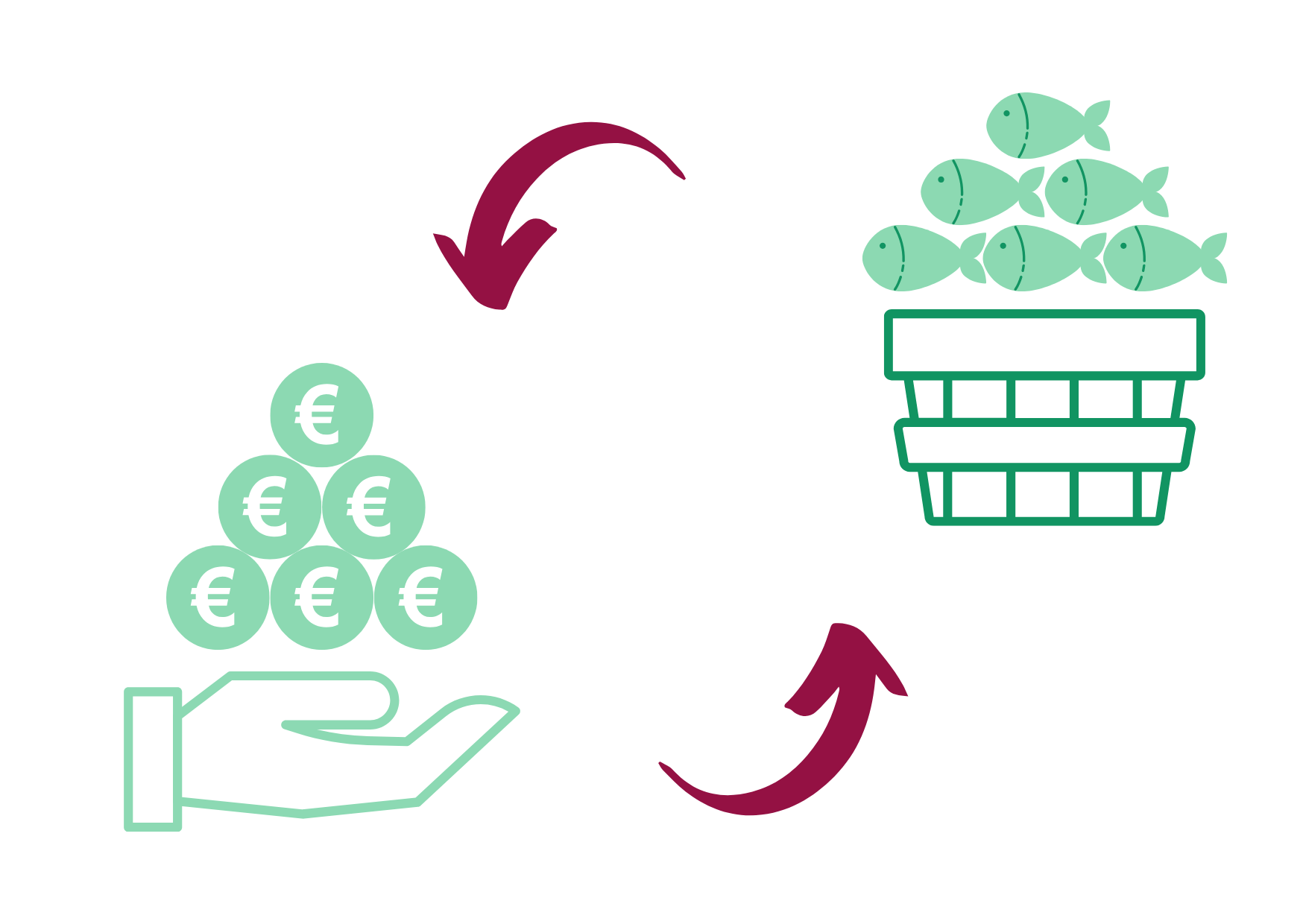
1. Condition public subsidies on the global conduct of EU-linked fishing companies
EU companies receiving public funds should be assessed across all their vessels, flags, and subsidiaries.
2. Assess compliance records at fleet and company levels
Vessel-by-vessel assessment allows companies to ‘insulate’ themselves from the consequences of non-compliance. A serious violation under one flag should affect the whole enterprise: its licences, its access to public funds, its ability to operate under EU fishing agreements.

3. Ensure transparency of beneficial ownership
EU companies should be required to disclose their full ownership structure: parent companies, subsidiaries, and all vessels they control, directly or indirectly. Without this transparency, accountability is impossible. Coastal communities and their governments have a right to know who is actually benefitting from fishing in their water

4. Extend corporate liability to environmental and social harm
Companies that organise, finance, and profit from fishing operations should be liable for the damage those operations cause,- to ecosystems, to artisanal fishers access, to coastal communities food security-, whatever flag the vessel flies. The EU Corporate Sustainability Due Diligence Directive (CSDDD) establishes the right principle – that companies are liable for harms across their global value chains. But following its latest revision, its scope is now limited to companies with over 5000 employees and €1.5 billion turnover: thresholds that exclude virtually every EU fishing company. The due diligence principle should therefore be extended to fisheries through a sector-specific instrument.
In short: those who control fishing operations and profit from them must also be accountable for their impacts on the oceans, and on the communities that depend on them for their livelihoods.
5. Conclusion: a governance reform whose time has come
The lesson from China’s distant-water model is that the company, not the vessel, is the right unit of governance. However, corporate-level organisation without corporate-level accountability harms ecosystems and fishing communities that depend on them for their livelihoods. China’s model carries both a lesson about how global fisheries governance should be structured, and a warning about what happens when that structure is allowed to operate without accountability.
The EU can adopt the same structural logic as China, making sure it includes the accountability that China’s model lacks, by making beneficial owners responsible for their actions.
The obstacle is, for the most part, not technical. The EU frameworks do exist, or are being built. What is missing is the political will to apply to all EU-linked fishing companies the same standards the EU demands of others.
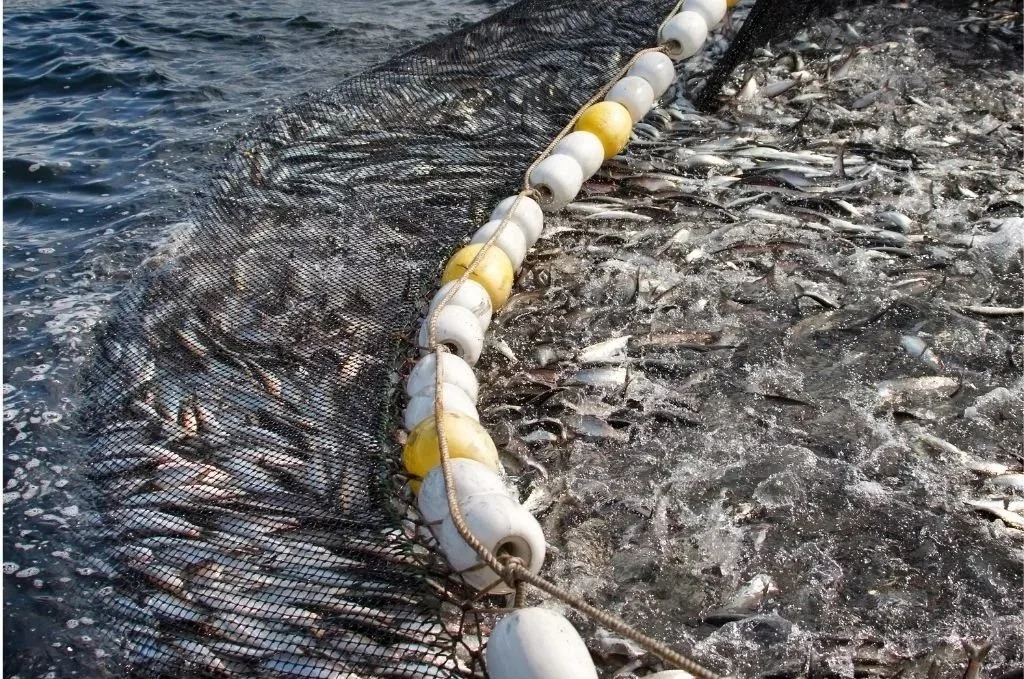
Banner photo: illustrative photo, from CanvaPro.
This article examines the deadlock in negotiations between Mauritania and the EU over a new fisheries agreement, focused on European fleet access and the EU’s financial contribution. As the Commission prepares its Vision 2040 for fisheries and aquaculture, it argues that negotiations should also address sustainable fisheries management and benefits for Mauritania’s small-scale fishing communities.