
In this article, the author examines how the future European Ocean Act could improve the coherence of ocean policies. Such a framework could better align fisheries management, biodiversity conservation and economic activities in order to enhance the health of marine ecosystems, the sustainability of food systems and the prosperity of coastal communities, both in Europe and in partner countries.
Reading time: 9 minutes
The European Union is preparing a new legislative framework for ocean governance: the European Ocean Act, announced under the European Ocean Pact.
At a time when marine ecosystems face growing pressures from overexploitation, pollution and climate change - and when competition for ocean space is intensifying - the choices made now will shape how Europe manages ocean activities for decades to come.
The European Union (EU) is a major global ocean actor. Fishing fleets of EU origin operate far beyond EU waters ; its policies influence international ocean governance ; and its investments shape coastal development across many regions of the world. Through its external policies and partnerships, the EU is also shaping what is increasingly described as its ‘ocean diplomacy’. Decisions taken in Brussels affect not only European seas, but also the livelihoods and food security of millions of people in coastal communities elsewhere, including in Africa.
Yet today, EU policies shaping ocean use remain fragmented. Fisheries management, maritime spatial planning, offshore energy development, biodiversity conservation, development cooperation are often addressed in separate policy arenas.
In our view, the Ocean Act offers a critical opportunity to improve coherence between these policies and ensure that fisheries management, biodiversity conservation and ocean-based economic activities contribute to healthy marine ecosystems, sustainable food systems and thriving coastal communities, both in Europe and in partner countries.
1. Small-scale fisheries: sustaining coastal livelihoods and food systems
In Europe and globally, small-scale fisheries provide jobs for millions of men and women and supply essential nutritious food. They sustain coastal economies, preserve cultural traditions and often operate with relatively low environmental impact. Yet, despite their importance, they remain too often overlooked in policy debates and public investment priorities.
The Vision 2040 for fisheries and aquaculture, also announced under the Ocean Pact, must clearly recognise the contribution of small-scale fisheries, both in Europe and globally, to resilient and sustainable food systems. Strengthening this sector requires supporting sustainable local fisheries value chains, reducing post-harvest losses and ensuring that trade and fisheries agreements do not undermine the food security of coastal communities.

As a source of protein for millions of people, small-scale fisheries must be fully recognised in the future Ocean Act. This requires the effective involvement of coastal stakeholders in decision-making processes that will ultimately affect their livelihoods, through concrete measures such as access to information, technical assistance and capacity building. Photo: A fish processor in Sanyang, Gambia, by Mediaprod.
Women play a central role in these local fisheries value chains. In many regions they represent a majority of fish processors and traders, supplying local and regional markets and sustaining household incomes. Their work is essential to food security, yet it often remains insufficiently recognised in policy frameworks.
During her visit to Brussels for the European Ocean Days, Raïssa Nadège Leka Madou, a fish processor from Côte d’Ivoire representing the African Confederation of Artisanal Professional Fishers organisations (CAOPA) reminded policymakers that: “Thousands of women across Africa are processing and marketing fish that feeds our populations. Recognising and supporting their role through EU-Africa partnerships is therefore essential for the resilience of coastal food systems.”
She also stressed the importance of strengthening fisheries value chains through international cooperation: “EU instruments such as sustainable fisheries partnership agreements and sectoral support can strengthen the entire artisanal fisheries value chain in Africa when they are used in a transparent, inclusive and coherent way.”
Building resilient fisheries value chains requires secure access to marine resources, recognised tenure rights for fishing grounds and landing sites, and stronger co-management arrangements that allow fishers to participate meaningfully in resource management.
Recognising and strengthening the role of small-scale fisheries should therefore become a guiding principle of the EU’s emerging ocean governance framework. To achieve this, coastal stakeholders must be meaningfully involved in decisions affecting their livelihoods, and their participation must be supported by practical measures such as access to information, technical support and capacity building.
2. Thriving fishing communities need healthy ecosystems and fair access to ocean space
To achieve credibility, the Ocean Act must start from a simple premise: thriving fishing communities depend on healthy marine ecosystems and fair access to ocean space. Environmental sustainability must therefore remain the foundation of the Ocean Act. Achieving this requires ecosystem-based management of marine resources, the recovery of depleted fish resources and the restoration of coastal habitats.
For coastal communities around the world, healthy ecosystems are not an abstract objective, they are the basis of their livelihoods, food security and cultural identity. However, growing competition for ocean space has become one of the main challenges of ocean governance. Offshore energy production, maritime transport, tourism, conservation initiatives increasingly compete with fishers for access to coastal areas, at sea and on-land.
“EU instruments such as sustainable fisheries partnership agreements and sectoral support can strengthen the entire artisanal fisheries value chain in Africa when they are used in a transparent, inclusive and coherent way.””
Maritime spatial planning, which will organise how these activities coexist, must safeguard the livelihoods, rights and long-term wellbeing of coastal communities that depend on the ocean.
Strengthening the implementation of the EU Maritime Spatial Planning Directive is likely to be a central element of the Commission proposal. The approach adopted by the EU in organising access to ocean space in its own waters will also influence how maritime spatial planning is promoted through its partnerships and cooperation with third countries. In this sense, maritime spatial planning is also becoming a key instrument of EU ocean diplomacy.
In Africa, where small-scale fisheries is the backbone of coastal livelihoods and food systems, it will be essential to ensure that MSP processes recognise the spatial needs, knowledge and rights of artisanal fishing communities.
Through its support to MSP initiatives taken by their African partners, the EU must ensure that small-scale fisheries are meaningfully involved and that their fishing grounds, landing sites and coastal infrastructures are not negatively affected, or displaced, by new maritime uses of the ocean.
3. The CFP evaluation: a test for sustainable and fair fisheries governance
If the Ocean Act is to better align ocean governance and fisheries policy, the ongoing evaluation of the Common Fisheries Policy (CFP) becomes particularly important. Together, these two initiatives offer an opportunity to ensure that fisheries policy and broader ocean governance frameworks evolve in a coherent and mutually reinforcing way.
The CFP evaluation should go beyond assessing the biological sustainability of fish stocks or the economic performance of fleets. It should also examine how effectively the CFP contributes to wider objectives pursued in the Ocean act, such as food security, resilient coastal livelihoods and the EU role in international partnerships and ocean diplomacy.
“If the EU wants a credible ocean diplomacy, small-scale fisheries must be placed at the centre of the external fisheries strategy announced for 2026.””
A key area to look at is the external dimension of EU fisheries policy, including Sustainable Fisheries Partnership Agreements (SFPAs), and the growing role of joint-ventures involving EU operators in third countries.
Joint-ventures increasingly shape the external footprint of EU fisheries, yet their governance and impacts remain insufficiently documented. Recommendations developed by the Long Distance Advisory Council have highlighted the need to improve transparency of joint-ventures, including clearer information on ownership structures, and ensure the social and environmental sustainability of their operations.
Initiatives such as the Fisheries Transparency Initiative demonstrate the value of making fisheries agreements, access conditions and financial flows publicly accessible, helping to improve accountability and support better governance of marine resources.
In the case of SFPAs, the evaluation should also assess how these partnerships contribute to sustainable development in partner countries. While access for EU fleets remains one element of these agreements, their broader purpose should be to support sustainable fisheries governance, resilient coastal economies and sustainable food systems.
In this perspective, the financial contributions associated with SFPAs should increasingly reflect the priorities and development needs identified by partner countries, rather than being determined by the level of fishing opportunities granted to EU fleets.
4. Connecting ocean policies at home and in global partnerships
Rather than replacing existing legislation, the Ocean Act is likely to take the form of a legislative package reviewing key governance instruments, such as the Maritime Spatial Planning Directive, the Marine Strategy Framework Directive and the Environmental Impact Assessment Directive.
Better coordination between these instruments could help ensure that environmental protection, sustainable fisheries and blue economy activities are managed in a more integrated way.
The Ocean Act will also shape the EU’s role in global ocean governance, and establish the credibility of its ocean diplomacy, particularly through its fisheries partnerships, development cooperation and blue economy initiatives with partner countries. The same social and environmental standards applied within Europe should guide the EU’s engagement with partner countries.

The future Ocean Act must work to improve transparency within EU-origin fishing joint ventures and ensure the social and environmental sustainability of their activities. Photo: the cargo ship HUA XIN 17, pictured here in the waters off Guinea-Bissau in January 2026, is a joint venture; originally Chinese-owned, it now flies the Gabonese flag. Source: anonymous.
As Gaoussou Gueye, speaking on behalf of Afrifish-net during the European Ocean Days, emphasised: “If the EU wants a credible ocean diplomacy, small-scale fisheries must be placed at the centre of the external fisheries strategy announced for 2026.” He also stressed the importance of fair governance and targeted investment for artisanal fisheries: “Our call is for fair rules, targeted investments and shared governance, for safe food systems, a living ocean and resilient small-scale fishing communities.”
This is particularly important in partnerships with African countries, where small-scale fisheries play a central role in food security, employment and coastal economies. Ensuring that EU ocean governance supports sustainable fisheries and resilient coastal communities in partner countries should therefore be an integral dimension of the Ocean Act.
5. What the EU Ocean Act must deliver
The Ocean Act will only succeed if it connects ocean governance with the realities of fishing communities. The development of the Ocean Act and the evaluation of the Common Fisheries Policy come at a crucial moment to achieve this. Together, these processes offer an opportunity to strengthen coherence between fisheries management, environmental protection and the governance of maritime activities across EU internal and external ocean policies.
In its international dimension, the Ocean Act should deliver three key outcomes: stronger recognition of small-scale fisheries in ocean governance; fair access to marine space for fishing communities; and greater coherence between EU ocean policies and the Union’s international fisheries partnerships.
If these objectives are pursued coherently, the Ocean Act can help shape a model of ocean governance that protects marine ecosystems while sustaining the fisheries and coastal communities that depend on them, both in Europe and in partner countries.
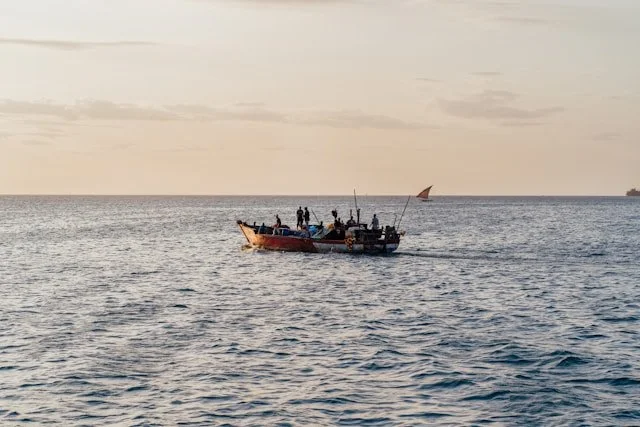
Banner photo: fishers in Zanzibar, Tanzania, by Keegan Checks.


Small pelagic stocks are shared across West African waters, yet their management remains largely national. In this article, the author argues that stronger regional management is not simply a matter of better policy or voluntary cooperation: it also flows from existing obligations under international law. These obligations require coastal states not only to conserve shared stocks, but to cooperate on issues such as fishing capacity and allocation of access, implement agreed measures and hold one another accountable where national decisions undermine a shared resource. Drawing on recent examples from West Africa, the article shows why effective regional governance is essential if national conservation efforts are to succeed.