
With Joëlle Philippe
This article has been written in collaboration with Joëlle Philippe.
Although the EU-Mauritius Sustainable Fisheries Partnership Agreement generates measurable macroeconomic gains, these benefits remain largely invisible to small-scale fishers. They highlight weak transparency, limited coastal development impact, governance issues, and inequitable access to resources, calling for a more inclusive, community-centred fisheries partnership model.
Reading time: 8 minutes
As the European Union prepares to negotiate a new protocol under its Sustainable Fisheries Partnership Agreement (SFPA) with Mauritius, policymakers will likely focus on familiar indicators: tuna catches, economic returns, and regional fisheries governance.
The evaluation of the current protocol indeed concludes that the agreement has generated tangible benefits for all parties: ‘Every euro of public investment is estimated to generate 4.01 euros in added value: 1.43 for the EU; 1.48 for Mauritius; and EUR 1.09 for other entities’. This is despite the fact that the uptake of fishing possibilities has been limited: less than half of the negotiated access has been used, be it for purse seiners or for longliners.
Yet for many Mauritian small-scale fishers, such figures feel far removed from the realities of life along the coast. Conversations with representatives of the Federation of Mauritian Artisanal Fishers and the Syndicate of Mauritian Fishers, representing together around 1600 small-scale fishers, reveal a different perspective: one in which the concept of ‘partnership’ remains fragile, and the benefits of the agreement appear distant from fishing communities.
The upcoming renegotiation of the protocol therefore offers an opportunity to ask a fundamental question: how can the EU-Mauritius SFPA genuinely contribute to the development and resilience of Mauritian small-scale fisheries?
1. An agreement whose benefits remain largely invisible to coastal communities
The Commission’s evaluation stresses that the agreement has fulfilled several of its objectives, including supporting cooperation on fisheries governance and monitoring.
However, the same evaluation notes that the impact of sectoral support funding has been limited by delays and implementation challenges. As of December 2025, Mauritius had been paid only two out of its four annual tranches of 450,000 euros each. The report states, ‘the delayed implementation of the sectoral support programme by Mauritius’authorities undermined the added value of the EU intervention’. For Mauritian fishers, the issue goes even further than delays. Many say they simply do not know how the funds have been used.
‘The lack of transparency pushes fishers to reject the agreement completely,’ explains Kenzy Brunet of the Federation of Mauritian Artisanal Fishers. ‘Lagoon fishers ask where the money goes, because they do not see any progress.’
For communities that depend on lagoon and coastal fisheries, the promise of ‘sustainable fisheries partnership’ sounds hollow. As fishers repeatedly emphasise, sustainability cannot be measured only through the performance of distant-water fleets; it must also be visible in the development of coastal fisheries.
2. A coastal sector still struggling after environ-mental shocks
Mauritian fishing communities are still dealing with the consequences of the 2020 Wakashio oil spill, which contaminated mangroves and coastal ecosystems. Studies have reportedly been conducted on soil and marine organisms to estimate potential contamination, however fishers say their results have not been made public.
For communities that rely on fragile lagoon ecosystems, uncertainty about environmental conditions only adds to economic vulnerability.
At the same time, fishers face governance problems within the sector itself. The system of fisher identification cards, which determines eligibility for fisheries benefits, has long been a source of controversy. According to fishers, the cards are sometimes distributed to individuals who are not active fishers.
3. Industrial fishing and unequal local benefits
Fishers explain that EU purse-seiners are authorised to operate as close as 15 nautical miles from the coast, although most of their fishing activities take place further offshore, often towards waters closer to the Maldives or Somalia.
In practice, industrial fleets rarely land fish in Mauritius, meaning that the economic spillover for the local economy remains modest.

Small-scale fishers from Mauritius criticise misaligned sectoral support, citing infrastructure investments that often miss local needs. Photo: A fisher works the offshore reef near Poudre d’Or, by Gail Hampshire.
For small-scale fishers, the concern is therefore less about direct competition and more about perceptions of fairness in the use of marine resources. When foreign fleets access national waters under international agreements, coastal communities naturally expect to see clear benefits in return.
Against this backdrop, one area where benefits from industrial tuna fishing could be more visible concerns the management of bycatch from tuna purse-seine vessels.
Before 2000, Mauritian fishers’ organisations played an important role in distributing bycatch landed by foreign fleets. The fish was sold at reduced prices on local markets, helping provide affordable protein to poorer communities.
This system worked because the Agricultural Marketing Board authorised the Federation of Artisanal Fishers to manage the distribution, ensuring sanitary standards were met.
However, the system has gradually collapsed. A reduction in foreign fishing licences in 2022 led to a decline in available bycatch. At the same time, access to the remaining supply has increasingly shifted towards companies connected to political elites. ‘New companies created by people close to the government now access the bycatch and sell it to hotels and supermarkets at high prices,’ Brunet explains. For fisher organisations, the consequences are serious. ‘This situation threatens the survival of the federation, which risks closing its doors and laying off its employees.’
4. Sectoral support: when development projects miss their target
The frustrations surrounding sectoral support funding are also reflected in the types of projects that have been implemented. Fishers point to several cases where infrastructure investments appear poorly aligned with local needs. Ice machines financed with EU support have reportedly been installed in villages with very small fishing communities, while major landing sites still lack basic facilities.
“As of December 2025, Mauritius had been paid only two out of its four annual tranches of 450,000 euros each. However, for Mauritian fishers, the issue goes even further than delays, as many say they simply do not know how the funds have been used.””
‘You can buy a car for someone without knowing what they need,’ Brunet explains. ‘If you buy a Mini for someone who lives in the mountains, it will be useless.’ Fishers’ organisations have proposed rehabilitating fisher houses in strategic locations such as Tamarin, Mahébourg and Cap Malheureux. These centres could serve as landing sites, fish markets and processing facilities, which could in turn create employment opportunities for women fish processors and allow fishers to sell their catch locally.
Yet these proposals have struggled to gain traction. In Tamarin, the fisher house was renovated but later subjected to a monthly rent of 70,000 Mauritian rupees (approximately 1,300€), which made it financially unviable for fishers to manage the facility. Renovation projects in Mahébourg and Cap Malheureux remain incomplete or blocked.
5. Development schemes with mixed results
Some programmes have produced tangible benefits, particularly schemes supporting the acquisition of semi‑industrial fishing vessels. These vessels operate near offshore banks and represent an opportunity for fisher cooperatives seeking to expand their activities.
However, because the vessels are often built in India or Sri Lanka, fishers must sometimes begin repaying loans before the boats are delivered and operational. Fishers also question why these vessels are not built locally, given that Mauritius already has shipyards capable of such construction.
Another initiative, the so‑called ‘canotte scheme’, which subsidised small boats for fishing near anchored fish aggregating devices, has been less successful. Fishers say declining fish stocks and the absence of refrigeration make such operations increasingly unprofitable, and some subsidised boats have reportedly been diverted to tourism activities.
6. Aquaculture: development for whom?
The growing emphasis on aquaculture is also viewed with caution by many fishers. Large‑scale projects focusing on export species such as sea cucumbers or algae are seen as primarily benefiting private investors. Fishers point to aquaculture infrastructure near Bambous-Virieux that reportedly cost several million rupees but now stands unused.
At the same time, fishers do not reject aquaculture entirely. Many believe it could provide a useful supplementary activity during bad weather or low fishing seasons, provided it is developed on a small, community‑based scale.
7. The missing piece: a long term vision for Mauritian fisheries and a partnership that must start with fishers
In the EU published evaluation, the EU-Mauritius SFPA is widely regarded as mutually beneficial at the macroeconomic level. But if the next protocol is to fulfil the promise of sustainability, it must also address the concerns of the communities that depend most directly on marine resources.
Greater transparency in the use of sectoral support funds, meaningful participation of fisher organisations in decision‑making, and targeted investments in coastal fisheries infrastructure would go a long way towards rebuilding trust.
Ultimately, sustainability must be judged by whether it contributes to resilient coastal communities, fair access to resources, and viable livelihoods for small‑scale fishers.
Because sustainability must not remain only in policy documents it must also be felt on the shore where fishers return with their catch.
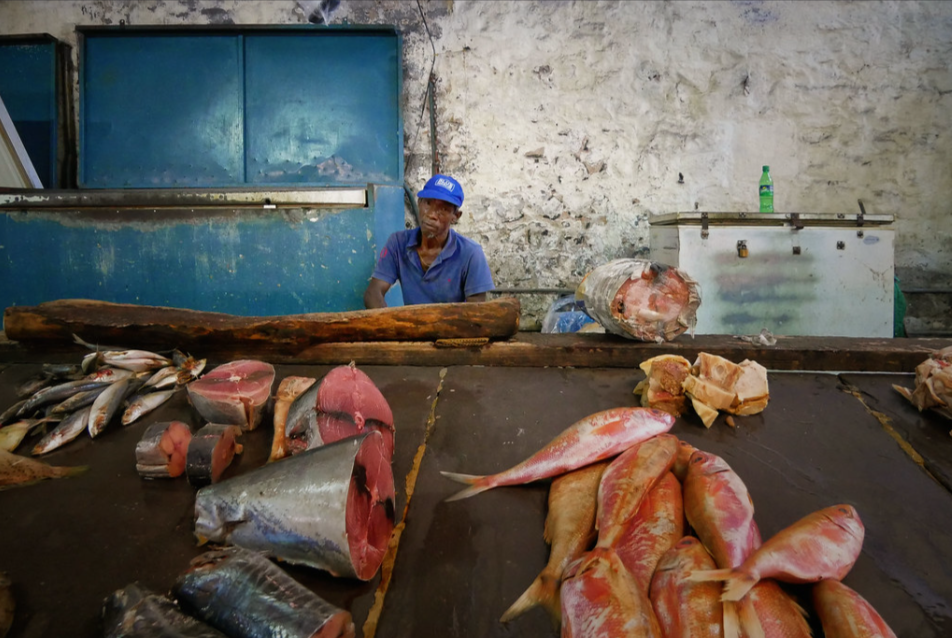
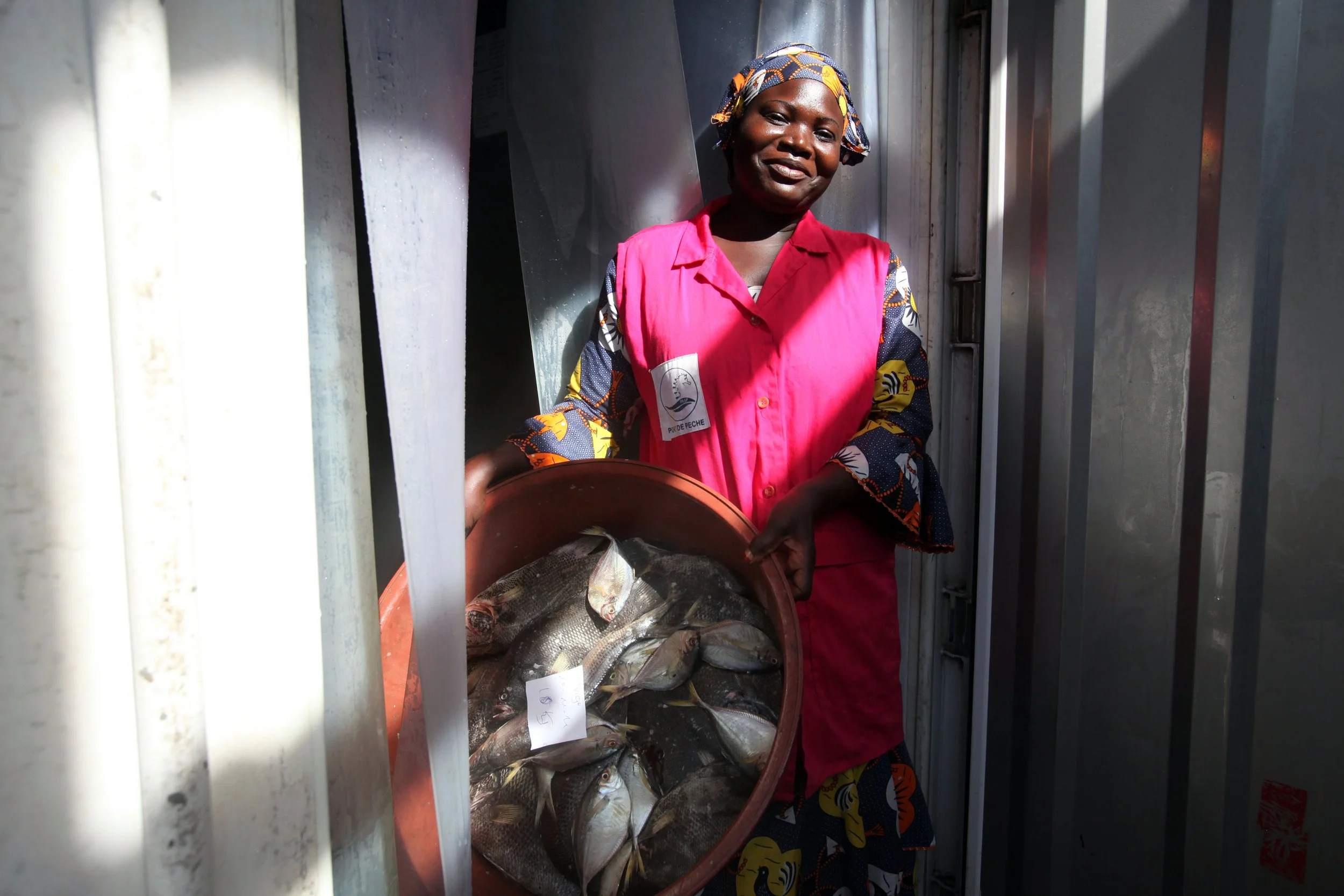
Banner photo: A fishmonger in the Port Louis fish market, in Mauritius, by Stefan Stega.
Small pelagic stocks are shared across West African waters, yet their management remains largely national. In this article, the author argues that stronger regional management is not simply a matter of better policy or voluntary cooperation: it also flows from existing obligations under international law. These obligations require coastal states not only to conserve shared stocks, but to cooperate on issues such as fishing capacity and allocation of access, implement agreed measures and hold one another accountable where national decisions undermine a shared resource. Drawing on recent examples from West Africa, the article shows why effective regional governance is essential if national conservation efforts are to succeed.