Fish is becoming increasingly scarce on African tables, even though African waters continue to supply international markets. As the EU is about to reveal its future strategy for external fisheries action, the next generation of Sustainable Fisheries Partnership Agreements (SFPAs) offers an opportunity to address this challenge. Future agreements should look beyond fishing opportunities and financial contributions to examine the entire value chain - from sustainable access to fish through conservation, processing and distribution. Their contribution to food security should ultimately be judged by a simple test: do they help more sustainably caught fish reach local consumers in good condition and at an affordable price?
Reading time: 14 minutes
Overview
A. AFRICA’S INCREASINGLY EMPTY FISH PLATE
In Africa, fish is one of the most accessible sources of animal protein for millions of people. It also supports livelihoods throughout extensive, mainly artisanal, value chains. Yet Africa is also the continent where aquatic foods are least available. According to FAO 2026 State of World Fisheries and Aquaculture report, fish availability in Africa was only 9.1 kg per person in 2023, compared with a global average of 21.1 kg. And the future outlook is not reassuring. Although Africa’s total production and consumption of aquatic foods are expected to increase, population growth will result in a further decline in per capita consumption, particularly in sub-Saharan Africa. The continent therefore faces an enormous challenge: aquatic foods are already less available per person than anywhere else in the world, and this availability is expected to decline further. For African artisanal fishing organisations, this is a strategic priority: “Fisheries policies and investments should be assessed against their contribution to increasing the sustainable availability of fish for African consumers, while securing the livelihoods and rights of the communities that depend on these resources,” stated the African Confederation of Artisanal fisheries organisations (CAOPA) Statement to FAO Committee on Fisheries.
Ensuring that existing fish resources contribute as much as possible to food security is therefore essential. Policies should protect the resources and the ecosystems, prioritise human consumption over reduction in fishmeal and fishoil, and reduce losses along value chains. These objectives should also guide the European Union when it considers its future Sustainable Fisheries Partnership Agreements (SFPAs) with African countries.
This would be coherent with the EU wider partnership with Africa. Strengthening sustainable and resilient food systems is already a priority of the EU - Africa Global Gateway Investment Package, which supports Africa’s agriculture, fisheries and food development agenda, including through investment in sustainable value chains, fish processing and improved nutrition. Giving greater attention to food security and local fish value chains in future SFPAs would connect the EU fisheries partnerships more closely with its broader priorities for cooperation with Africa.
SFPAs cannot, of course, determine partner countries’ food policy. But as they organise EU fleets access to resources, shape the destination of catches, and provide sectoral support, they have the potential to reinforce, or weaken, the contribution of fisheries to local food security.
B. PUTTING FOOD SECURITY ON THE SFPAS TABLE
The connection between SFPAs and food security is not a new question. Over recent years, several elements of a ‘food security approach’ have emerged, notably in European Parliament positions on particular agreements.
The European Parliament (EP) 2022 resolution on the EU-Mauritania SFPA refers explicitly to the Voluntary Guidelines for Securing Sustainable Small-Scale Fisheries in the Context of Food Security and Poverty Eradication. In it, the Parliament called for sectoral support to strengthen local food security and small-scale fishing communities. The EP argued that fish should primarily be used for human consumption rather than fishmeal and fish oil production. The resolution also supported the requirement for EU pelagic vessels to provide part of their catches for distribution to Mauritanian consumers, and called for regional management of shared small pelagic stocks, explicitly recognising their importance for food security.
This position goes beyond asking whether EU fishing activities in Mauritanian waters are environmentally sustainable. It connects resource management with the use of the fish, its availability to local populations and the use of sectoral support. In other words, it looked not only at what is caught, but also what eventually reaches Mauritanian consumers’ table.
The 2024-2029 EU-Guinea-Bissau Protocol also marks an important precedent: it is the first SFPA protocol to refer explicitly in its preamble to the FAO Voluntary Guidelines for Securing Sustainable Small-Scale Fisheries. In its 2025 Resolution on this SFPA, the Parliament looked at this agreement protocol through the local fish value chain. It called the EU to mobilise technical and financial assistance to “facilitate landings of species consumed locally, in the interests of local communities’ food security, and ensure access to the commodity [fish] for women processors and wholesale fish merchants, ensuring and promoting local human consumption of fish”. At the same time, the EP warned against the expansion of fishmeal production because it uses valuable protein resources needed by local communities.
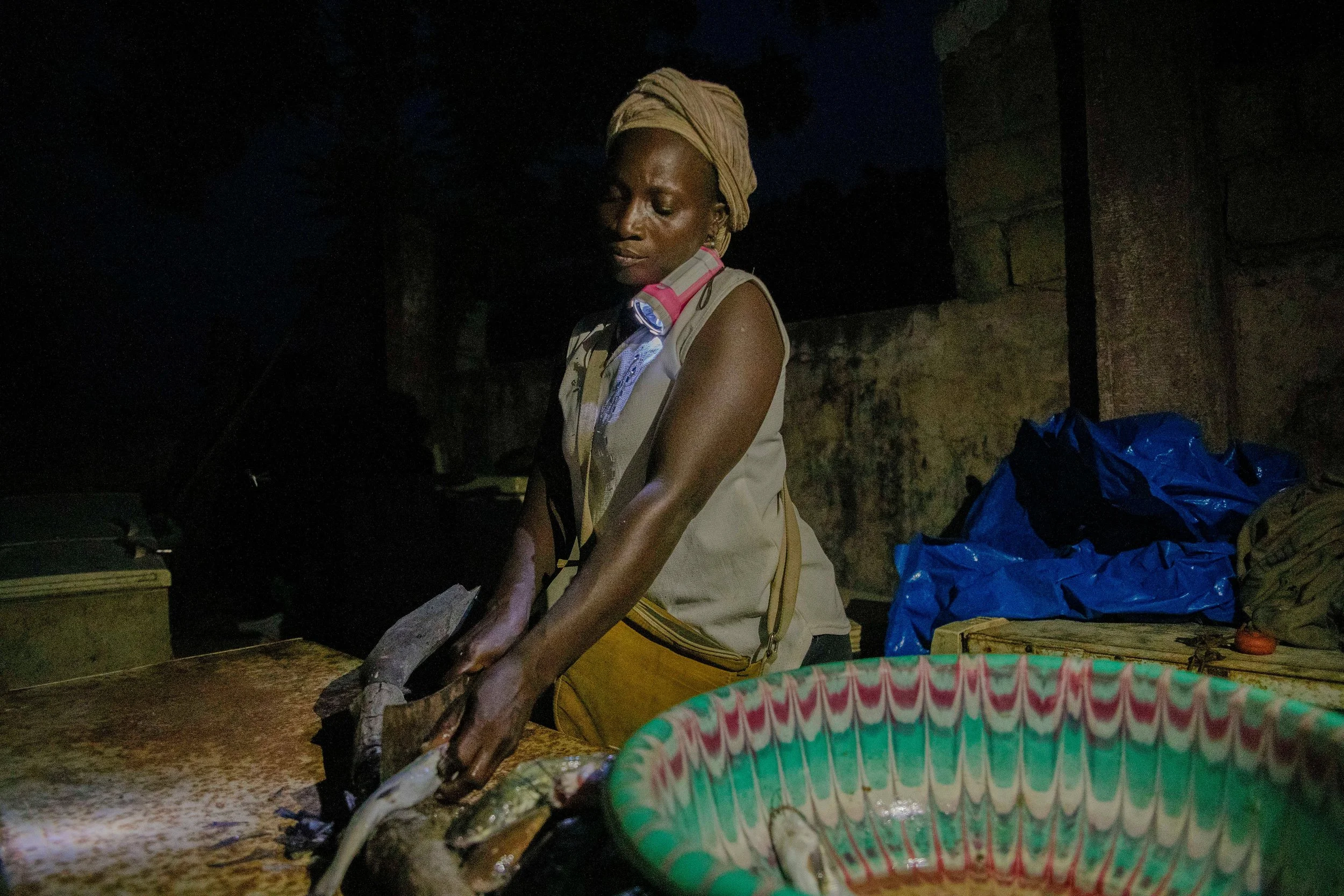
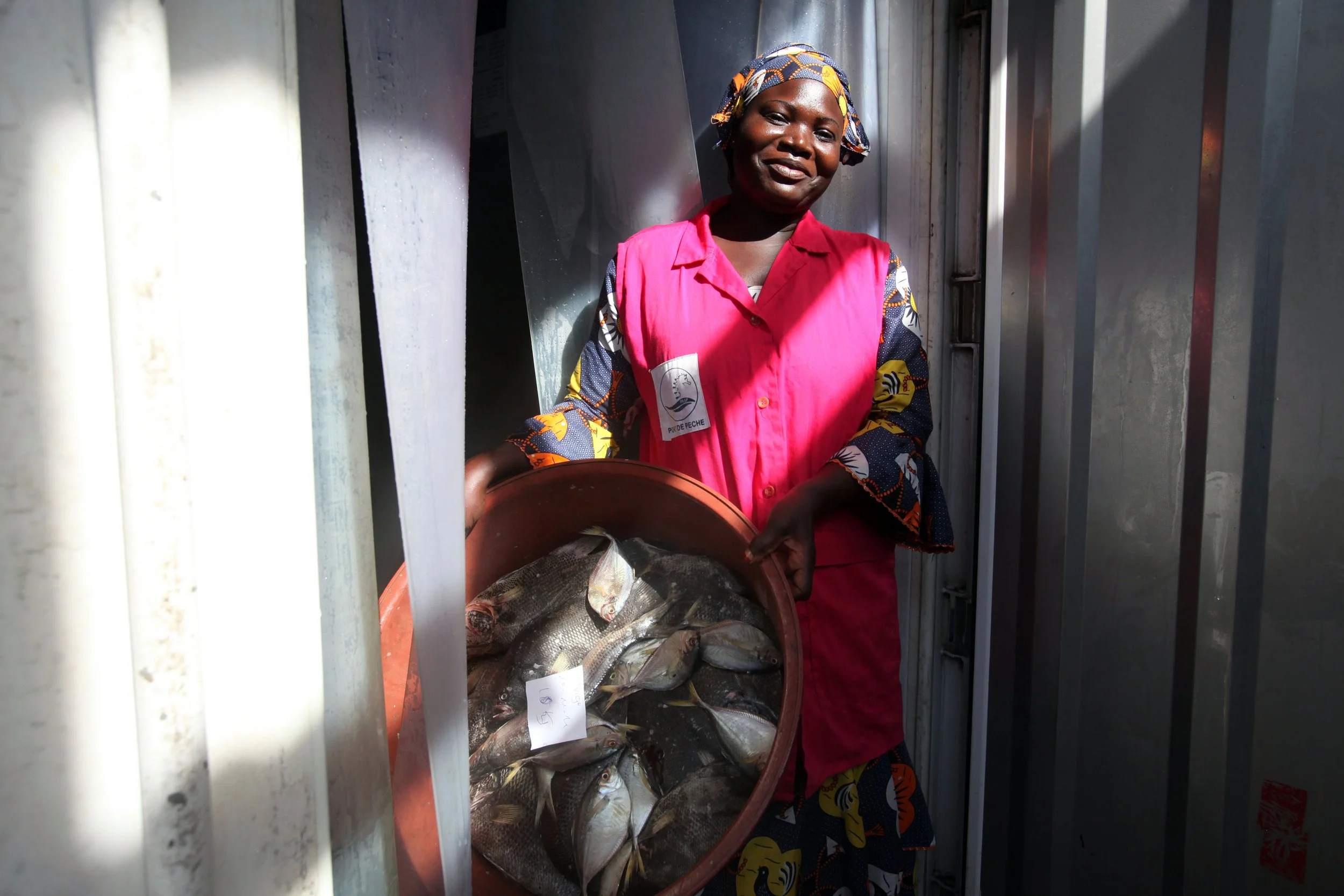
In the interest of food security, it is essential that SFPA landings are of species that are consumed locally, so that women fish processors can process and sell for local consumption. Photo: A woman fish processor in Cacheu, Guinea Bissau, by Carmen Abd Ali.
The Parliament Development Committee (DEVE) took a similar approach to the EU - Côte d’Ivoire SFPA. In its opinion, it underlined the country strong dependence on fish as a source of animal protein and the central role of artisanal fisheries. DEVE also called for sectoral support to benefit small-scale fisheries, fishing communities, women and young people, and to strengthen local processing.
Taken together, these positions provide many of the ingredients for a food-security approach to future SFPAs: sustainable and preferential access to resources for local fisheries; priority for human consumption; access to raw material for women processors; using the sectoral support for local processing and value creation; and safeguards against using fish in ways that may undermine local food availability, like reduction into fishmeal and fish oil.
Stakeholders debating the future of SFPAs are also asking how agreements can generate more tangible benefits for partner countries and fishing communities, particularly through employment, local value addition and stronger local economies. At a conference on the next generation of SFPAs in April 2026, EU and African participants highlighted the need to safeguard food security in partner countries. The LDAC advice on the next generation of SFPAs goes further, calling for their objectives to be formally aligned with EU development priorities, including local food security and poverty reduction, and for catches made under SFPAs to primarily supply human consumption markets rather than non-food uses.
All ingredients are therefore already on the table. The challenge is to bring them together in a coherent approach. Experiences under existing SFPAs offer some useful lessons about how EU fisheries agreements and development cooperation can complement partner countries national policies for strengthening food security.
1. Lessons from previous SFPAs
A. MAURITANIA: LANDING THE FISH IS ONLY THE STARTING POINT
Under the EU-Mauritania SFPA, EU pelagic freezer trawlers and shrimp vessels, - with respect to their fish by-catches-, must contribute 2% of their pelagic catches transhipped or landed after a fishing trip to Mauritania’s policy of distributing fish to people in need. This is something unusual in fisheries access arrangements: a direct link between the fishing activity authorised under an agreement and the food made available to the population of the partner country.
The fish is then channelled through the Société Nationale de Distribution de Poisson (SNDP), which supplies subsidised fish across Mauritania, including to inland communities. The SNDP is not an SFPA institution: it is a Mauritanian public company, created in 2013 and supported since its establishment by Spanish cooperation. It now reports 33 logistics centres and 398 sales outlets. The result therefore depends on the interaction of several bodies. According to the latest evaluation, these contributions accounted, on average, for around 12% of the fish collected by the SNDP, while the Mauritanian administration, through SNDP, and Spanish cooperation provide the network through which it reaches consumers.
Mauritanian artisanal fishers consulted for this article welcome this aspect of the agreement. They emphasise that the species supplied are those generally consumed locally. But they also point to its limitations: in some areas, demand continues to exceed availability, and the available fish is often sold out by ten in the morning.
Development-cooperation programmes support other links in the same food-security chain. The EU- and German-funded Promopêche programme invested in artisanal landing sites, conservation and transport, women’s cooperatives and small fisheries enterprises. A current GIZ project connects sustainable fisheries management with improved hygiene, more diverse fish products and new distribution channels, including possible support for school meals.
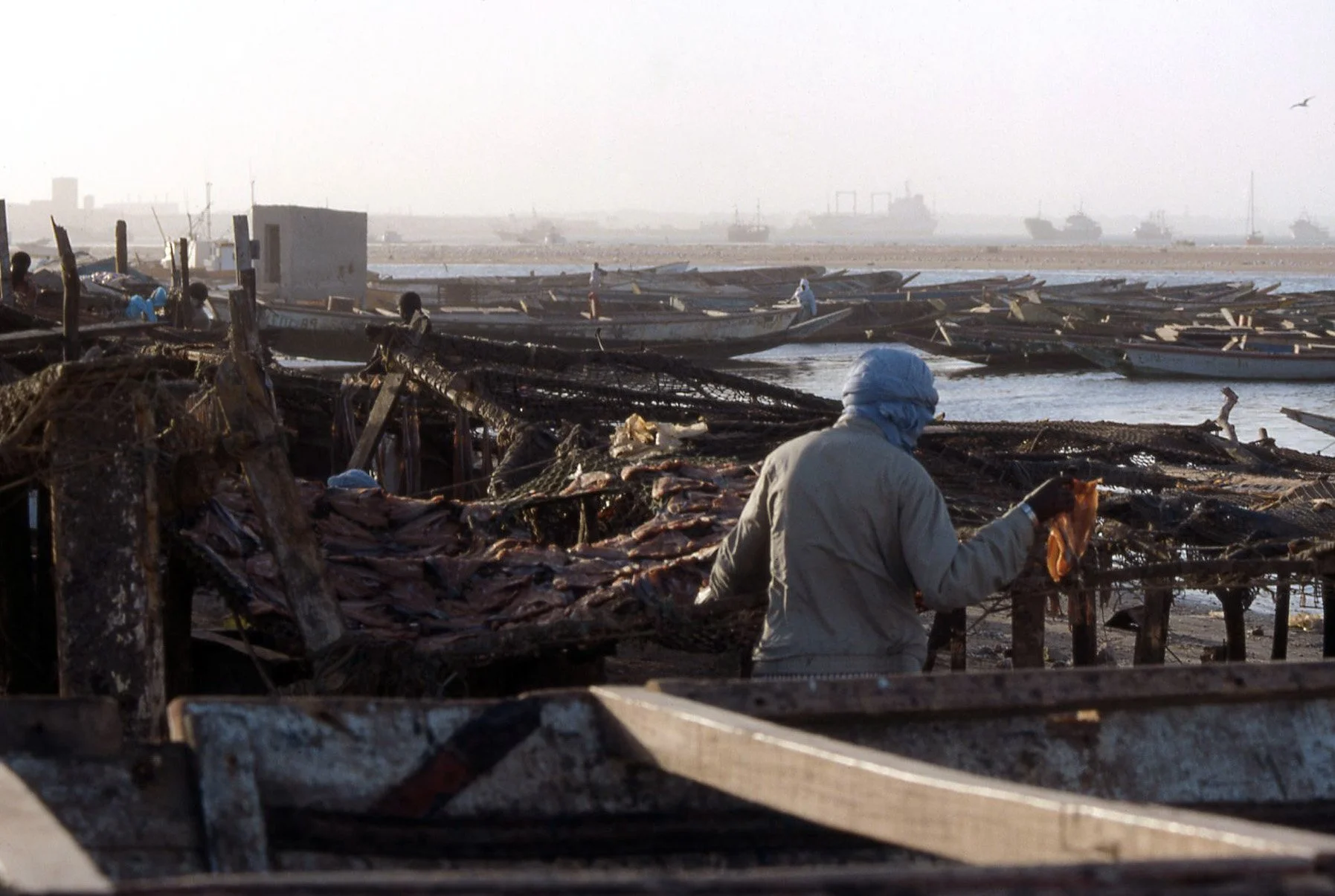
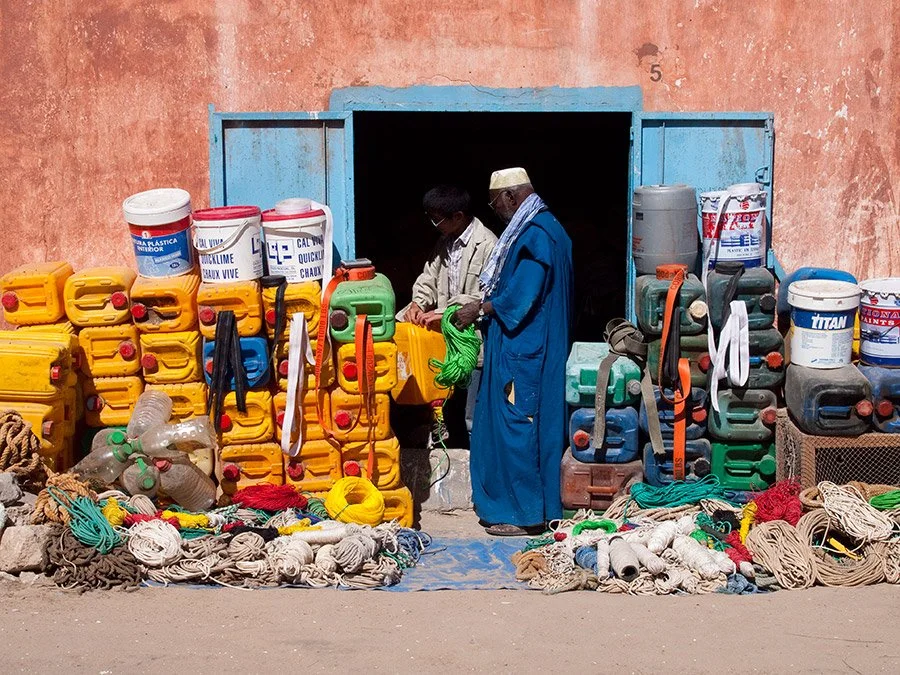
Development and cooperation projects can complement SFPAs if there a good synergies between the different implementing parties. For example, the EU-German-funded Promopêche programme supports links in a food-security chain, such as investments in landing sites, conservation, transport, women’s cooperatives and small-scale fisheries enterprises. Photo of a landing site in Mauritania, by Christine Vaufrey.
These initiatives were not designed as components of the SFPA, and their coexistence does not automatically create coherence. The lesson is therefore not simply that (EU and Member States) development cooperation can support the fisheries sector alongside the agreement. It is that better-planned synergies could increase the agreement’s contribution to food security.
The access conditions, fish supplied by EU vessels and sectoral support could be better connected with investments in landing and storage facilities, cold chains, processing capacity and inland distribution. Such cooperation should also strengthen the artisanal fishers and women processors who supply local markets.
This coordination should begin with the ex-ante evaluation and continue through the Joint Committee. The parties should identify where fish is being lost or failing to reach consumers, decide which instrument is best placed to address each bottleneck and establish shared, measurable food-security objectives. The 2% landings would then become the first link in a wider chain bringing more sustainably caught fish to consumers in good condition and at an affordable price.
B. CÔTE D’IVOIRE: ACCESS, AFFORDABILITY AND THE COLD CHAIN
In Côte d’Ivoire, women fish processors and traders are an essential link between the sea and consumers. They smoke, dry, store and market fish, including far from the coast. But their ability to perform this role depends first on obtaining fish of adequate quality at a price they, and their customers, can afford.
Women processors consulted in Côte d’Ivoire described how seasonal fluctuations in artisanal landings, - and, more acutely, biological rest periods when fishing is suspended-, exposes the sector’s economic vulnerability. They regularly depend on frozen fish to maintain their activities, but this dependence increases when fresh local landings decline. During the biological rest period, frozen fish prices rise sharply, making some products, including sardinella, unaffordable for the poorest households.
According to stakeholders consulted, the frozen fish sold on local markets come mainly from imports, including catches by large European vessels operating in Mauritania under the EU-Mauritania fisheries agreement. But the price of the frozen fish is not the only concern. Women processors also reported serious cold-chain problems. According to them, some intermediaries supplying the frozen fish switch off power to cold rooms to reduce electricity costs, allowing fish to thaw and deteriorate before it is sold. Women fish processors have nevertheless little choice but to accept this fish of degraded quality, with consequences for their incomes, product quality and consumer health.
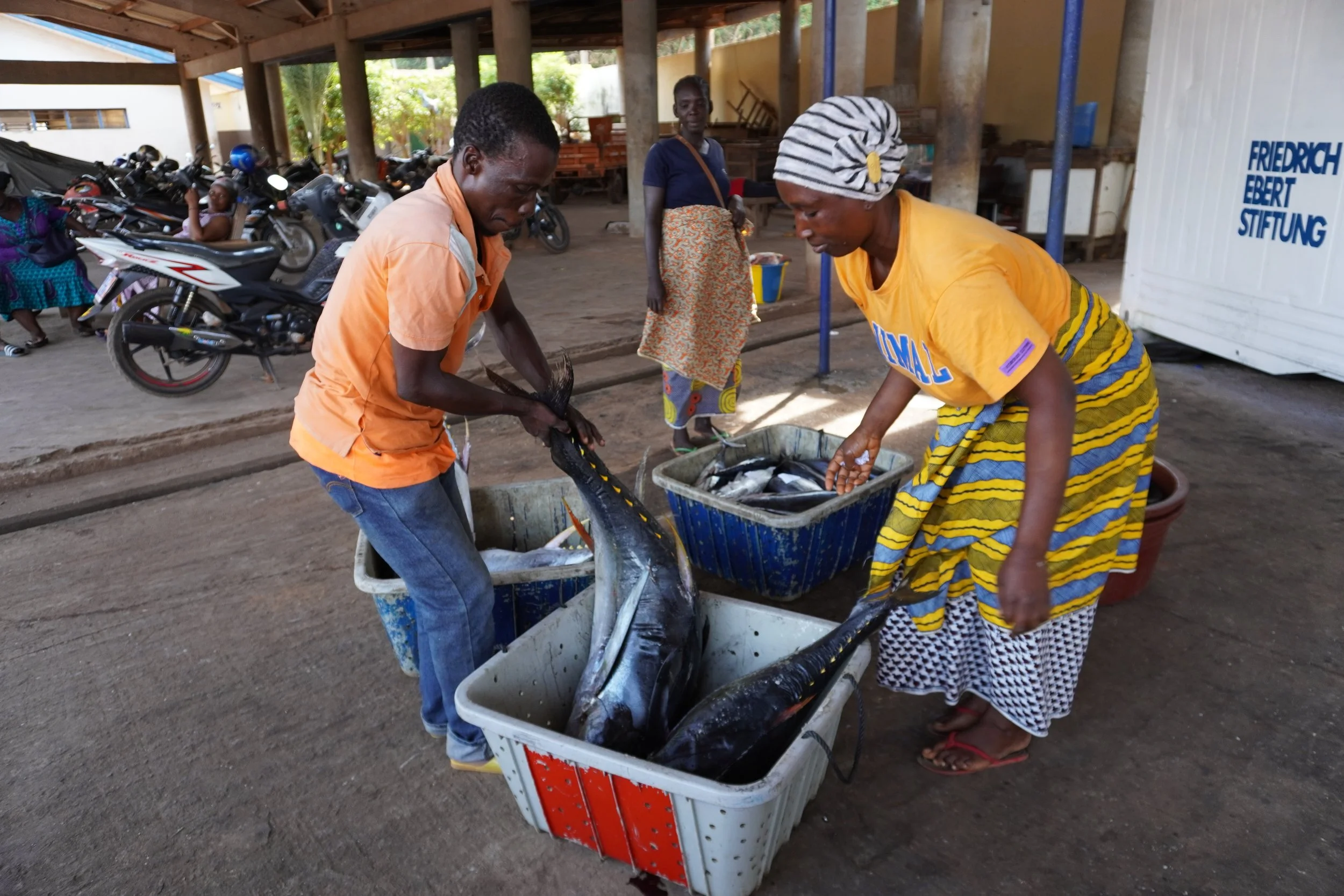
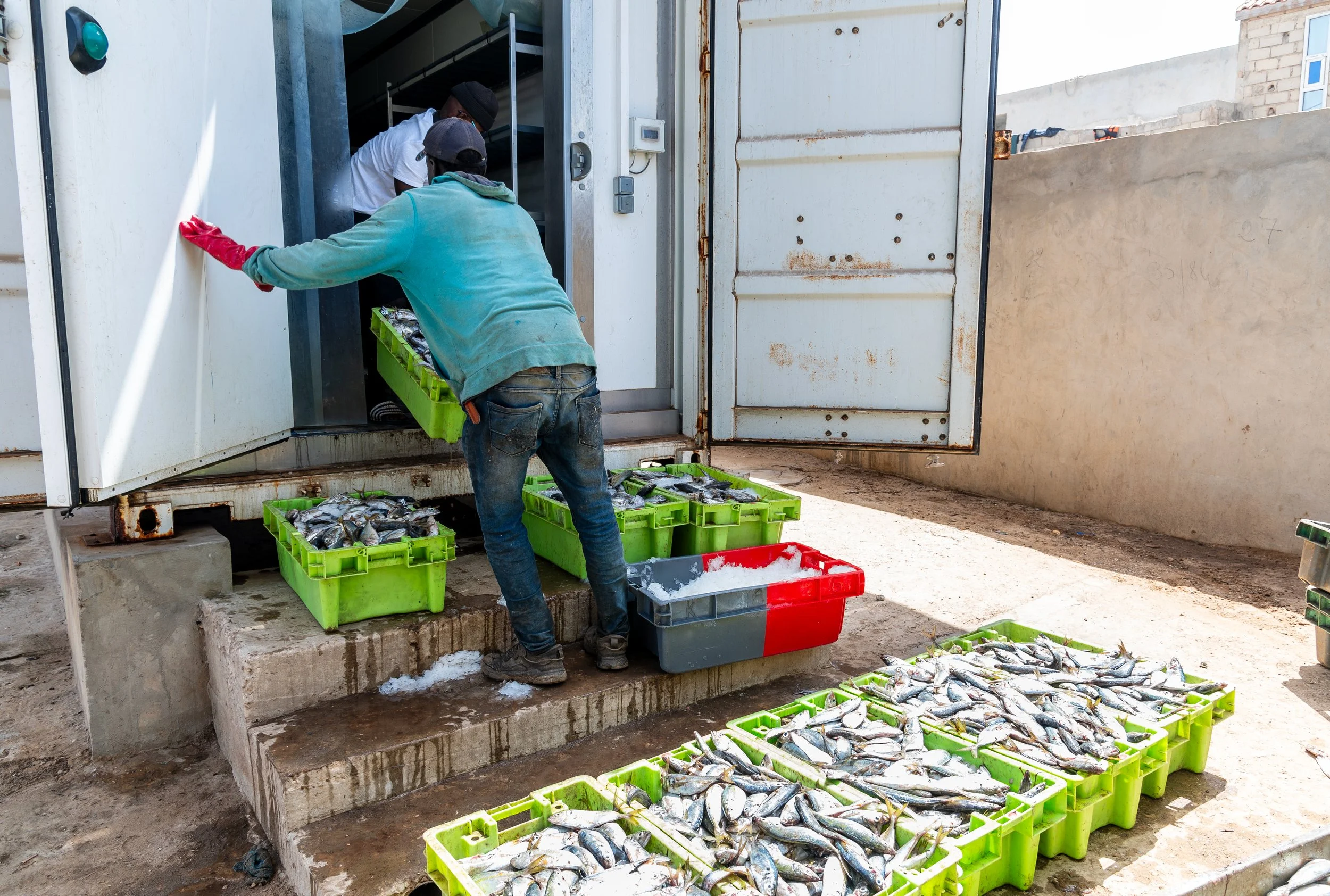
Refrigerated containers can help small-scale fishing communities preserve fish throughout longer periods, but they are nevertheless very costly in terms of electricity. Some fish processors cooperatives are turning towards solar powered cold-chain infrastructure. Photo: A woman fish processor collects tuna from the EU-funded refrigerated container in San Pedro, Côte d’Ivoire, by Joëlle Philippe/CFFA.
Previous support shows that practical investments can help. In 2020, sectoral support under the EU - Côte d’Ivoire agreement enabled women’s organisations to acquire a refrigerated container in San Pedro, preserving fish where it was relatively abundant and facilitating its transport to Abidjan. Women subsequently reported a more continuous supply. However, high electricity costs also showed the limits of conventional cold storage for women’s cooperatives. Experiences with solar powered refrigeration elsewhere in West Africa, such as at Fass Boye in Senegal, illustrate a potentially more affordable and sustainable approach.
These measures may appear modest compared to the millions of euros involved in fisheries agreements, but they address a decisive point: increasing food availability is not only about catching more fish. It also requires reducing losses, maintaining quality and ensuring that fish already caught remains affordable and reaches consumers.
2. What should future SFPAs include?
These experiences suggest a different way of thinking about future SFPAs. Currently, when an agreement is negotiated or evaluated, considerable attention is devoted to the vessels operations: how many vessels can fish, what species they target, how much they catch, where they operate and what fees they pay. Yet from the perspective of a consumer in Nouakchott, Abidjan or a town inland, hundreds of kilometres from an African coast, the decisive issues may be very different: whether fish can be kept cold, whether a woman fish processor can afford to buy it, whether roads and refrigerated transport allow it to reach far away markets, and whether processing techniques preserve its quality and shelf life.
This is why a value-chain approach to food security is key. For each SFPA, the EU and the partner country should identify the fisheries and products most important for local food security and examine the value chain from access to the fish at sea to consumption. That analysis should not be conducted solely by the parties’ administrations. Fishers, women processors, fishmongers and their organisations know where these value chains work and where they fail.
A. FROM THE LANDING SITE TO THE DINNER TABLE
A value-chain approach would also change how sectoral support under SFPAs is designed and assessed. Rather than measuring success primarily through expenditure or infrastructure delivered, it would ask: what has improved for the local people who catch, process, sell and consume fish?
Depending on the priorities identified by the partner country and local stakeholders, investments might include improved landing sites, ice-making facilities, solar-powered cold rooms, refrigerated transport, clean water or safer processing equipment. The Côte d’Ivoire experience shows that targeted support can make a tangible difference along a fish supply chain.
Future agreements should therefore begin with a diagnosis, not an infrastructure shopping list. What prevents women processors from accessing raw material? What would help artisanal catches reach more distant markets? Where are the fish losses? Who will own and manage the infrastructure, and how will operating and maintenance costs be covered? But above all, what do the fishing communities say they need - a cold storage that nobody can afford to use because of high energy costs does not strengthen food security. The diagnosis should also determine where infrastructure is genuinely needed and likely to be used, rather than distributing facilities without sufficient regard to the number of fishers, the intensity of activity and alternative needs at each site.
B. SUSTAINABLE FISHERIES MANAGEMENT COMES FIRST
Food security cannot be something the EU supports through one part of an agreement while another part undermines fish resources or local communities’ access to them. Sustainable fisheries management therefore remains the starting point. Future SFPAs should assess how fishing opportunities granted to EU vessels interact with fisheries important for local consumption, artisanal activities and regional markets.
Existing agreements offer useful precedents. The current EU-Mauritania protocol grants no fishing opportunities for the cephalopod category, which includes octopus, while the EU-Guinea-Bissau Protocol sets fishing opportunities for small-pelagic trawlers at zero. Such decisions recognise that access for EU vessels should not be granted where the state of the resources or the needs of local and regional fisheries do not justify it.
Zero access for EU vessels is not, however, sufficient if the same resources remain under pressure from other industrial fleets or poorly controlled national capacity. Evaluations should therefore consider cumulative fishing effort, the activities of all fleets and the preferential access needed by artisanal fisheries supplying local and regional markets.
C. BRINGING ALL THE INGREDIENTS TOGETHER
The next step is not to invent a new objective for SFPAs, but to bring the existing ingredients together more systematically. Each future agreement with an African partner country could include a specific ‘food security and local value chains chapter’ adapted to the country’s fisheries, markets and priorities. This approach is also reflected in recent LDAC advice on the regional management of small pelagics in West Africa, which calls for food security, nutrition, employment, the women’s role in artisanal processing and the social effects on coastal communities to be explicitly incorporated into the evaluation criteria for fisheries agreements.
It is essential to identify which fish value chains are key for local and regional food security. For this, small-scale fishing communities’ inputs must be taken into account so that the challenges facing the value chain are put to light, whether it is about access to resources, about post-harvest losses, the cold value chain or the access to markets. Photo: A solar-powered refrigerated container in Fass Boye, Senegal, by Agence Mediaprod.
Through the ex-ante evaluation, the EU and the partner country could identify the fish value chains most important for local food security. Together with artisanal fishers, women processors and other stakeholders, they could then assess the main constraints along the value chains: access to resources, access to raw material, post-harvest losses, cold storage, transport, processing and market access. The assessment should also examine how fishing opportunities negotiated under the SFPA, the destination of catches and sectoral support spendings affect the availability, the quality and affordability, of fish for local populations.
Such a framework would concretise principles increasingly recognised by the EU institutions and fisheries stakeholders: sustainable fisheries partnerships should protect the resources, support small-scale fishing communities, prioritise fish for human consumption and deliver tangible benefits to the populations of partner countries.
Conclusion: A test for genuine partnership
SFPAs alone cannot solve Africa’s food-security challenges. They cannot compensate for weak national fisheries management, rebuild depleted stocks on their own or resolve the continent structural cold chain and fish transport problems.
But the way these agreements are designed can make a difference. They can protect artisanal communities access to resources and markets; avoid encouraging the diversion of food fish towards fish meal and fish oil; improve women processors access to raw material; and invest in cold chains and processing to reduce losses. Where EU vessels fish in African waters, agreements can also assess more systematically how their activities affect the partner country food system.
Aquatic foods availability in Africa is already less than half the global average and is projected to decline further per person. In its statement for the 37th session of FAO Committee on Fisheries, the EU expressed concern that “the people who may be most in need of this resource [aquatic foods] have the least access to it.” The next generation of SFPAs should therefore answer a simple question: once fishing opportunities have been allocated, vessels have fished and the financial contribution has been paid, is more sustainably caught fish reaching the people who need it, in good condition and at an affordable price? If future agreements can increasingly answer yes, the EU will be responding to its own stated concern and helping put more fish on African tables.
Banner photo: An Ivorian fish processor gets fish out of a refrigerated container funded with sectoral support of the EU-Côte d’Ivoire SFPA in San Pedro, by Rich Press.


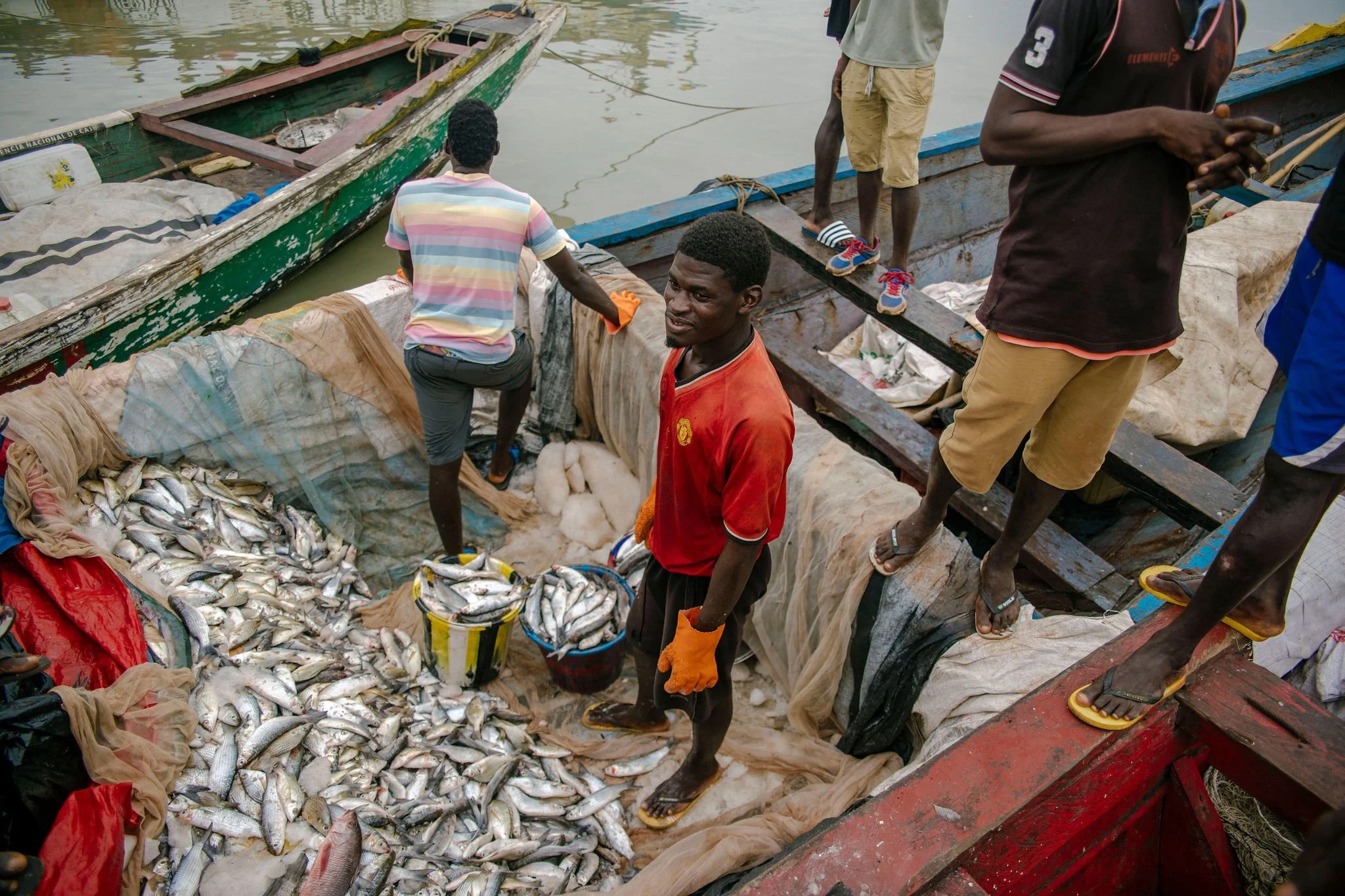
Small pelagic stocks are shared across West African waters, yet their management remains largely national. In this article, the author argues that stronger regional management is not simply a matter of better policy or voluntary cooperation: it also flows from existing obligations under international law. These obligations require coastal states not only to conserve shared stocks, but to cooperate on issues such as fishing capacity and allocation of access, implement agreed measures and hold one another accountable where national decisions undermine a shared resource. Drawing on recent examples from West Africa, the article shows why effective regional governance is essential if national conservation efforts are to succeed.