The decision by Senegal’s Ministry of Fisheries and Maritime Economy to authorize the granting of new coastal demersal fishing licences has sparked strong opposition from Senegal’s fisheries sector and civil society.
According to the Ministry official communication, four coastal demersal fishing licences under the ‘fish and cephalopod’ category were granted to a Senegalese fishing company, following the approval by the Consultative Commission for the Allocation of Fishing Licences (CCALP). For the Ministry, this measure forms part of the implementation of the orientations adopted by the Council of Ministers in November 2025 aimed at ‘sustainably strengthening the availability of fish on the national market’ and consolidating food sovereignty. The Ministry specifies that the beneficiary company committed to supply all of its production for the domestic market and to develop cold storage and distribution infrastructure in remote areas of the country.
The Ministry further states that this decision is based on a scientific assessment by the Dakar-Thiaroye Oceanographic Research Centre (CRODT), which reportedly highlighted ‘the existence of a fishing potential of 2,921 tonnes compatible with limited, progressive and strictly supervised access to the coastal demersal fishery’. The communication stresses the ‘transparent, inclusive and scientifically rigorous’ nature of the process.
A contested reopening in a context of fragile resources
However, this decision comes in a particularly sensitive context. Coastal demersal fishing licences have been frozen since 2006 because of the worrying state of the targeted resources.
““The lack of transparency regarding the beneficial ownership of vessels granted exemptions for coastal demersal fishing – some of which may be controlled by foreign interests – undermines confidence in the government’s assurances regarding domestic supply.””
The reaction of the National Coalition for Sustainable Fisheries (CONAPED), led by the artisanal fisheries platform CONIPAS, was immediate, calling for the cancellation of the Ministerial order. For its part, the Grouping of Shipowners and Fisheries Industries in Senegal (GAIPES) considers that the partial lifting of the freeze raises serious and significant concerns. The criticisms formulated by both artisanal and industrial fishing professionals are based on several arguments.
CONAPED and GAIPES consider that the partial lifting of the freeze on coastal demersal fishing licences constitutes a risky decision in a context where several stocks remain fragile or overexploited, such as thiof (white grouper) and coastal shrimp. Both organisations recall that the freeze introduced in 2006 responded to a critical situation regarding fishery resources and fear that a resumption of industrial fishing effort could further worsen the state of coastal marine ecosystems.
CONAPED also expresses concerns regarding certain fishing companies operating under the Senegalese flag but suspected of being controlled, directly or indirectly, by foreign interests. For the coalition, this situation raises the question of whether the unfreezing of licences will genuinely benefit the supply of the domestic market and food sovereignty, as claimed by the government, or whether it risks instead favouring operators primarily oriented towards exports and commercial profitability. The coalition considers that the lack of transparency regarding shareholding structures and the effective control of fishing companies weakens the credibility of the guarantees put forward by the authorities.
GAIPES, for its part, challenges the exploitable potential put forward by the authorities, arguing that the CRODT figures are overestimated when interactions between species sharing the same habitats are taken into account. According to the organisation, the truly exploitable volumes would represent less than five days of national fish consumption, which considerably weakens the argument of food sovereignty.
GAIPES also criticises the manner in which the decision was taken, denouncing a process considered insufficiently transparent and lacking adequate consultation, particularly concerning the allocation of licences to a single fishing company. The organisation therefore calls for maintaining the 2006 freeze of demersal licences, presented not only as an ecological necessity but also as an imperative of intergenerational justice.
Food security is based on small pelagic resources
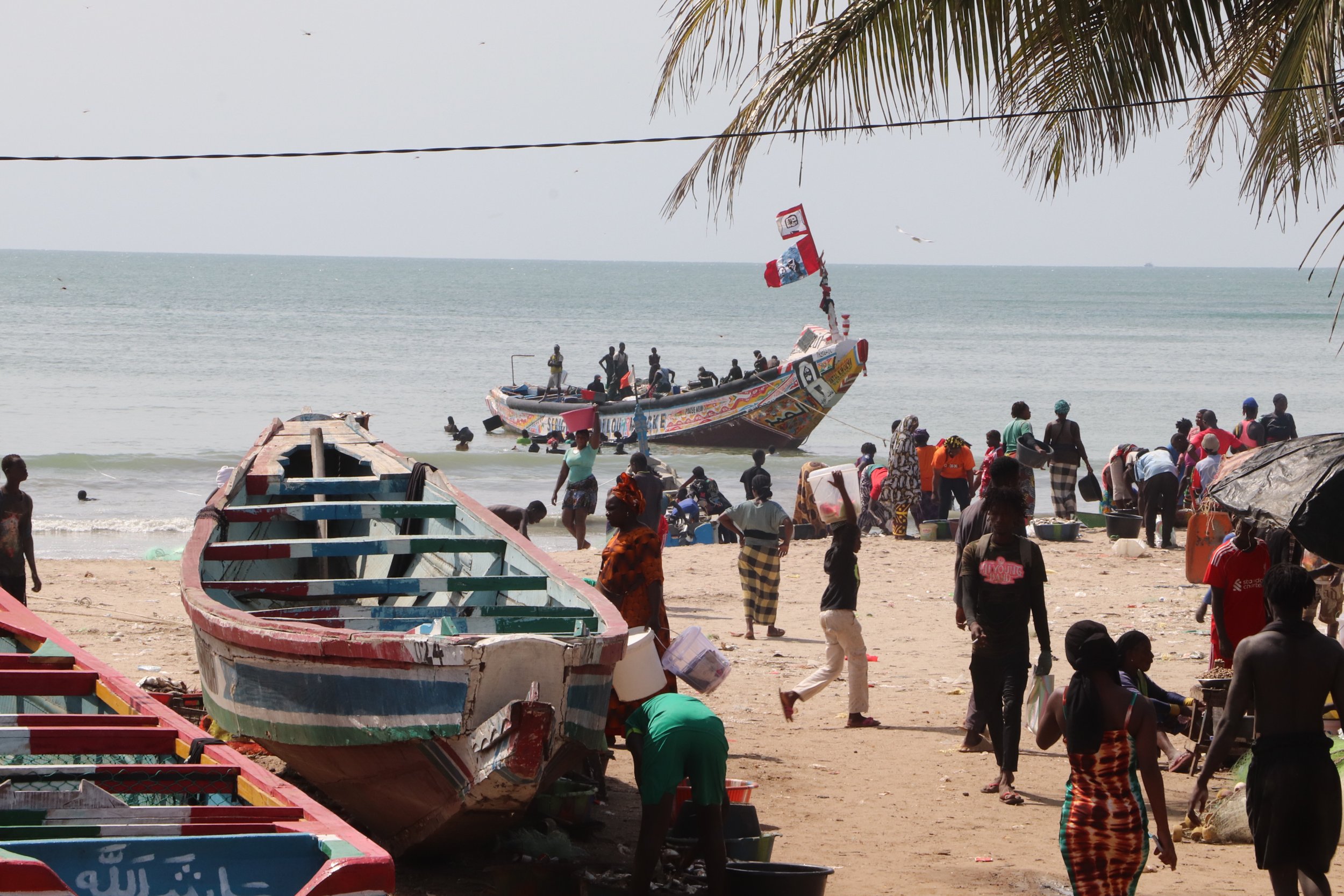
Both organisations also contest the food security argument advanced by the government, considering that the volumes concerned remain low in relation to national needs and that the targeted demersal species do not correspond to the main species consumed by the population, whose diet relies primarily on small pelagic species, in particular sardinella and horse mackerel.
The data compiled by economist Omar Sarr in a recent contribution on the industrialisation of Senegalese fisheries adds to this debate. According to these figures, Senegalese exports of fishery products increased from 151,000 tonnes in 2014 to a peak of 291,000 tonnes in 2020, before declining again to 230,000 tonnes in 2024.
““The debate over Senegal’s fisheries is ultimately a question of priorities: while industrial exports and fishmeal production continue to expand, concerns persist that growing pressure on small pelagic species may undermine food security, local livelihoods, and access to affordable protein.””
The data also highlights the growth in fishmeal exports. In 2024, the volumes of fishmeal exported corresponded, according to the estimates cited by Omar Sarr on the basis of official statistics, to the equivalent of between 79,000 and 98,000 tonnes of fresh fish processed. The document recalls that one kilogram of fishmeal requires between 3 and 5 kilograms of fresh fish.
For several years, this trend has fuelled concerns among artisanal fisheries organisations, women fish processors and numerous NGOs regarding the pressure exerted on small pelagic species, which constitute the main source of affordable animal protein for a large part of the Senegalese population.
For several organisations in the sector, the central question therefore remains that of the allocation of fishery resources: should priority be given to the expansion of industrial fishing and exports, or should the sustainable supply of the local market and the food security of the population, particularly centred on small pelagic species, be guaranteed first?
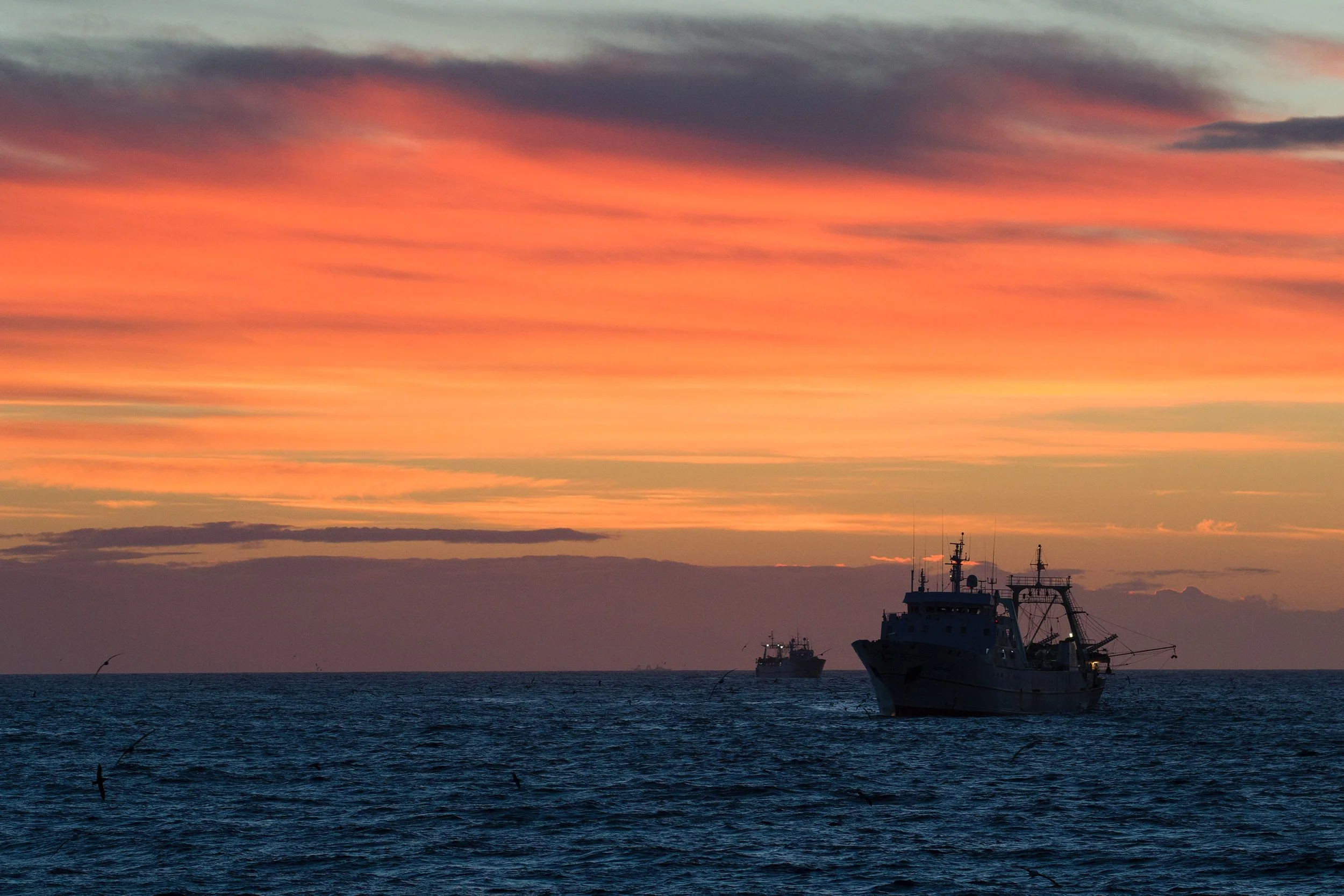
Banner photo: Stock photo of a vessel similar to the Kanbal III, by Fer Nando/Unsplash.
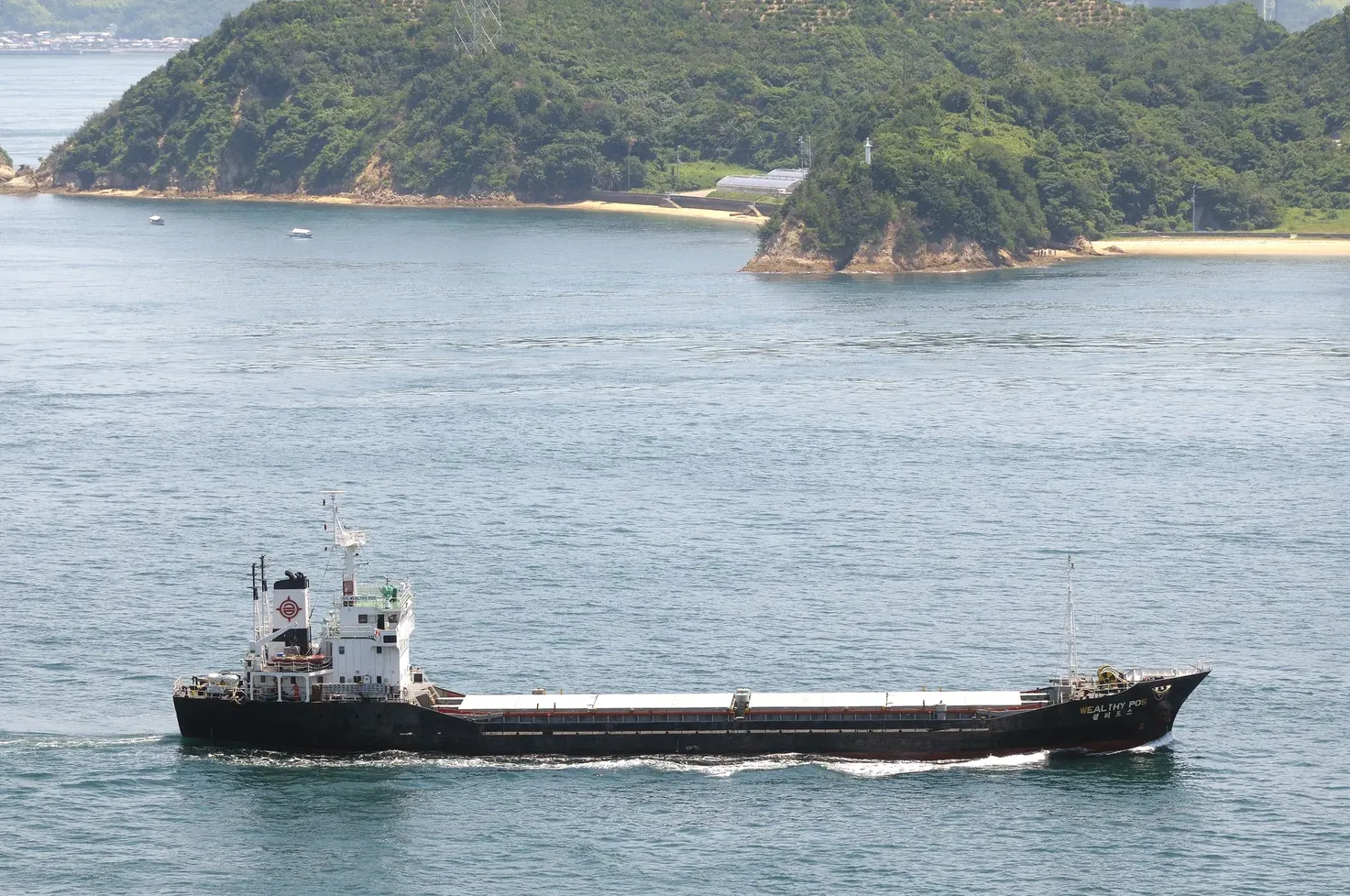


Senegal has granted four new coastal demersal fishing licenses. Although the government says the decision is based on scientific assessments, it is being challenged by fishing industry stakeholders and NGOs, who fear overexploitation of fish stocks, a lack of transparency, and potential risks to food security.