EU distant water vessels employ fishers from African, Caribbean and Pacific (ACP) countries as crew members. However, barriers to training and recognised qualifications can put their safety at risk and limit access to more skilled and better paid positions. In its contribution to the European Commission call for evidence, CFFA argues that the EU should ensure that all fishers working on EU vessels benefit from the same safety standards, regardless of nationality; make recruitment under Sustainable Fisheries Partnership Agreements (SFPAs) transparent; ensure that ACP fishers have a fair access to appropriate required training, including training that supports career progression.
Reading time: 3 minutes
In October, the Commission launched an open call for evidence on possible common EU training and certification standards for fishers, in line with the IMO STCW-F Convention. There are currently no harmonised minimum standards for the training of fishers apart from existing occupational safety and health requirements.
This call will inform an impact assessment for possible legislation, with a public consultation due to follow before the end of 2026. The recently published communication from the Commission “Vision 2040 for fisheries and aquaculture” points at improved training as one of the priorities for action, a commitment that should also benefit African, Caribbean and Pacific (ACP) fishers working on EU vessels.
In its contribution to the call, the Coalition for Fair Fisheries Arrangements focussed on ACP fishers employed on Distant Water EU vessels, including those under Sustainable Fisheries Partnership Agreements (SFPAs), as their safety, access to employment and professional development affect their households and communities.
1. Enlarging the scope of the STCW-F convention: Basic safety training on vessels of all sizes
International training standards for fishers are spelled in the International Convention on Standards of Training, Certification and Watchkeeping for Fishing Vessel Personnel (STCW-F), which was adopted in 1995 and entered into force in 2012. The revised Convention framework and the new STCW-F Code entered into force on 1 January 2026. Under this convention, however, most provisions only apply to larger vessels.
The EU should harmonise training standards through integrating the STCW-F Convention into law, but with a wider scope: there should be mandatory basic safety training for fishers on vessels of all sizes. In CFFA’s view, all crew members should benefit from such training, including those working on vessels under 24 metres. However, any additional requirement on smaller vessels should be proportionate to the risks involved and developed in consultation with the concerned parties. Implementation should be supported by accessible training and certification arrangements.
2. Training for career progression: access to qualified jobs
The recently published Vision highlights the increasing proportion of third-country nationals working on EU vessels and the importance of ensuring equal working conditions with those of EU nationals. In the accompanying EU strategy for fisheries external action, the Commission commits to strengthening social responsibility under SFPAs, including a “clear set of social provisions with SFPA partners”.
CFFA has previously raised attention to the link between training and working conditions for ACP seafarers working on board EU vessels, particularly under SFPAs. The lack of training of ACP fishers has an impact on wages.
In this regard, the proposed EU training and certification standards should help translate EU’s social commitments into practice, by ensuring that ACP crew benefit from the same training standards and have fair access to the training and recognised qualifications needed to work and progress their careers on EU Distant Water Fishing vessels.
3. Transparent recruitment criteria, including training
Under SFPAs, EU vessels have obligations to employ either nationals from the partner country or ACP fishers, depending on the protocol provisions. However, coastal communities and small-scale fisher partners have often denounced the opacity around the recruitment of seafarers. In the majority of SFPAs, recruitment is performed through fishing agents. Sometimes these agents do not follow clear criteria, and in some occasions, agents expect a bribe for obtaining fishers a place on board of EU vessels. This can result in untrained fishers being taken on board while qualified fishers stay ashore.
In this regard, SFPAs would benefit from a harmonisation of training provisions. For the moment, some SFPA protocols make qualifications according to STCW or STCW-F mandatory for the nationals of the third country embarking vessels: Mauritania requires certification of basic safety training referring to STCW-F, while Seychelles requires basic safety qualifications under STCW. However, a majority of SFPA protocols only encourages the parties to “promote proper training for fishers, in particular training as provided for in” STCW-F. Guinea Bissau and Cabo Verde SFPAs combine commitments to promote STCW-F training with mandatory basic training requirements under the relevant flag State legislation.
In CFFA’s view, common EU standards should therefore apply regardless of nationality and should be aligned with the STCW-F Convention. Furthermore, the EU should make sure that embarking of a seafarer is linked to a training and should include provisions in all SFPA protocols. SFPAs protocols should also clarify the responsibilities of flag States, partner-country authorities and vessel owners.
4. A fair access to training
New requirements, however, must improve safety without creating avoidable barriers to employment for ACP fishers. For ACP fishers, effective access to training depends on its cost, location, language, and schedule. Additionally, some types of vessels require very particular training for their crew.
To overcome potential obstacles in this regard, the EU should work with partner countries, training institutions, fishing organisations and trade unions. Necessary funding arrangements should clarify the responsibilities of authorities and employers, including for training costs, so that these do not become a barrier for prospective crew members.
Finally, the EU should ensure that the conditions are in place to ensure fair access to training, a training that is aligned to the STCW-F but that is also adapted to the context of the third country, particularly regarding language.
Summary of demands
Basic safety training on vessels of all sizes, with proportionate additional requirements. Additional requirements for smaller vessels should be proportionate and developed in consultation with stakeholders.
Harmonisation for all fishers, including non-EU fishers: Trainings should be harmonised with STCW-F convention for all seafarers, regardless of their nationality, working on board all vessels, including those under SFPA
Recruitment of ACP fishers linked to training: All SFPAs must include provisions to ensure recruitment processes are transparent and that embarked seafarers have the mandatory training.
A fair access to training: The EU should ensure fair access to adapted training, including trainings that open the opportunities for better paid positions, through inter alia sectoral support.
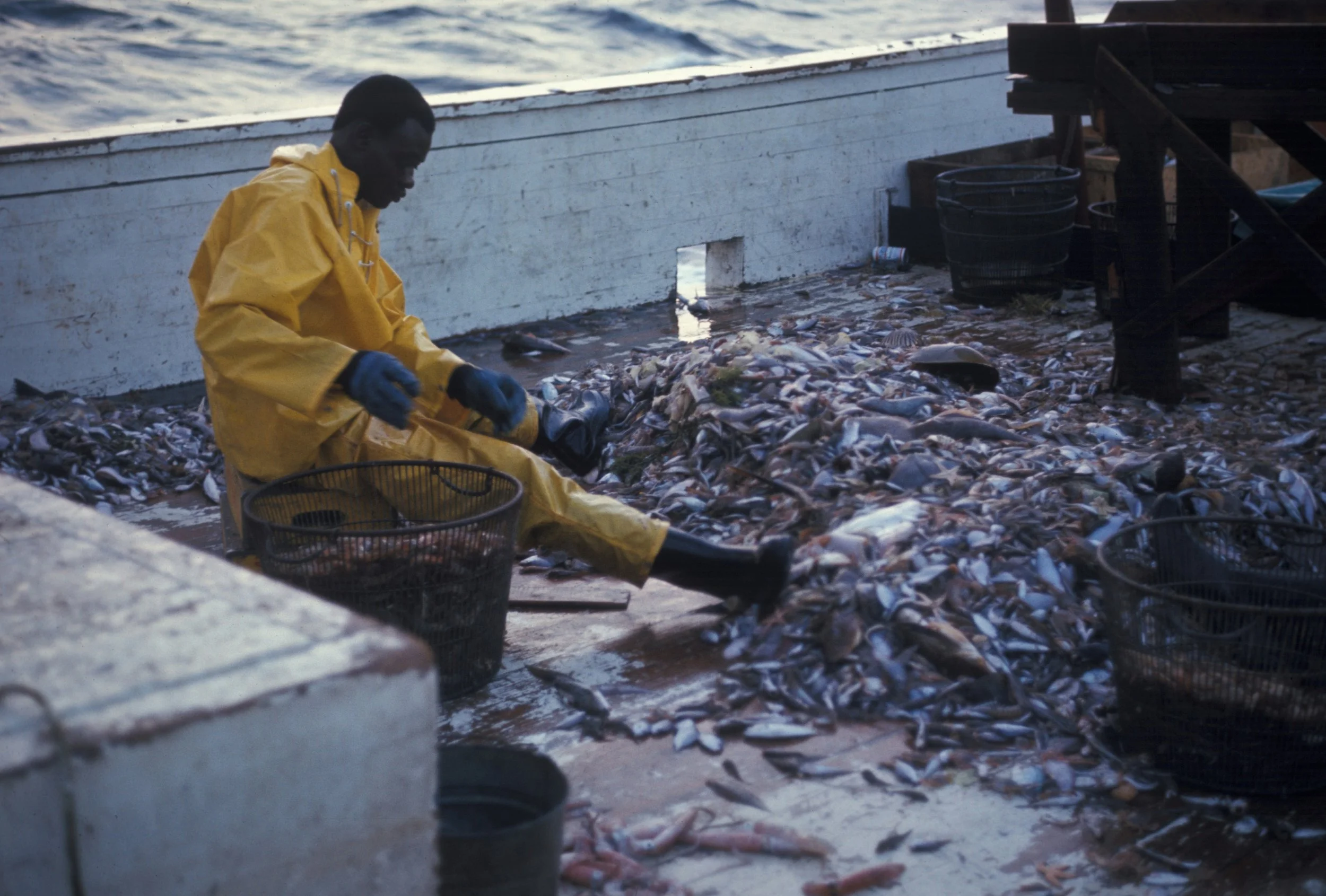
Banner photo: a seafarer sorting fish, by NOAA.
Fishers from ACP countries working on EU distant-water vessels face barriers to training putting their safety at risk and limiting their career prospects. In its contribution to the European Commission’s call for evidence, CFFA calls for equal safety standards for all fishers, greater transparency in recruitment under SFPAs, and fair access to training opportunities.