On 9 October, the EU and Cabo Verde held their 14th high-level political dialogue, a forum where the two parties discuss their Special Partnership since 2007, which supports the third country’s long-term development goals as outlined in “Cabo Verde – Ambition 2030”.
In this meeting, both parties reaffirmed that the 2024-2029 Sustainable Fisheries Partnership Agreement (SFPA) protocol is “the key framework for their fisheries cooperation”. But does the partnership address the concerns expressed by Cabo Verde small-scale fishing communities?
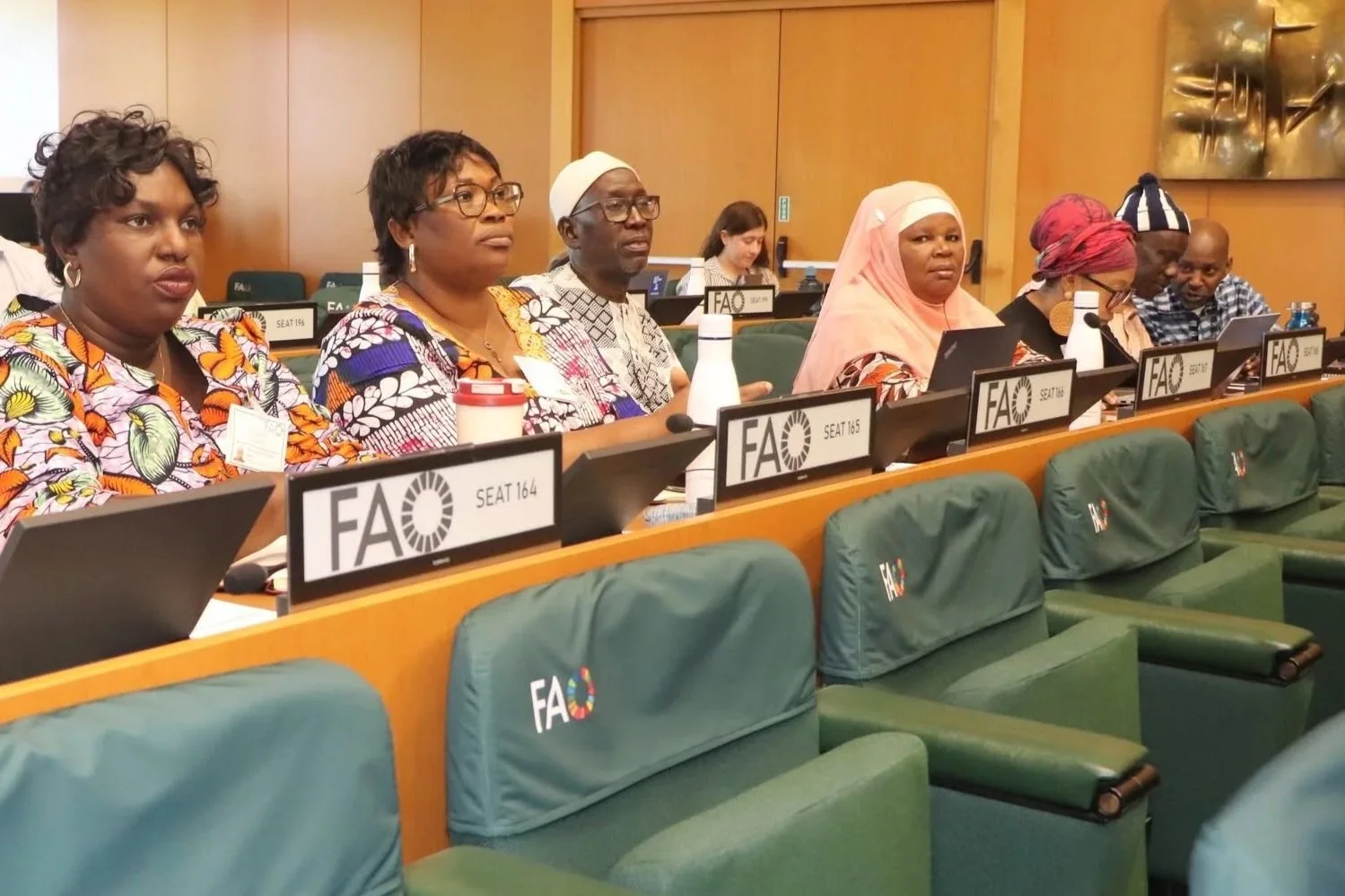
A workshop held this July 2026 in Boa Vista, Cabo Verde, organised by Fauna & Flora and partner organisations, brought together local fishing organisations, civil society and public authorities to discuss foreign fishing agreements.
Opinions on foreign fishing agreements differed. Some representatives of fishing communities questioned their benefits, while others considered that agreements could contribute to national development, provided there was greater accountability for the use of financial resources and stronger community involvement in monitoring its implementation.
Where do the benefits of the SFPA go?
The keynote speaker, Ms. Zuleika Lopes, President of Cabo Verde Network of Professional Artisanal Fisheries Organisations (ROPA), speaking on behalf of the African Confederation of Professional Organisations of Artisanal Fisheries (CAOPA), examined particularly the EU-Cabo Verde SFPA from the perspective of fishing communities. Ms. Lopes explained that since the Cabo Verde SFPA protocol primarily concerns highly migratory tuna species managed regionally through ICCAT, the main issues for small-scale communities are more linked to the economic benefits of foreign tuna fishing, its governance and transparency, rather than necessarily a direct competition for coastal fishing resources.
The current protocol provides an annual EU contribution of 780.000 euros: 350.000 euros for access to fishing opportunities and 430.000 euros for sectoral support. EU vessel owners also pay fishing fees. Sectoral support is intended to strengthen fisheries surveillance, scientific research, sanitary controls and coastal community development, including measures benefiting women and young people.
Participants to the workshop questioned whether the EU financial compensation adequately reflected the value of tuna resources caught in Cabo Verdean waters. Discussions highlighted the need for a clearer understanding of how ICCAT decisions on tuna resources allocation, SFPA reference tonnage and payments under fisheries agreements are related.
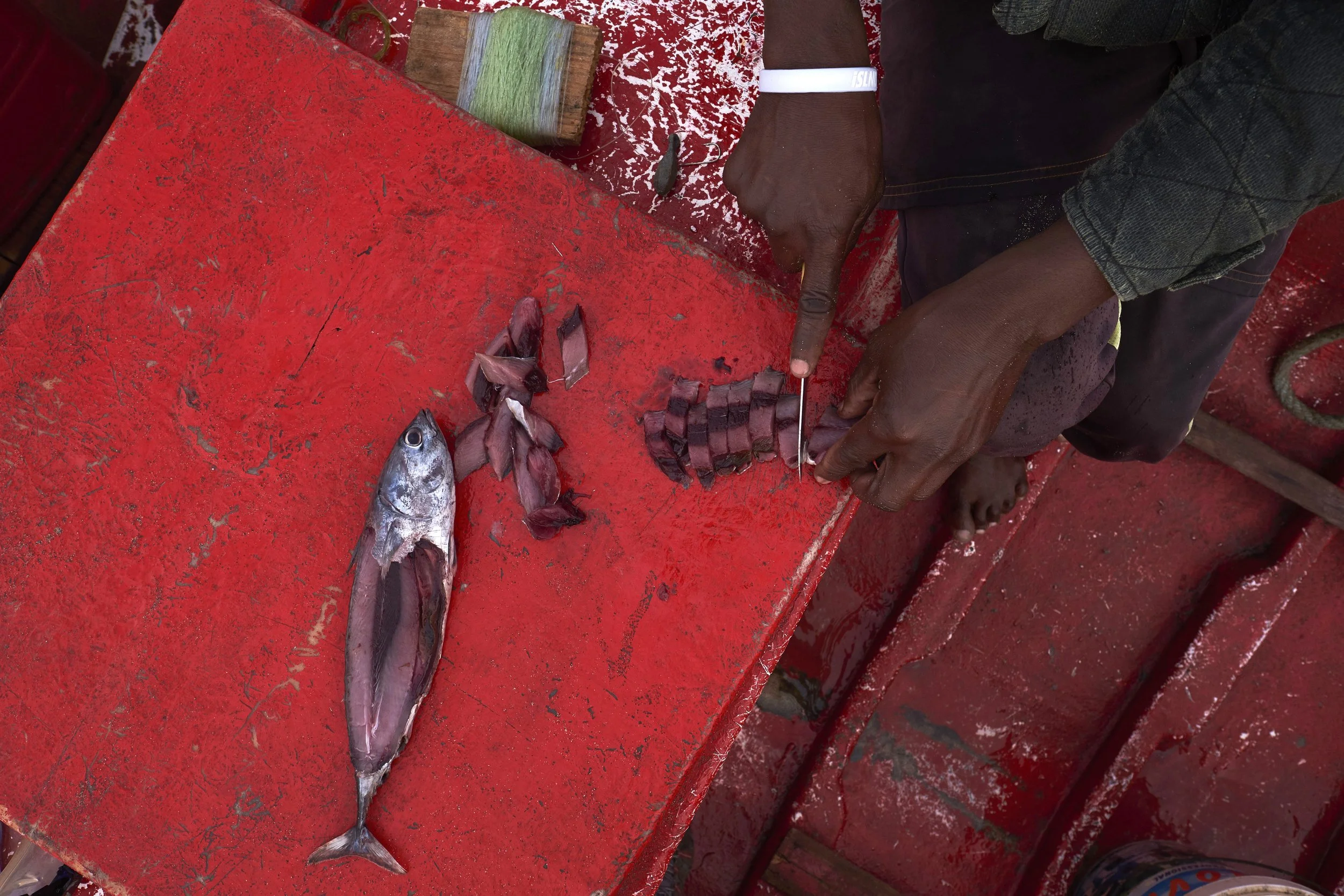
Beyond access to tuna resources and preferential access to export markets, the EU–Cabo Verde wider partnership relations has to respond to the development needs and aspirations of Cabo Verde small-scale fishing communities. Photo: A fisher prepares bait for line fishing off the beach of San Pedro, Cabo Verde, by FAO/Luis Costa.
Representatives of public institutions acknowledged difficulties in demonstrating the results achieved with fisheries support. Better documentation and evaluation of investments, they suggested, could also strengthen Cabo Verde position in future negotiations. In the evaluation of the previous EU–Cabo Verde SFPA protocol, the European Commission had identified difficulties in implementing sectoral support, and concerns about the visibility of its benefits among stakeholders.
Against this background, Ms. Lopes called for clearer information on projects financed through sectoral support, their budgets, beneficiaries and results. She stressed that small-scale fishers and women in fisheries should participate in setting priorities and evaluating outcomes, rather than being regarded simply as beneficiaries.
Transparency and participation: fishing communities want answers
Ms. Lopes also stressed that fisheries governance extends beyond the EU agreement. Other formal arrangements involve Senegalese and Japanese vessels, while other foreign vessels, including from Panama, Salvador, Morocco, also operate with private licenses in Cabo Verdean waters. Cabo Verde participation in the Fisheries Transparency Initiative (FiTI) has definitely improved public access to information on fisheries agreements, fleets and catches, but participants questioned the limited information available on some foreign fleets, particularly on Japanese vessels, compared with the EU fleet.
In her presentation on behalf of CAOPA, Ms. Lopes called for greater transparency across all foreign fishing arrangements, including on fishing authorisations, catches, payments and beneficial ownership. She also highlighted the importance of monitoring environmental impacts, including bycatch of sharks and other sensitive species, and of involving fishing organisations in the implementation and monitoring of agreements. For her, foreign fishing agreements should be more than instruments granting access to resources, and become genuine partnerships for sustainable fisheries governance, based on transparency, participation and accountability.
Trade preferences will help fish exports, but it’s not enough for small-scale fisheries
The 9 October high-level political dialogue held in Brussels also highlighted another important dimension of EU–Cabo Verde fisheries relations: preferential access for Cabo Verdean fish products to the EU market. Cabo Verde expressed its interest in continuing to benefit from the EU GSP+ trade preferences for fish products. Both partners also noted the temporary derogation from rules of origin adopted in March 2026, allowing certain ‘non - originating’ tuna and mackerel processed products to qualify for preferential access to the EU market.
Fish counts as originating in Cabo Verde if it is caught within the country territorial sea (12 miles), regardless of the vessel’s nationality. Beyond those waters, including in its wider exclusive economic zone, the vessel must meet the rules for registration, flag and ownership in Cabo Verde. Fish caught by EU vessels can also be used in products processed in Cabo Verde for preferential access to the EU market, as it counts as ‘originating’ fish.
While these trade arrangements can support Cabo Verde export-oriented fish processing industry and the jobs it provides, they do not create many new opportunities for local small-scale fishers and women processors. In particular, allowing fish processing factories to process imported fish for export to the EU market does not, in itself, encourage stronger links with local fisheries, or value addition within fishing communities.
This echoes the concerns raised by fisheries stakeholders at Boa Vista in July 2026 about who benefits from fisheries cooperation. During the workshop, participants highlighted the importance of strengthening local small-scale fisheries value chains through investing in better landing facilities, cold storage, processing, training and market opportunities, alongside stronger professional organisations and greater involvement of fishing communities in resource management.
The discussions in Boa Vista therefore add an important perspective to the commitments reaffirmed by Cabo Verde and the EU in Brussels: beyond access to tuna resources and preferential access to export markets, the EU–Cabo Verde wider partnership relations has to respond to the development needs and aspirations of Cabo Verde small-scale fishing communities.
Banner photo: Traditional fishermen return to San Pedro beach, Cabo Verde, after a night of work at sea, by FAO/Luis Costa.


The EU-Cabo Verde high-level political dialogue reaffirmed the SFPA as the “key framework for their fisheries cooperation”. However, at a workshop in Boa Vista bringing together fisheries organisations, civil society and public authorities, show that the partnership does not yet address the concerns of the third country’s small-scale fisheries.